
B'ida, b'iti:
the Music of the Spirits
Musical instruments among the Otomi people
of the Sierra Madre Oriental, Mexico

Introduction
“Just as the huehuetl was the alpha of Aztec instruments, so the teponaztli was the omega”. With these words, musicologist Robert Stevenson (1968:63) describes a pair of wooden musical instruments of pre-Hispanic origin, whose melody accompanied public rituals, depicted in pictographic codes and mentioned in chronicles since the early colonial period.
The huehuetl is a vertical membranophone with a cylindrical body covered at the top with animal skin and open at the bottom. The teponaztli is a struck idiophone laid horizontally, similar to a xylophone, with a longitudinal opening at the base and an
H-shaped incision at the top forming two vibrating tongues which, when struck with sticks, produce sounds of different pitches.

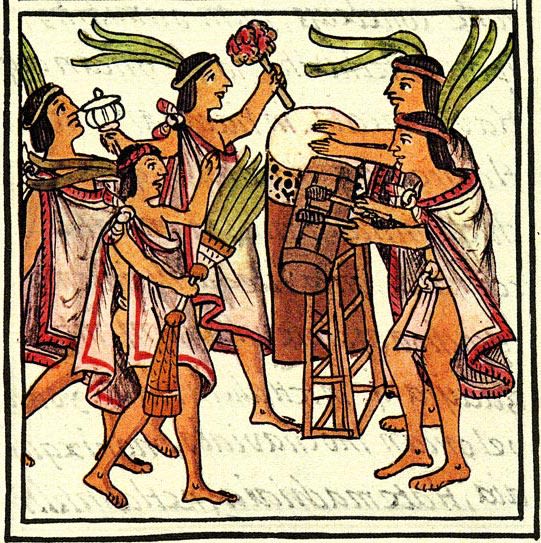
The pair of Huehuetl and Teponaztli played during a public ceremony. Bernandino de Sahagún, Florentine Codex, Book 4, Folio 19v. Courtesy of the Biblioteca Medicea Laurenziana, Florence, and by permission of MiBACT.
The pair of Huehuetl and Teponaztli played during a public ceremony. Bernandino de Sahagún, Florentine Codex, Book 4, Folio 19v. Courtesy of the Biblioteca Medicea Laurenziana, Florence, and by permission of MiBACT.

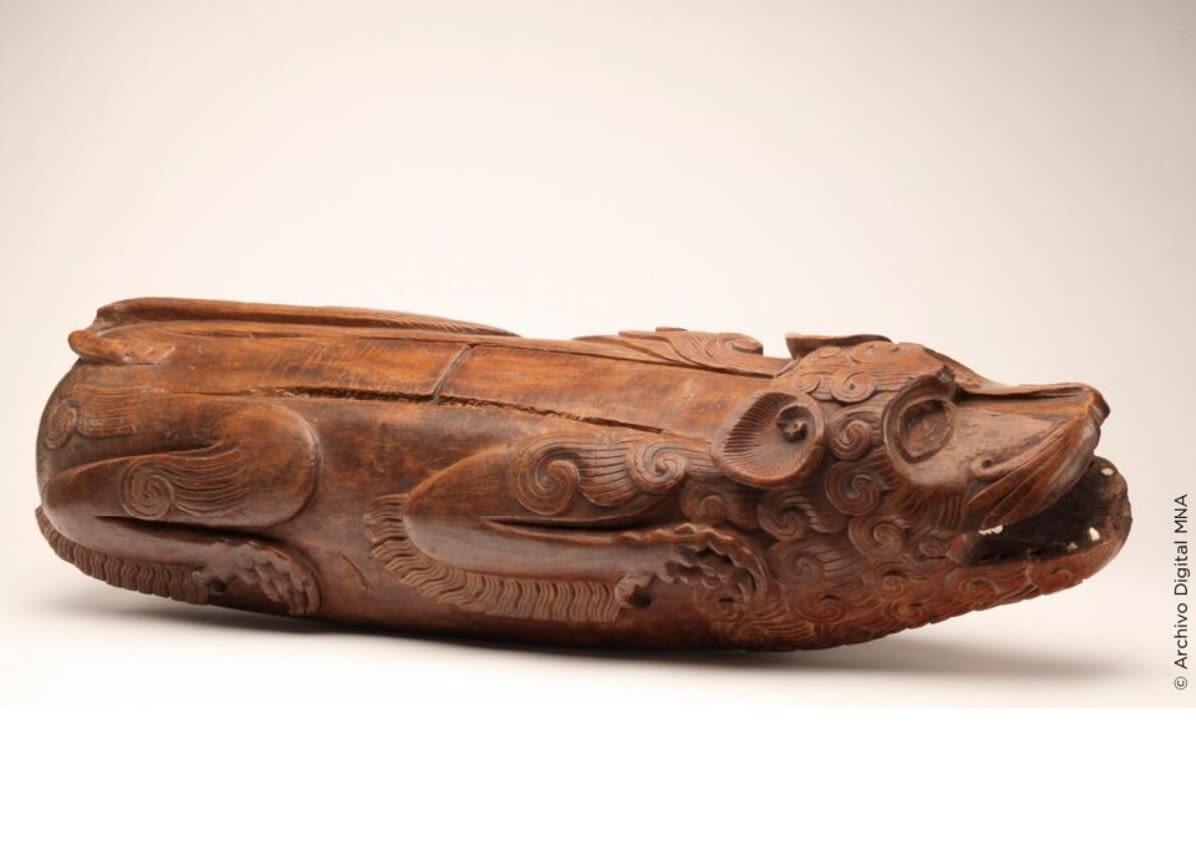
Teponaztli Mexica from Malinalco from the Late Postclassic period (1250-1521). Museo Nacional de Antropología. Coordinación Nacional de Museos y Exposiciones © Secretaría de Cultura. Instituto Nacional de Antropología e Historia. CC BY-NC-ND 4.0 https://repositorio.inah.gob.mx/o-28622
Teponaztli Mexica from Malinalco from the Late Postclassic period (1250-1521). Museo Nacional de Antropología. Coordinación Nacional de Museos y Exposiciones © Secretaría de Cultura. Instituto Nacional de Antropología e Historia. CC BY-NC-ND 4.0 https://repositorio.inah.gob.mx/o-28622

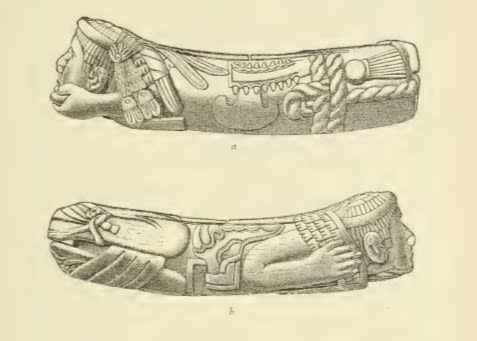
Drawing of the pre-Hispanic Teponaztli of the warrior of Tlaxcala preserved in the National Museum of Anthropology in Mexico City, published in Saville, M.H. 1925. The wood-carver’s art in ancient Mexico. New York: Museum of the American Indian, Heye Foundation, p.63
Drawing of the pre-Hispanic Teponaztli of the warrior of Tlaxcala preserved in the National Museum of Anthropology in Mexico City, published in Saville, M.H. 1925. The wood-carver’s art in ancient Mexico. New York: Museum of the American Indian, Heye Foundation, p.63

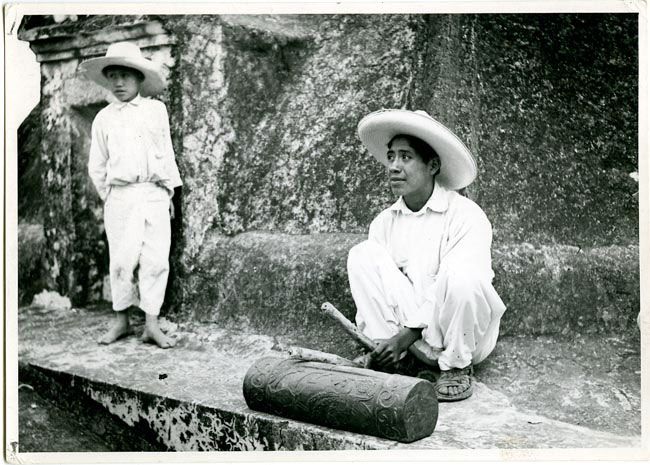
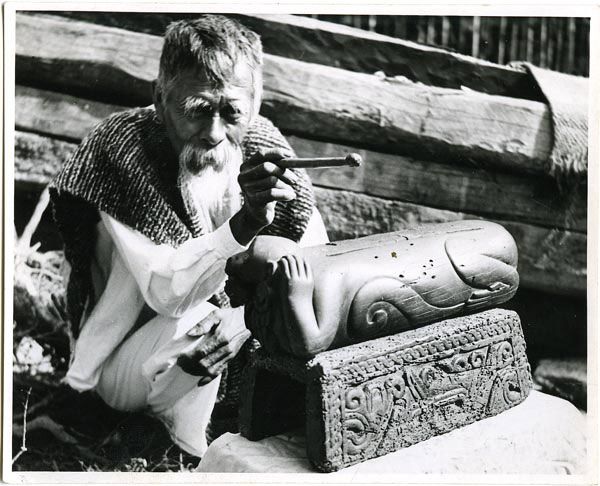
Musician playing the Teponaztli of Tepoztlán photographed by anthropologist Rodney Gallop in the 1930s. Photo published in Gallop, R. 1939. ‘The Music of Indian Mexico’. The Musical Quarterly 25 (2): 210–25, p. 217
Musician playing the Teponaztli of Tepoztlán photographed by anthropologist Rodney Gallop in the 1930s. Photo published in Gallop, R. 1939. ‘The Music of Indian Mexico’. The Musical Quarterly 25 (2): 210–25, p. 217
In 1533, Fray Andrés de Olmos collected a Nahua myth about the divine origin of music in which the god Tezcatlipoca sends Ehecatl, god of the wind, identified with the wise Quetzalcoatl, to the House of the Sun to take away those who play instruments and bring them to earth. When he reached the seashore, Ehecatl called out to the musicians, and one of them responded and followed him, taking with him the art of sound, music, which has accompanied dances in honor of the gods ever since (Léon Portilla, 2007:131).
Among the Otomi people of the Sierra, the divine instruments – known here as b'iti for the drum and b'ida for the xylophone – play a leading role in agricultural fertility ceremonies, setting the rhythm for the dance and cheering the hearts of the extra-human entities summoned to the ritual scene.
Their music is still today a means of communication and sharing between humans and deities.
Teponaztli song
Titoco titoco titocoti
This earth is shaking.
It's a Mexican who starts the song,
and with it causes eagles, causes jaguars to dance.
Cantares Mexicanos, Vol.II, Tomo 1, F.31r.
(Translation from Nahuatl by Bierhorst, 1985:233)
01.
Mate: the favour, the grace
The Sierra Otomi-Tepehua

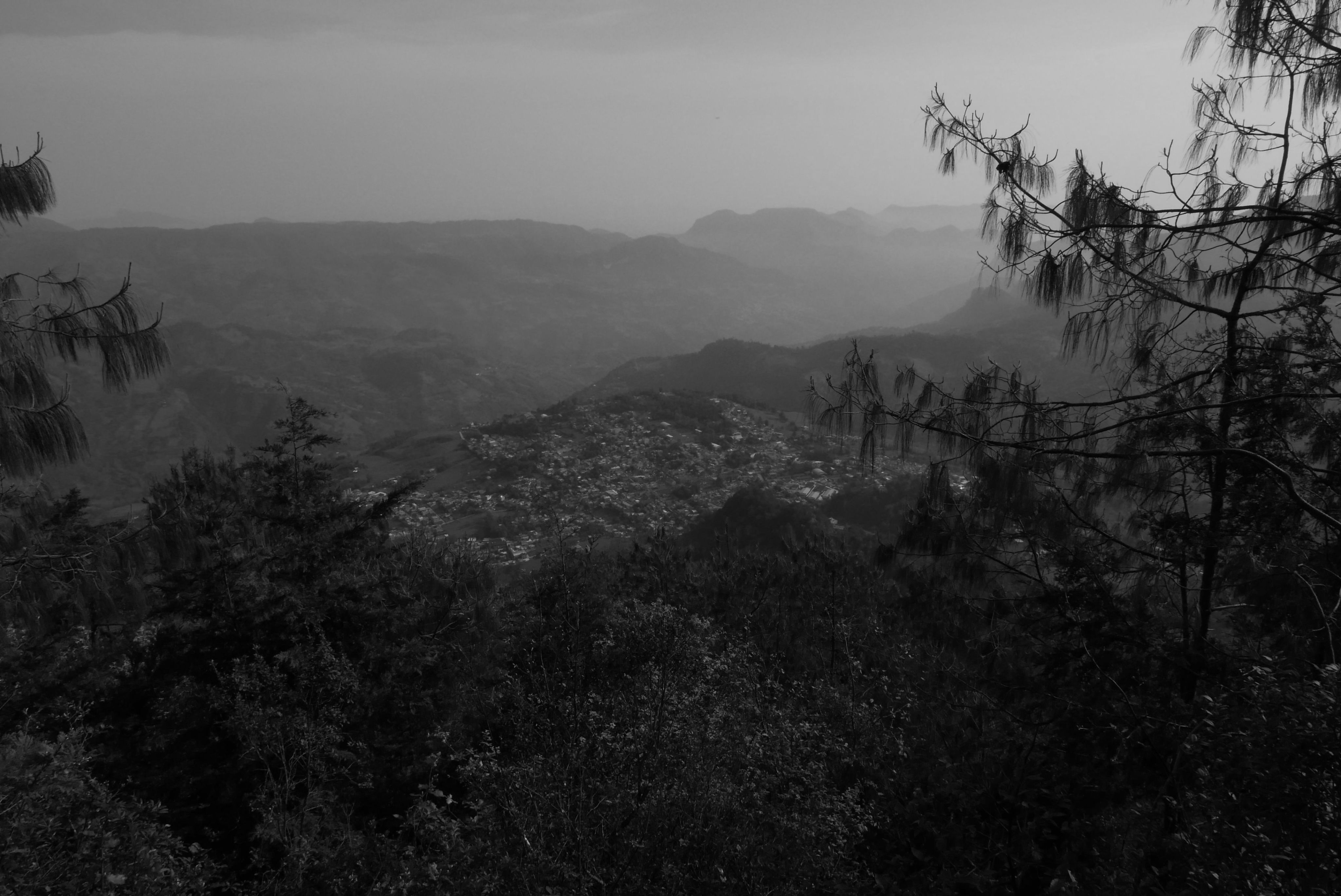
The Sierra Otomi-Tepehua is the portion of the Sierra Madre Oriental that extends along the border between the Mexican states of Hidalgo, Puebla and Veracruz. It is characterized by great climatic and cultural variability.
The landscape – which descends from the peaks over 2000 mt. above sea level in the municipality of Tenango de Doria to the hills of the southern Huasteca – is inhabited by villages belonging to the Otomi, Totonac, Nahua and Tepehua ethnolinguistic groups.
The inaccessible nature of the region and the absence of large ceremonial centres slowed down the process of evangelization of the native populations without, however, preventing the pervasive penetration of missionary orders.
Indigenous religiosity today is pluralistic and multifaceted, embracing various Protestant groups alongside the Catholic one. The latter continues to fuel the more traditional indigenous ritual practices, linked to agricultural fertility and the alternation of rainy and dry seasons, with extraordinary creativity. The privileged interlocutors of the rites are the extra-human entities that govern natural resources: spirits of the mountains, waterways, and seeds of food plants, to which offerings and festive celebrations are dedicated in order to build a reciprocal relationship between them and the social group.

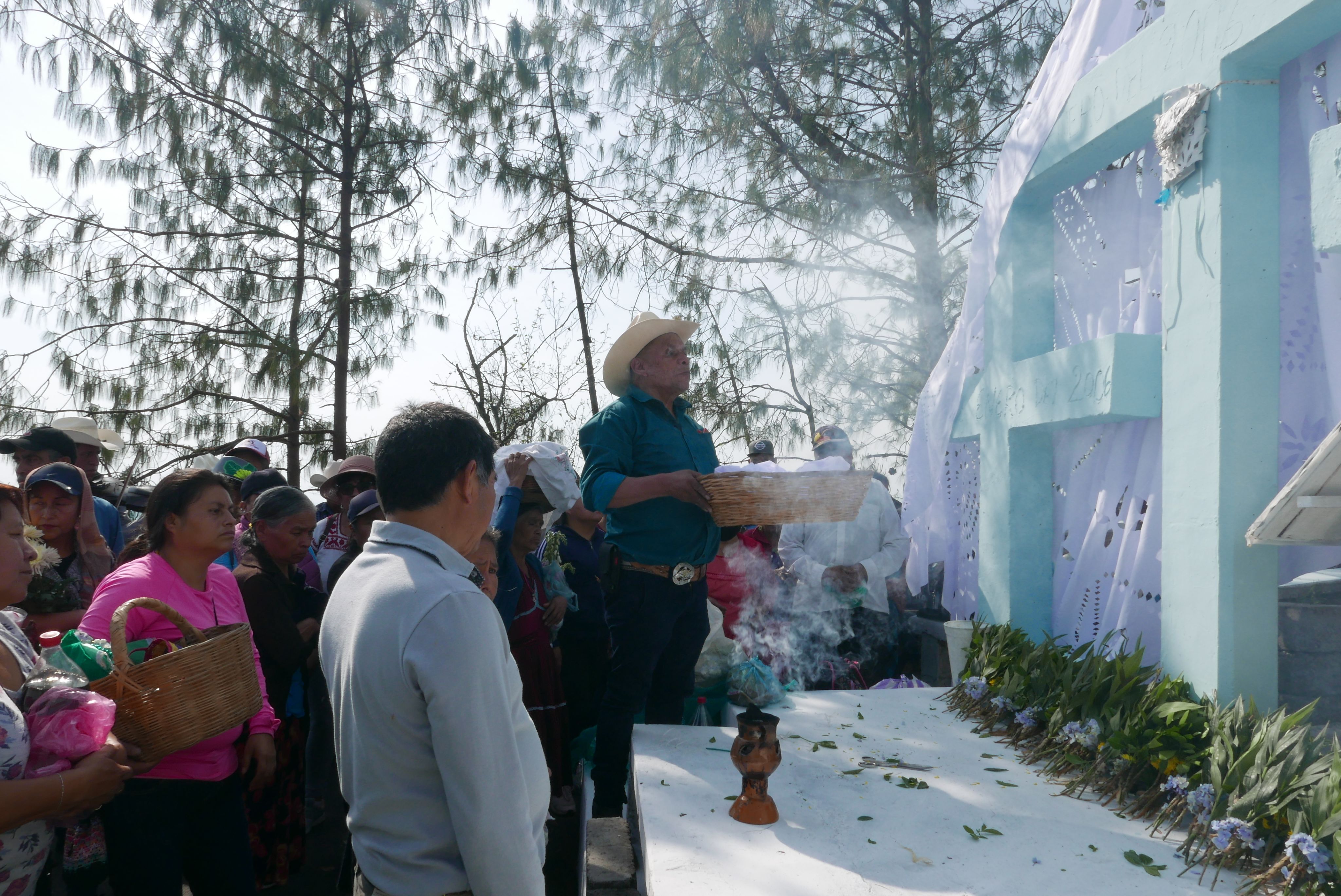
Ritual specialist Braulio Domingo presents the group of pilgrims before the altar in the mountains. Photo by Giulia Cantisani (2022)
Ritual specialist Braulio Domingo presents the group of pilgrims before the altar in the mountains. Photo by Giulia Cantisani (2022)
The ritual complex related to the agricultural cycle and community well-being is called costumbre in Spanish and mate (favour, grace) in Otomi.
Mate alludes to the grace that people hope to receive from entities in the form of the goods necessary for human survival: water, the fruits of the earth, physical health, individual and collective peace. In return, human beings offer them their filial devotion, consisting of faith and ritual commitment, the effort of pilgrimages and the joy of music and dance.
As José Eriberto Alvarado Morales points out (whose family has organized the Feast of the Holy Cross in the Otomi community of Tenango de Doria for several generations), referring to the spirit of the sacred mountain conceived as a cosmic container of water and seeds, "They call it xita t'oho, the grandfather, the mountain. Where there is custom, there is tradition, he arrives" (16/08/2024).
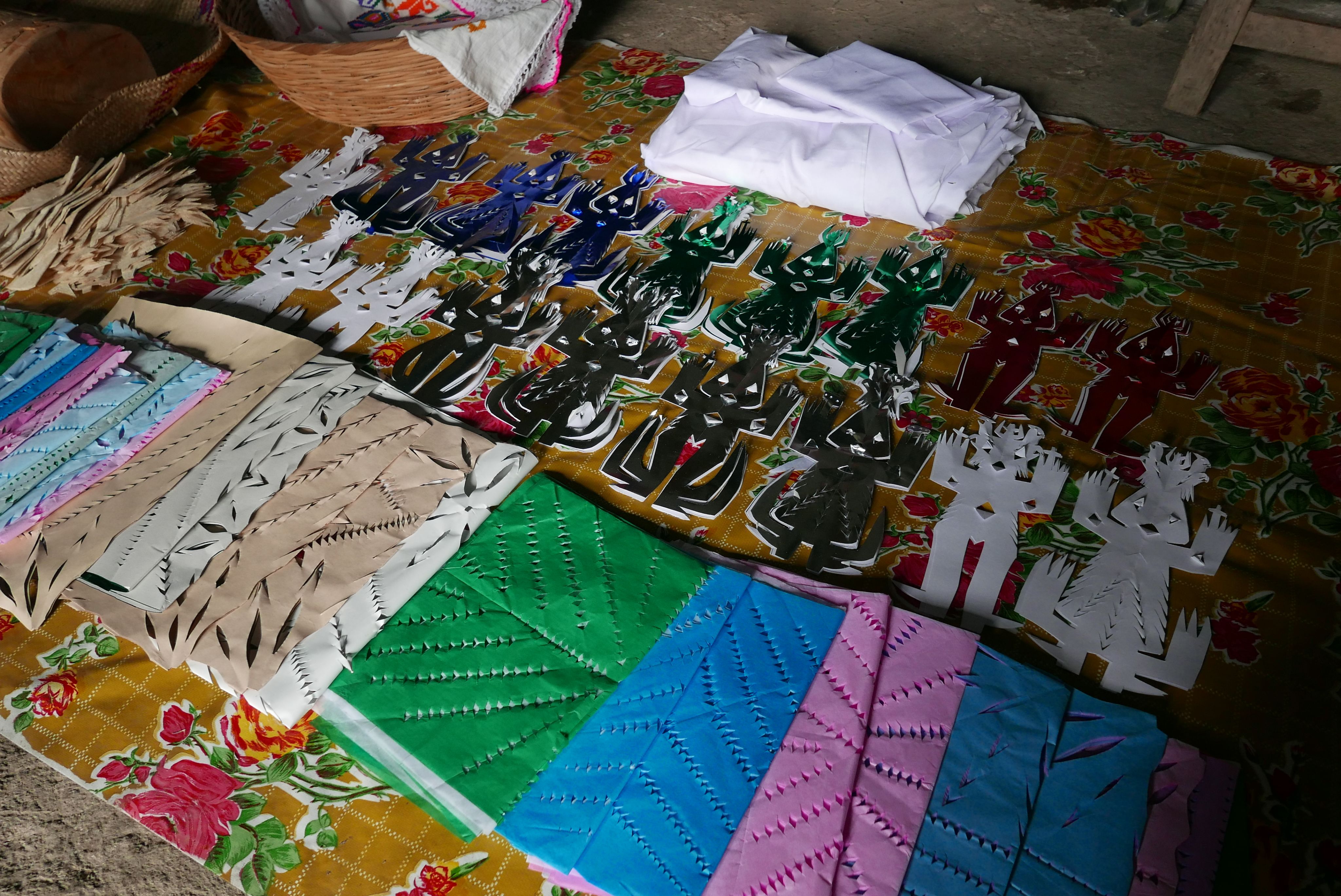
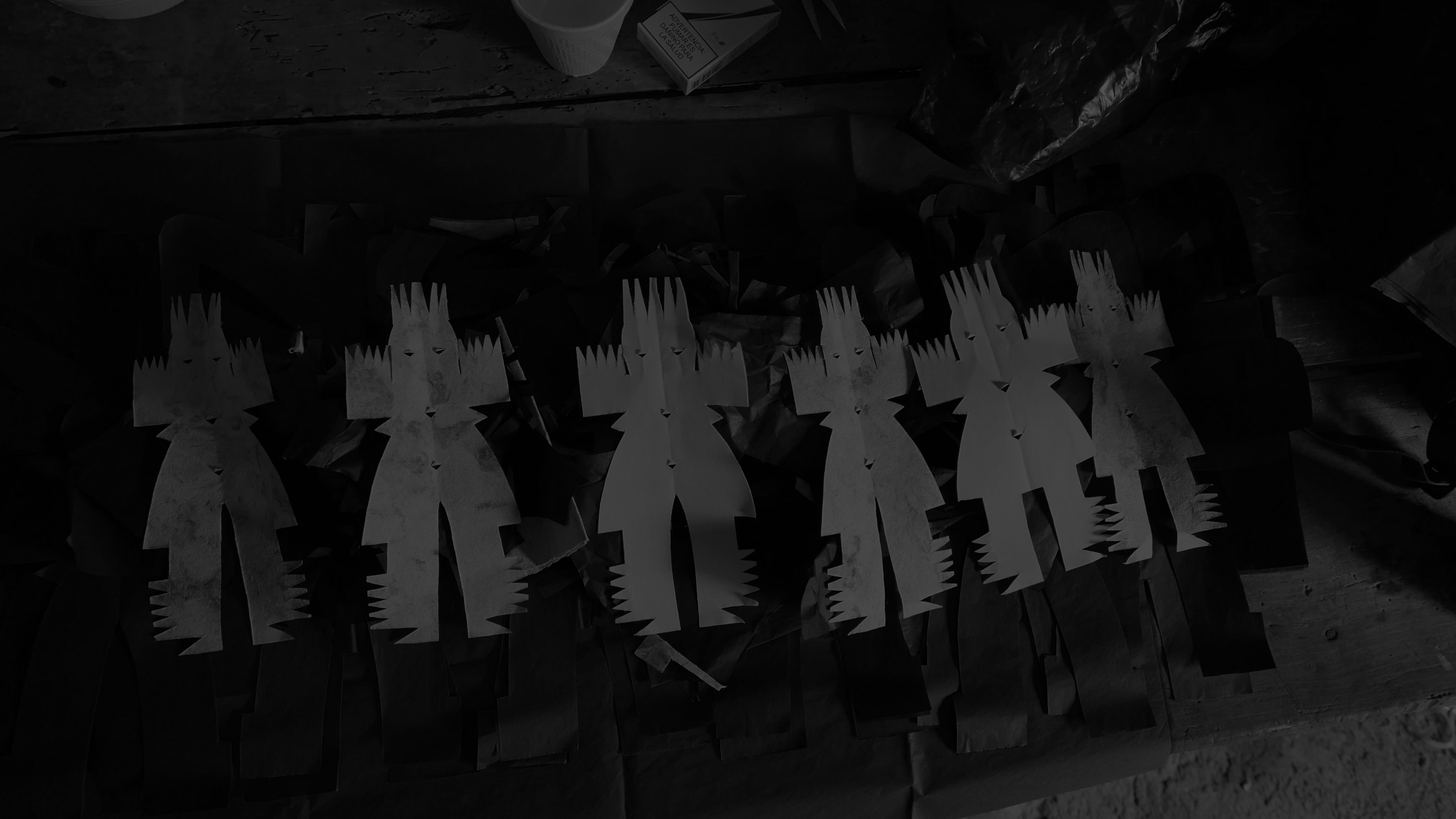
Cut-out paper figures used in rituals as temporary receptacles for incorporeal entities Photo by Giulia Cantisani (2022).
Cut-out paper figures used in rituals as temporary receptacles for incorporeal entities Photo by Giulia Cantisani (2022).
[The mountain] is very delicate:
just as it gives to us, we must give to it.
It gives us water, it feeds us, it gives us corn, everything.
It contains beans, tomatoes, it is the mountain of seeds.
That is why we worship the earth and the seeds, so that they do not let us die of hunger.
He [the spirit of the mountain]
will not let us die of hunger, he will not let us die of thirst.
Preparing flowers for offerings. Photo by Giulia Cantisani (2025)
02.
Xita toho: the grandfather
The Mountain of water and the oratory

The sacred mountain of Tenango de Doria is a male entity endowed with personality, volition and capacity for action, referred to by the term xita (grandfather) connoting in an affectionate sense the relationship between the spirit and the community of believers.
In his belly, beneath the earth's surface, the grandfather preserves the vital principles of organisms and water, which he can release into the world, causing floods, or retain, causing famines.
His generative power is equal to his destructive potential: the need for rituals lies not only in the community's request for life, but also in the promise to remember the spirits and honor them with a celebration to ward off their violent reaction.
The fragility of existence, both of human beings and entities, is addressed with an agreement of mutual care.
On May 3rd, the feast of the Holy Cross is celebrated, which unfolds over three days along a route between the oratory of El Mamay and the top of the mountain, involving a plurality of extra-human figures: the grandfather, the holy earth, the water creature, fire, and the various benevolent or malevolent spirits that traverse the landscape.
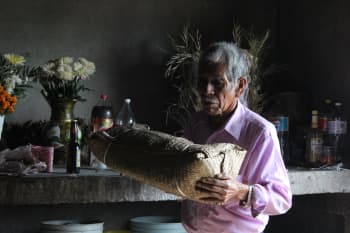
Inside the oratory are preserved their images cut out on paper by the ritual specialist, and a pair of wooden musical instruments consisting of the xylophone, b'ida, and the vertical drum, b'iti, whose sound belongs to the entities, which guide the musician in learning and correctly performing the pieces.
Eriberto explains that "This music gladdens the heart [of the entity], [its] power. That is why when the music starts, the woman who sings begins, and the old man who awakens her soul through music begins to arrive. Thanks to the music, the heart and spirit are awakened" (16/08/2024).
The sound of the instruments penetrates the heart and spirit of both the entity and the woman who sings in a trance, lending her voice to the invisible interlocutor.
Music becomes a vehicle of presence and contact, an instrument of communication between humans and extra-humans.

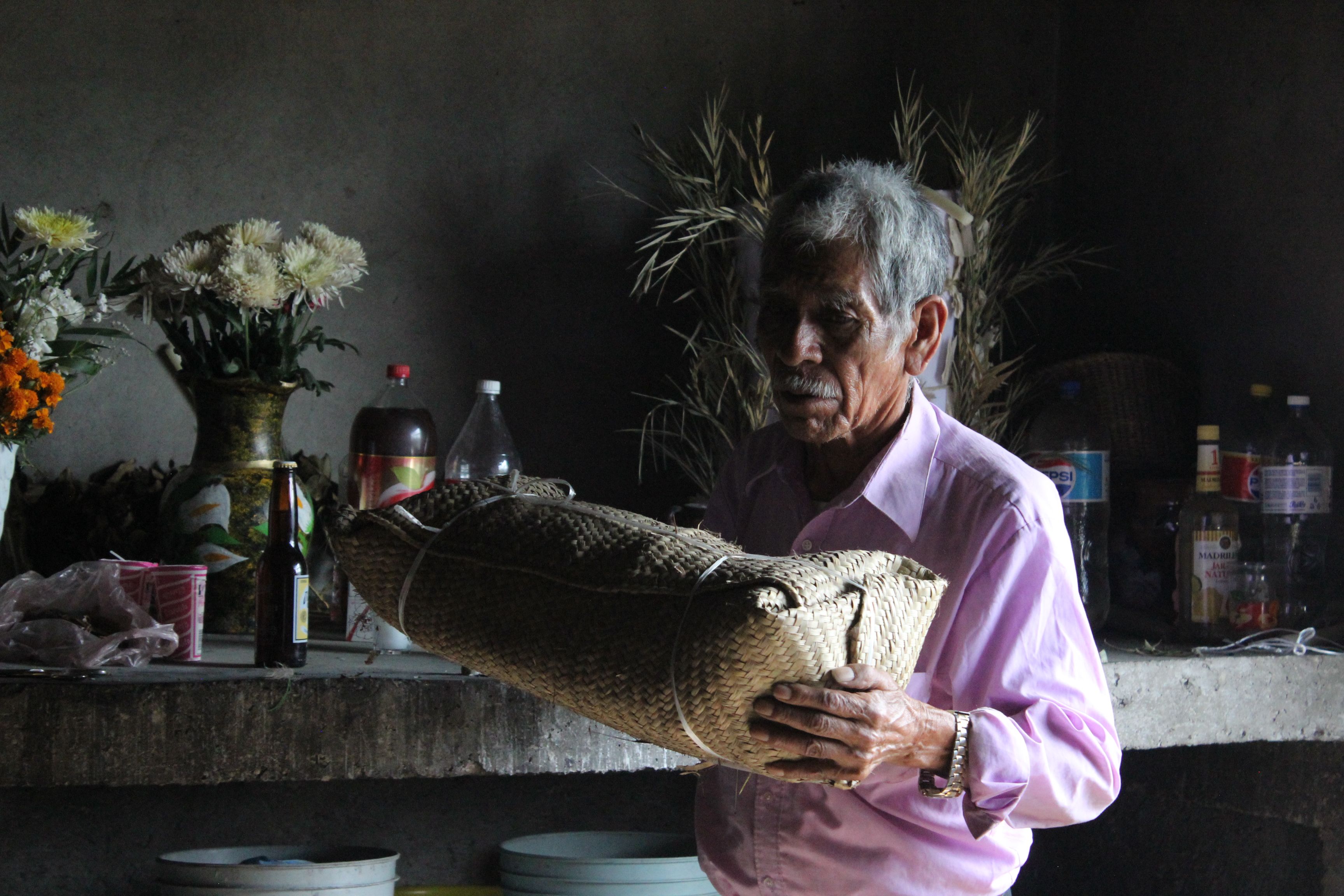


It contains a lot of water:
the mountain can destroy the entire village, the town hall.
If it wants to come out [release the water inside], it can destroy everything.
You can't see that there is a lagoon there, you can't see the water coming out, but its spirit contains a lot of water.
It contains a lot of water in its heart.
It can destroy the town hall at any moment.
03.
Ra nzaki: the Strength
The power to be, the power to act

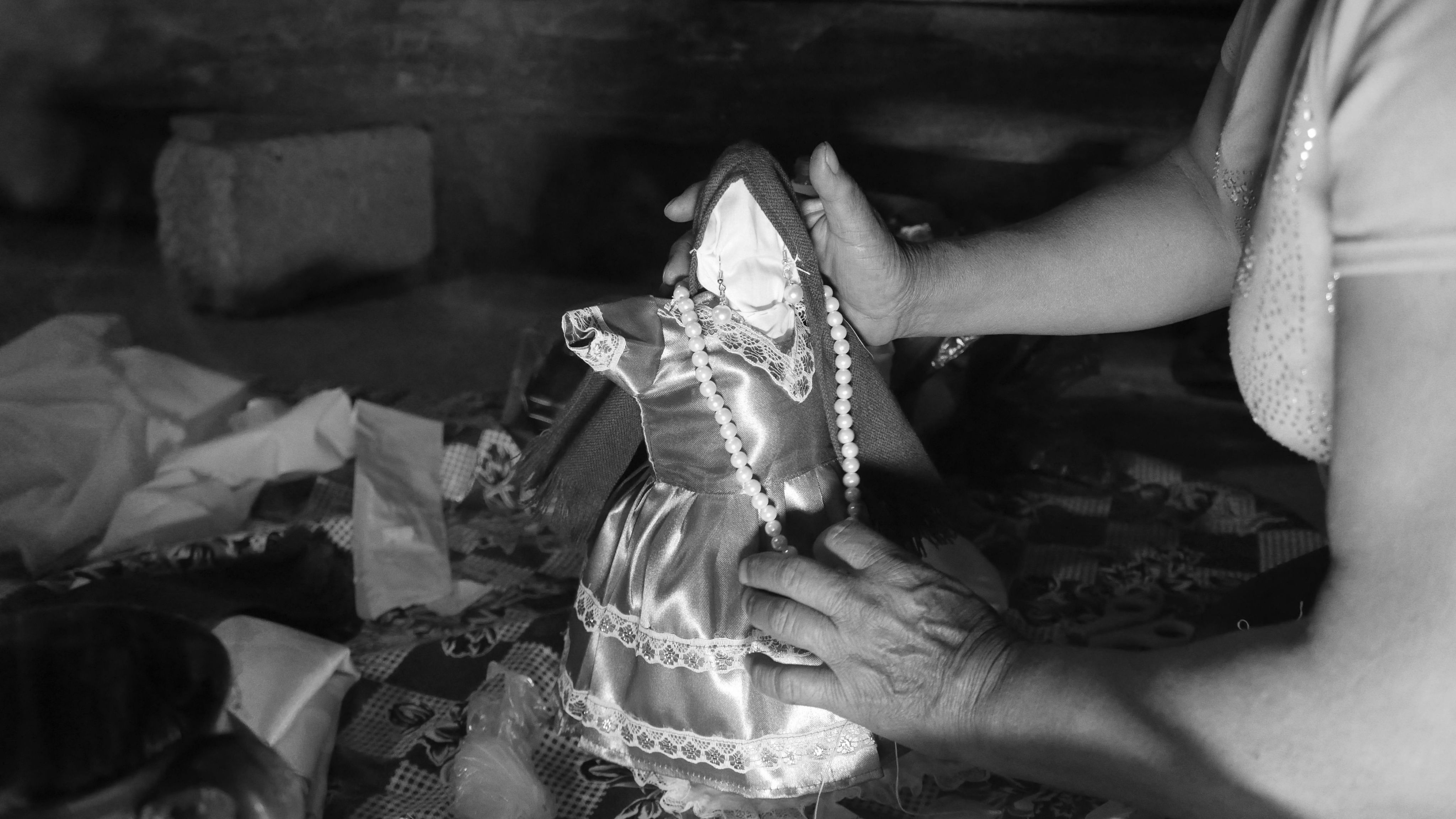
The specialist summons the entities by creating anthropomorphic figures out of paper to offer them as receptacles: temporary bodies that allow the spirits to be present in the human dimension, experiencing the fragrance of incense, food and the pleasure of music and dance.
In Tenango, the figures are called ra nzaki (the forces), referring both to their role as substitutes for extra-human power and to their ability to imprint vital force on matter.
After a purification ritual, aimed at evoking and warding off evil influences, the specialist sets up a multitude of images differing in color, shape and type of paper, which are activated with a few drops of bird's blood in a ceremony called benediction.
They are then distributed in various points of the ritual space, from the oratory to the top of the mountain, creating an animated geography.
The blessed artifacts acquire the power to be, manifesting the personality of the spirit with which they are associated, and the power to act, exerting their influence on those present. On the altar of the oratory, the figures of the earth, the mountain and the water, dressed in miniature clothes, are kept in a wooden box, accompanied by seeds from cultivated plants and gifts.
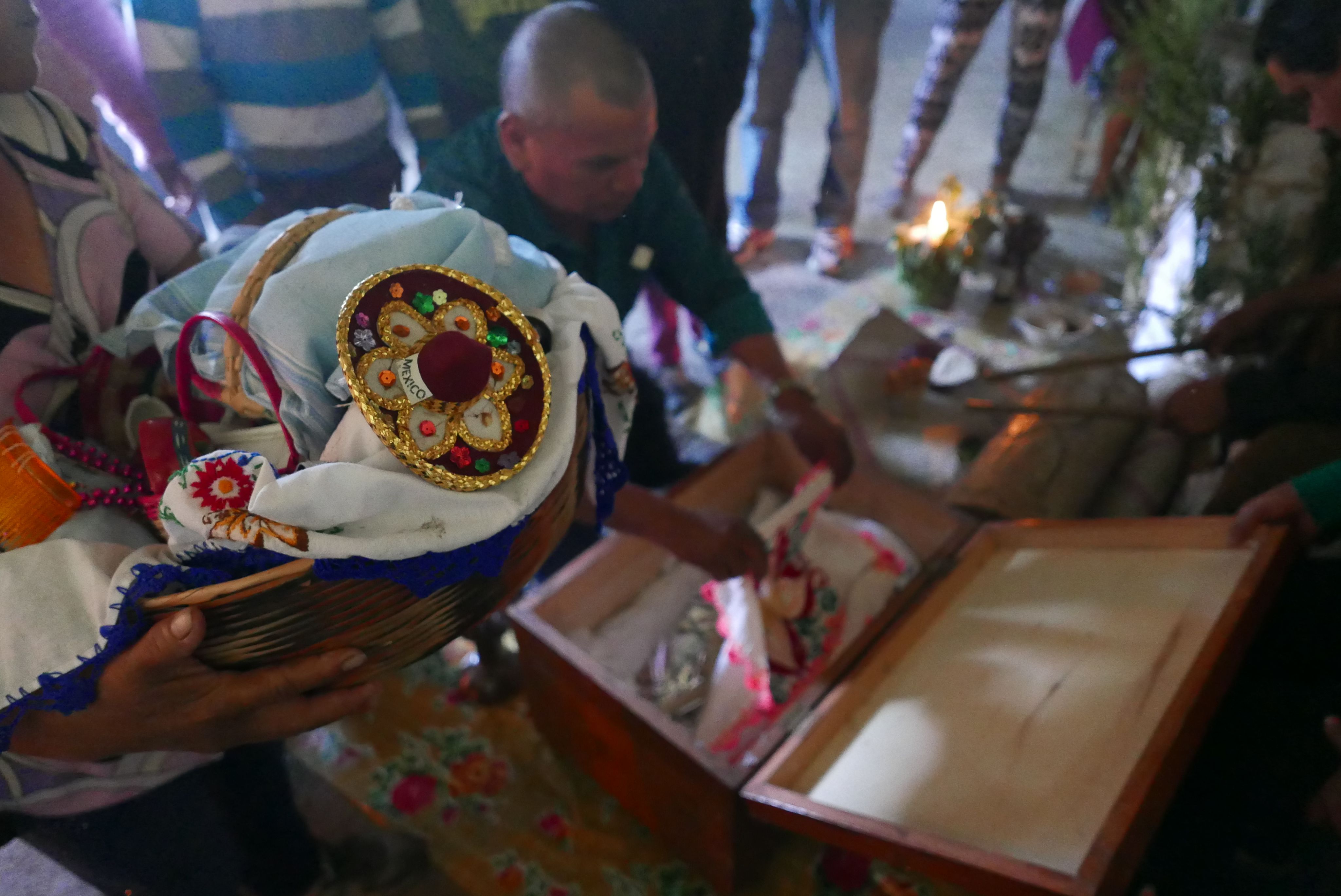
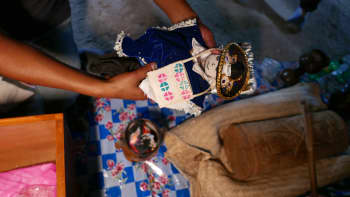
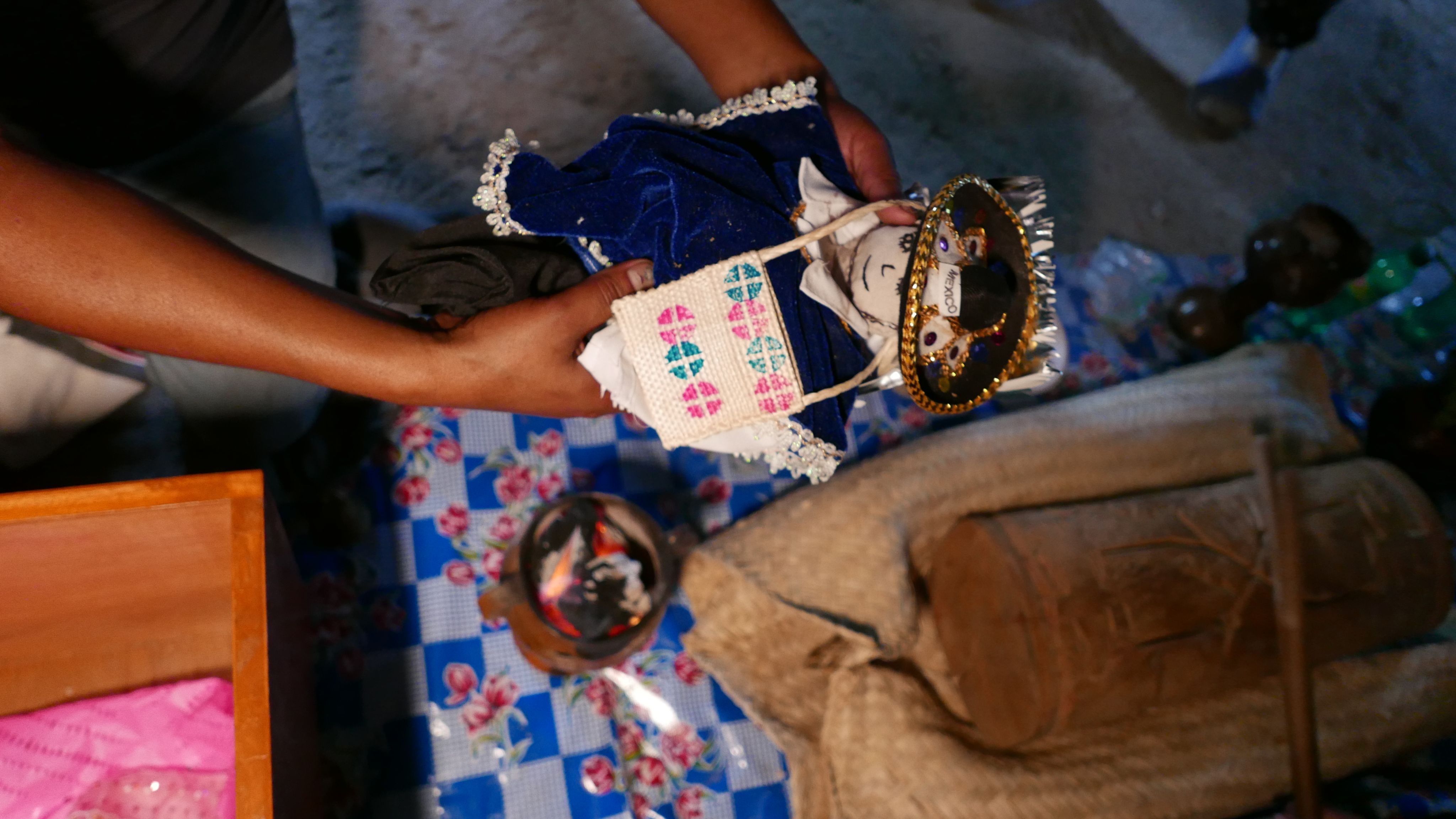
On May 2nd, the ritual specialist opens the box and carefully removes the santitos, as they are called in Spanish, to show them to those present, who kiss them gently.
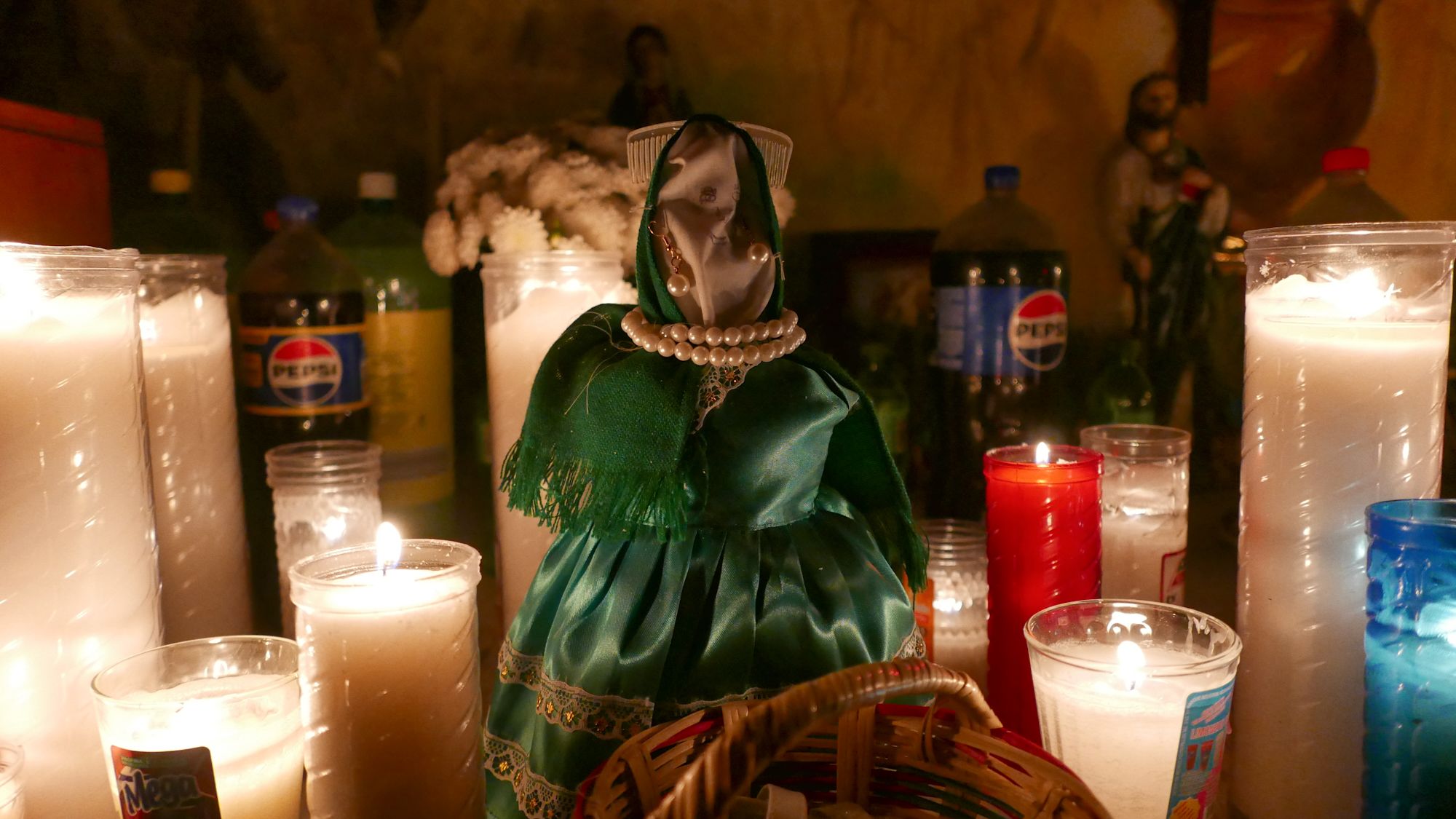
The women sew bright green dresses onto three bottles of water that flows from the mountain (incorporations of the aquatic entity) decorating them with jewellery and small objects.
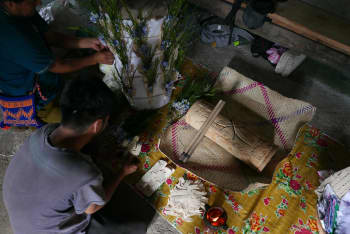
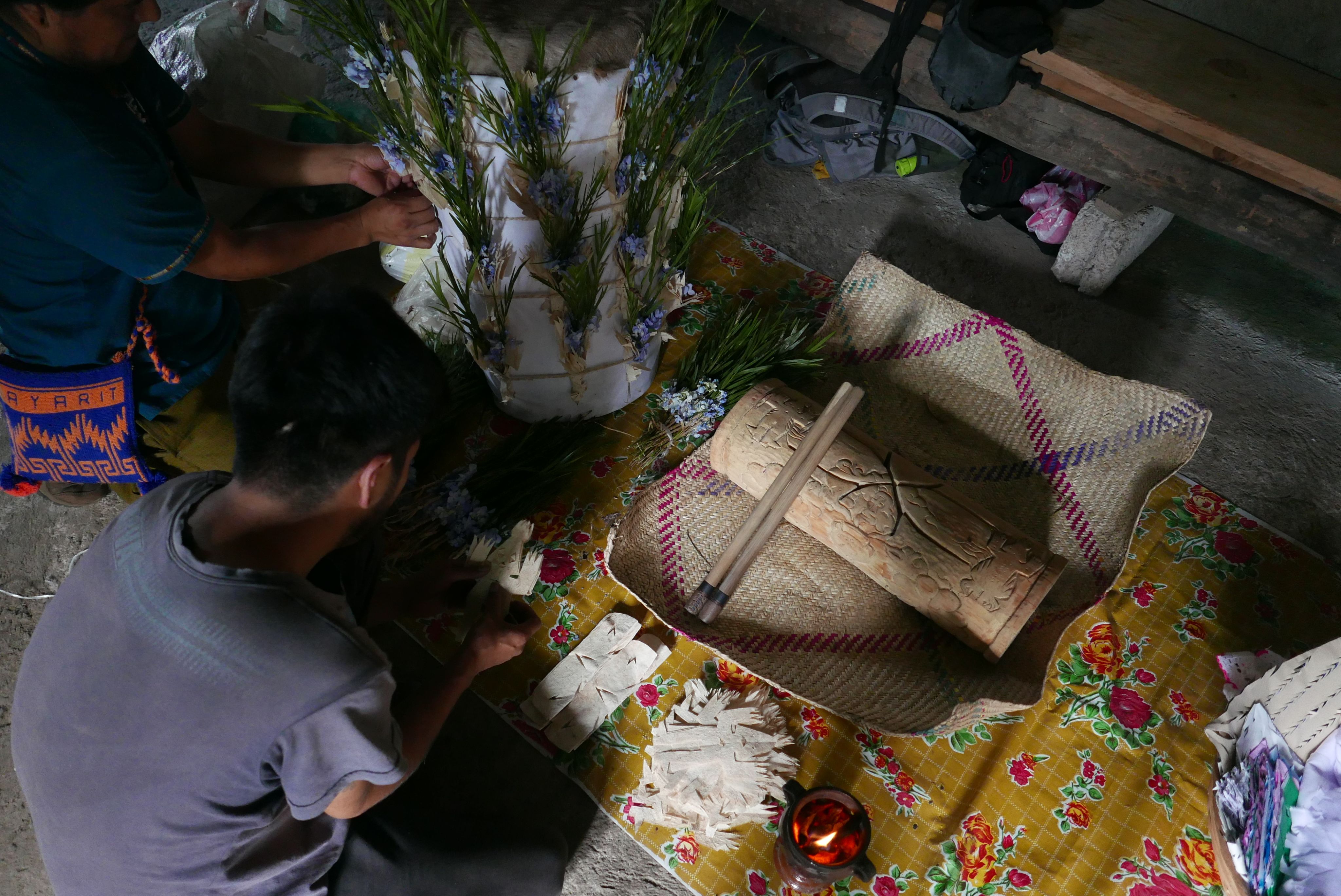
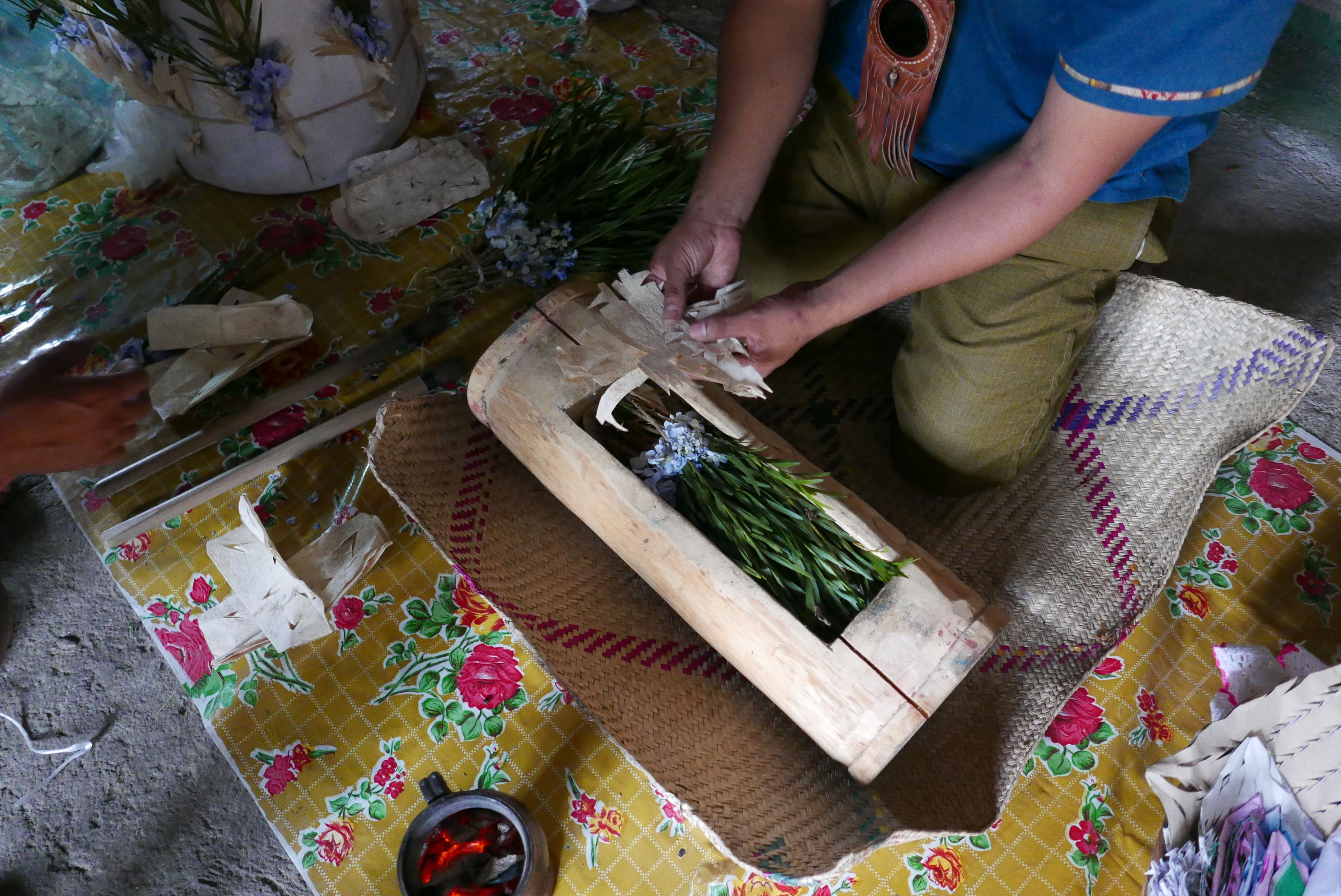
Before playing them, the musical instruments are renewed. The musicians strip them of the figures and flowers from the previous year and dress them with new cut-outs and woven palm leaves to give them renewed vitality.
Their handling is governed by strict rules: the masculine and delicate, or dangerous, nature of the instruments prohibits women and children from touching them, on pain of illness as punishment.
Attention to gestures and the emotional tone of the event are essential elements for an effective relationship with the extra-human world.
They pour the blood of a white chicken onto the wood, place its figures all around the drum and the palito [xylophone] and say that [the instruments] are baptised. After baptising them, they have power!
And who gives them power?
The mountain!
Because they are his instruments, his grandfather's, and it is he who gives them power and makes dance, makes those who play jump.


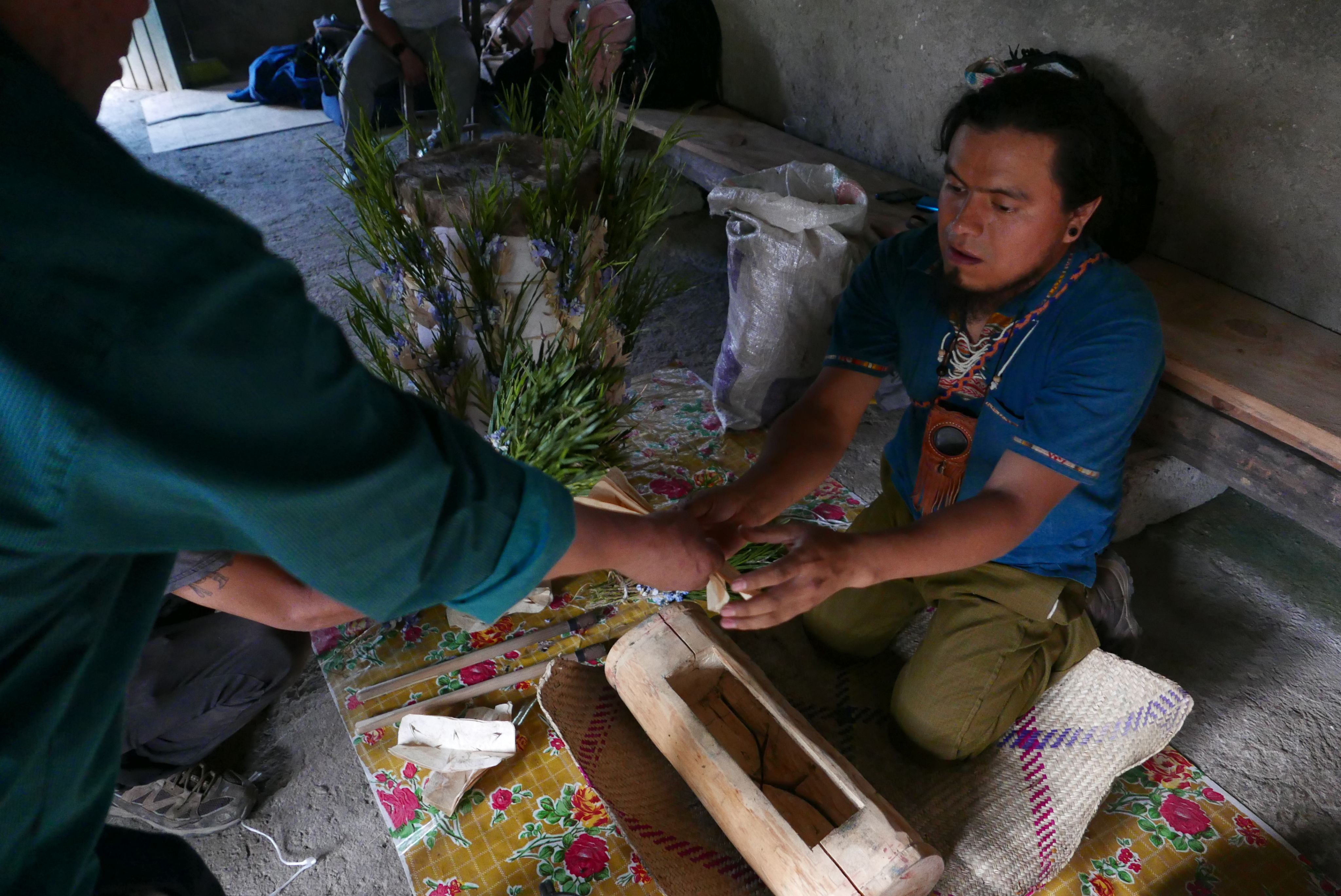




Fernando Ibarra Molina receives the new figures to be inserted into the xylophone from the ritual specialist. Photo by Giulia Cantisani (2022).
Fernando Ibarra Molina receives the new figures to be inserted into the xylophone from the ritual specialist. Photo by Giulia Cantisani (2022).
Figures made of paper obtained from plant fibres (heliocarpus appendiculatus) inserted inside the xylophone. Photo by Giulia Cantisani (2022).
Figures made of paper obtained from plant fibres (heliocarpus appendiculatus) inserted inside the xylophone. Photo by Giulia Cantisani (2022).
Ritual specialist Braulio Domingo opens the box that holds the santitos. Photo by Giulia Cantisani (2022).
Ritual specialist Braulio Domingo opens the box that holds the santitos. Photo by Giulia Cantisani (2022).
A child kisses the santito figure as a sign of devotion. Photo by Giulia Cantisani (2025).
A child kisses the santito figure as a sign of devotion. Photo by Giulia Cantisani (2025).
Incorporation of the aquatic entity into a dressed and adorned bottle of spring water. Photo by Giulia Cantisani (2025).
Incorporation of the aquatic entity into a dressed and adorned bottle of spring water. Photo by Giulia Cantisani (2025).
The faithful dance in front of the altar, holding the dressed water bottles and the basket with the santitos in their arms. Video by Giulia Cantisani (2022).
The faithful dance in front of the altar, holding the dressed water bottles and the basket with the santitos in their arms. Video by Giulia Cantisani (2022).
04.
Ra hyandi: She who discovers
Song, music, dance

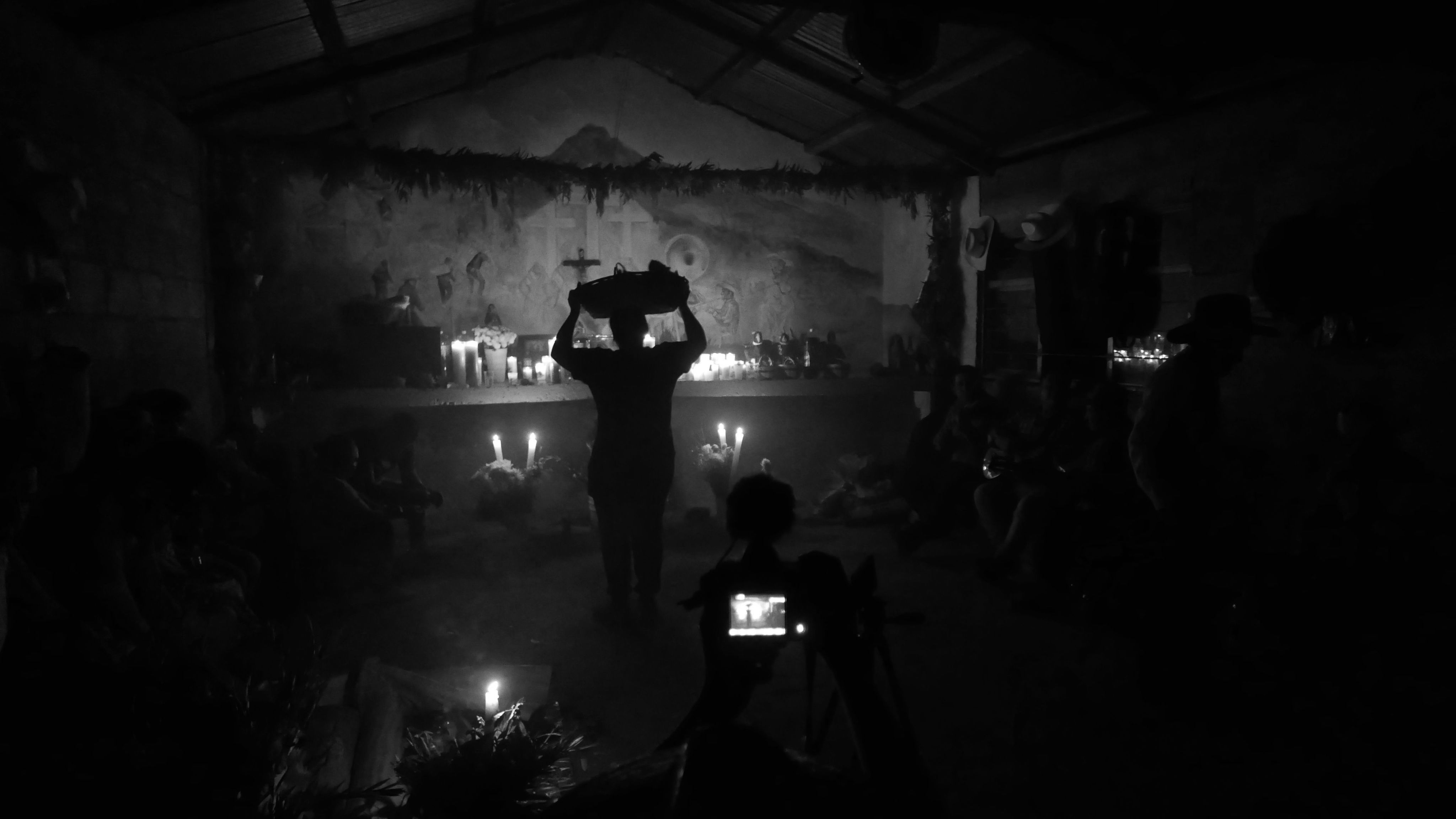
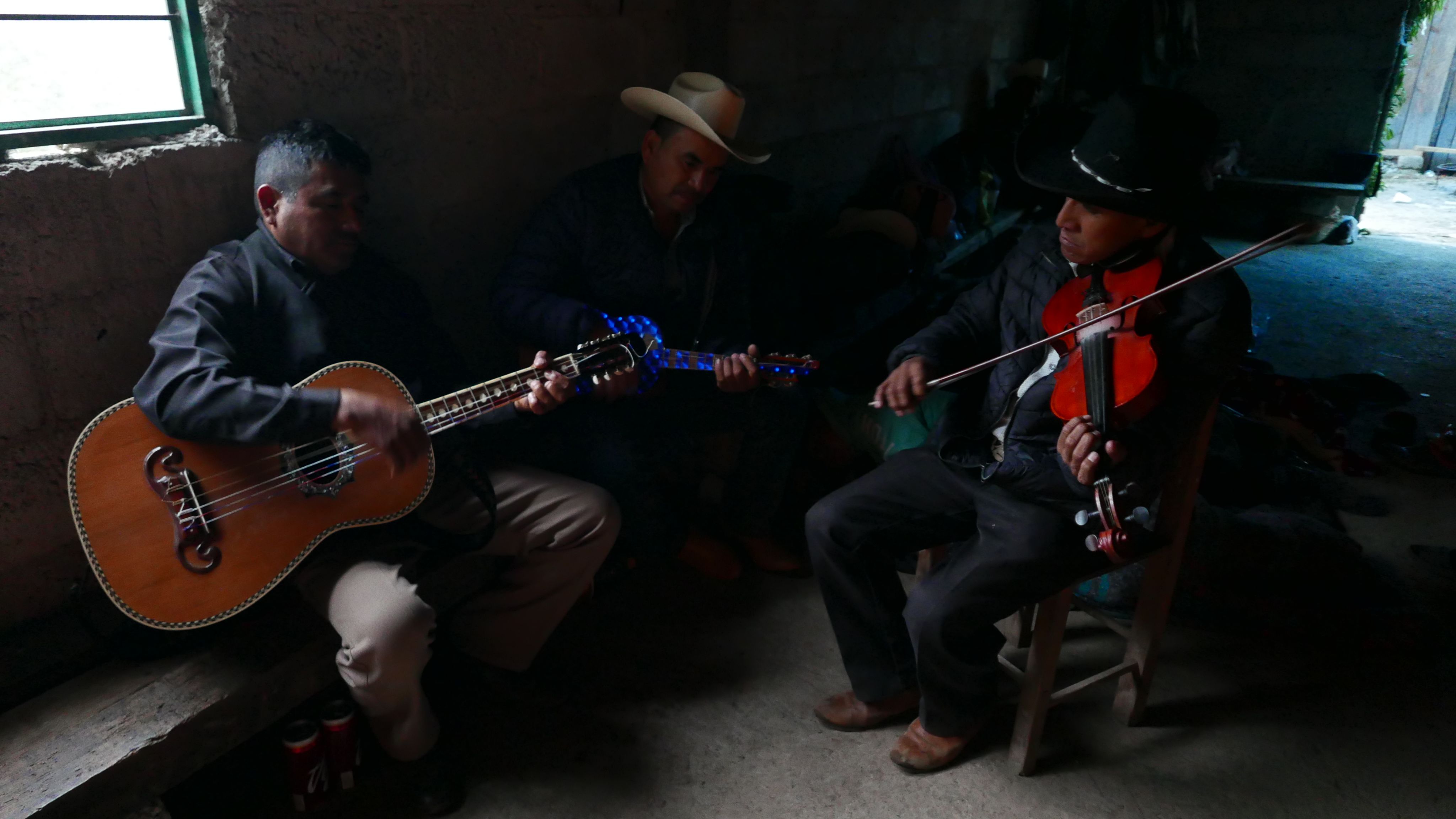
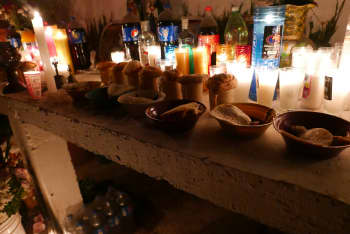
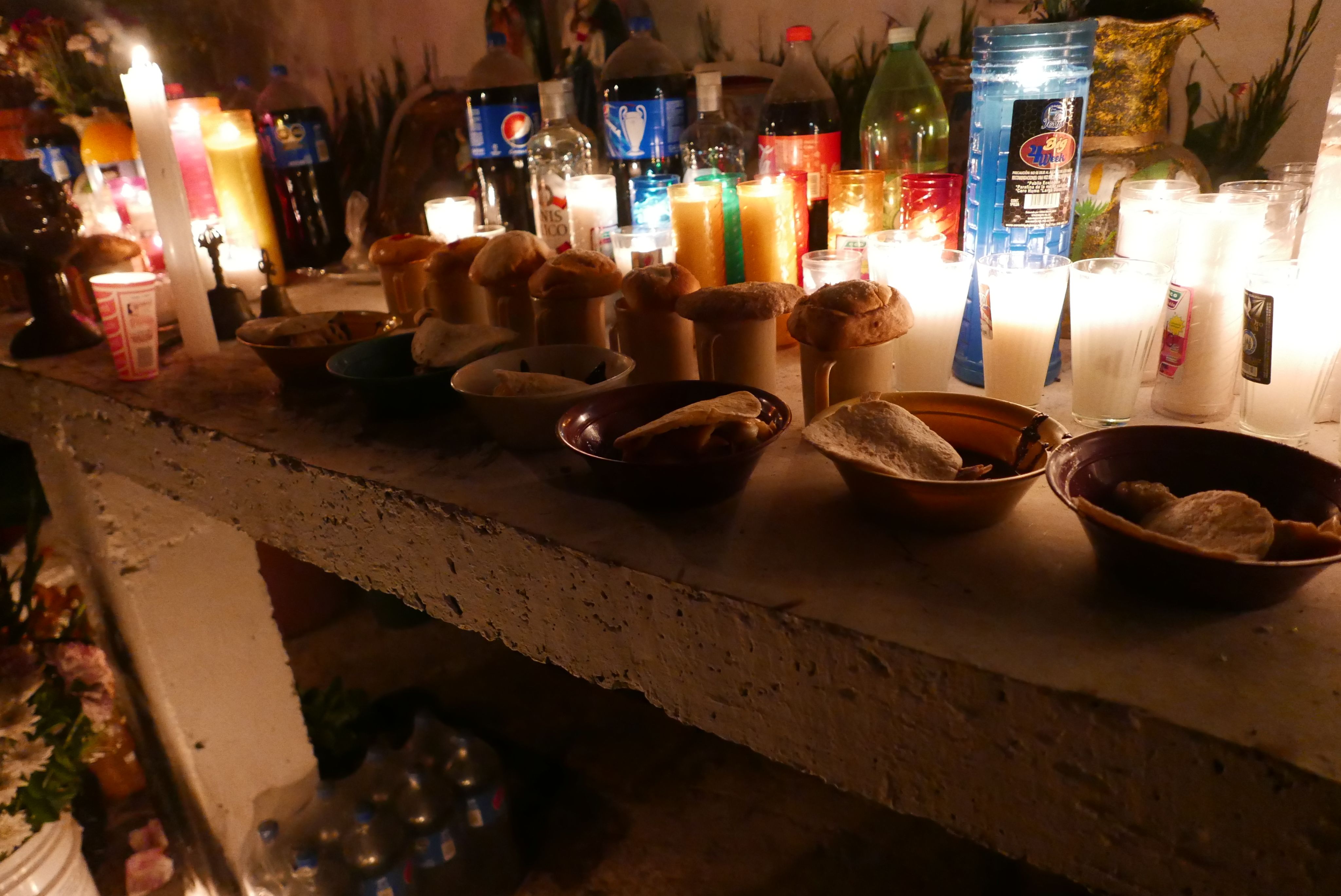
On the night of May 2nd, people dance in the oratory holding dressed bottles of water in their arms and, in a basket resting on their heads, they rock the santitos to the sound of the xylophone and drum accompanied by a trio of violin and guitars. On the altar and in front of the instruments, an offering of mole, tortillas, chocolate atole and bread is placed, which the following morning will be distributed among those present in a moment of communion between human beings and their invisible guests.
The moment of dance and music is when the entity can speak through the singing of those who have the gift of “discovering”: seeing what is hidden from others, becoming mediators of divine communication. Those who sing in a state of trance are called ra hyandi (from the verb i handi, to see) or ra zi doni (he who eats the flower), referring to the custom of some singers to chew Santa Rosa leaves - the personification of marijuana (cannabis indica) – to achieve a state of intense concentration.
In Tenango, Claudia Tolentino Sevilla – who has possessed a gift since childhood without needing to take the Santa Rosa – describes how singing comes about "It is the gift that enters me, it is the spirit that enters me. I explain what they feel, what they need to say, I am the one who says it. You feel symptoms, you start to tremble, and the rhythm of the music you are listening to is as if it were moving your body. You lose yourself, and suddenly the spirit arrives, the gift, and you begin to see" (1/01/2025).
Due to the delicacy, and therefore the danger, of the singing performances, the community of Tenango de Doria has requested that no videos of such sequences be shown. Contact with extra-humans, in fact, requires specific ritual precautions and a deep respect not only for the content of the message, but also for the very experience of proximity and intense intimacy with the spirit.
The words Claudia conveys may refer to the ritual being performed, for which the entity gives thanks or points out shortcomings, as well as to future events or circumstances of particular uncertainty.
An exchange that becomes a tool both for sealing an alliance and for finding one's way in the world.
The person who discovers has the gift for which the mountain speaks, water, earth, fire, winds.
Why do these people speak?
Because they want to let others know what is about to happen, because there are times when difficulties arise, or they give thanks for the flowers they have received, for the offering.
All this is a whole, everything that is done is left in the mountain.
05.
Mäkä Ponti: the Holy Cross
Objects and people in motion

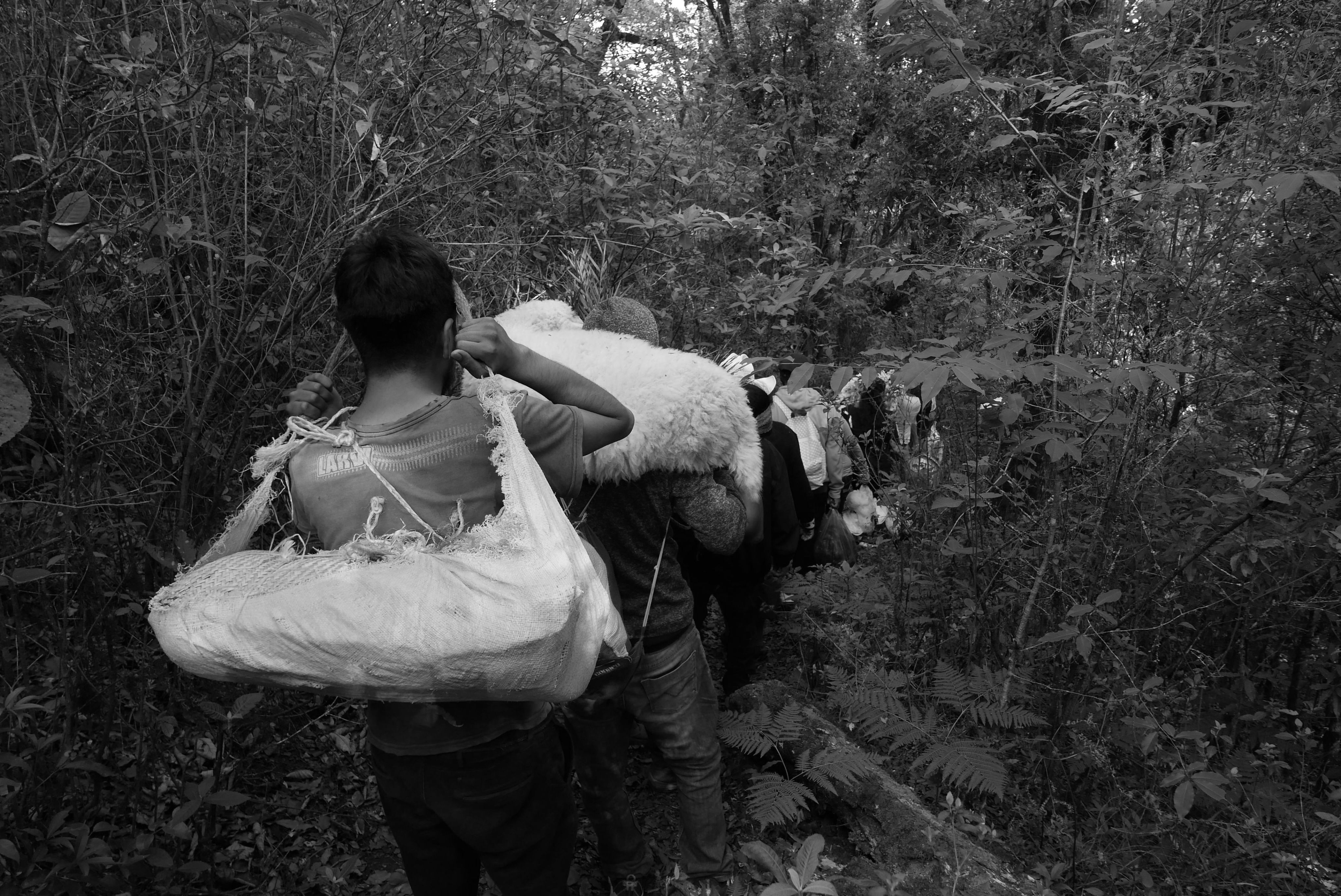
On the morning of May 3rd, those who took part in the night vigil climb back up to the summit. The current ritual specialist, Floriberto Tolentino Pérez, explains that there is a connection between the Mamay's oratory, inhabited by the santitos and instruments, and the spirit of the mountain, which “descended” into the valley during the night for the festival.
The route between the two points is marked by 10 stops at places where water flows, where woven palms and food offerings are left, honoring the mountain along its entire vegetal body.
When the procession of pilgrims reaches the top, it circles the altar of the 3 large crosses several times, accompanied by the melody of the trio.
Circular movement is a recurring element of Otomi ritual practice, often performed when entering and leaving a ritual space as a sign of greeting or to establish a link between distant sacred places.
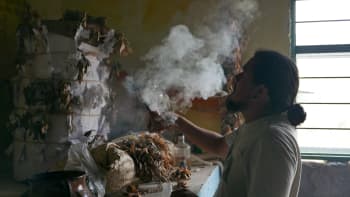
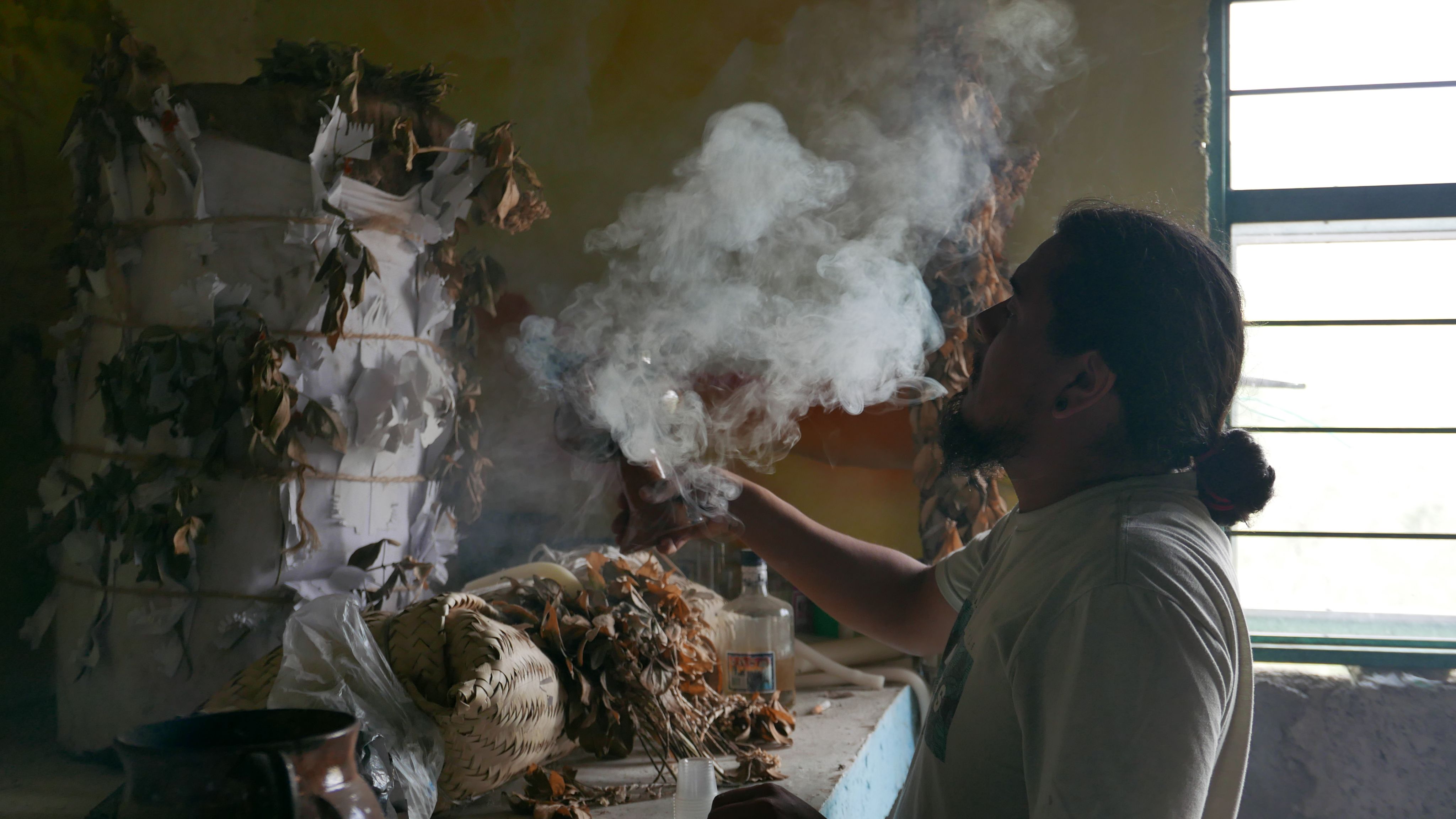
The specialist sprinkles the empty altar with incense smoke and begins to set up the offering of palms and flowers, food, candles and prayers. The drum and xylophone pair, carried on the shoulders of the musicians along the path through the woods, resumes its music.
The sacrificial dimension of this phase is expressed not only in the difficulty of the journey, but also in the animals, which represent both a gift of life and food for the entities.
The 3 crosses are wrapped in white cloth, alluding to Christ's shroud, and 3 white roosters are placed on their arms, while a white lamb is danced in front of the altar and then released into the mountains at the end of the ritual.
In the past, the close relationship between the festival and agricultural fertility was manifested by the presence of 12 children, boys and girls, who were led to the top of the mountain wearing crowns and playing rattles, musical instruments associated with the seeds of food plants. The children, whose role was to "awaken the heart of the earth", were called anxe (angels) "Anxe, the children who dance. At each piece of music, the children must dance. They are the ones who give strength to the mountain, because they are angels. They are sinless children with pure hearts" (José Roberto Alvarado Morales, 27/04/2025).
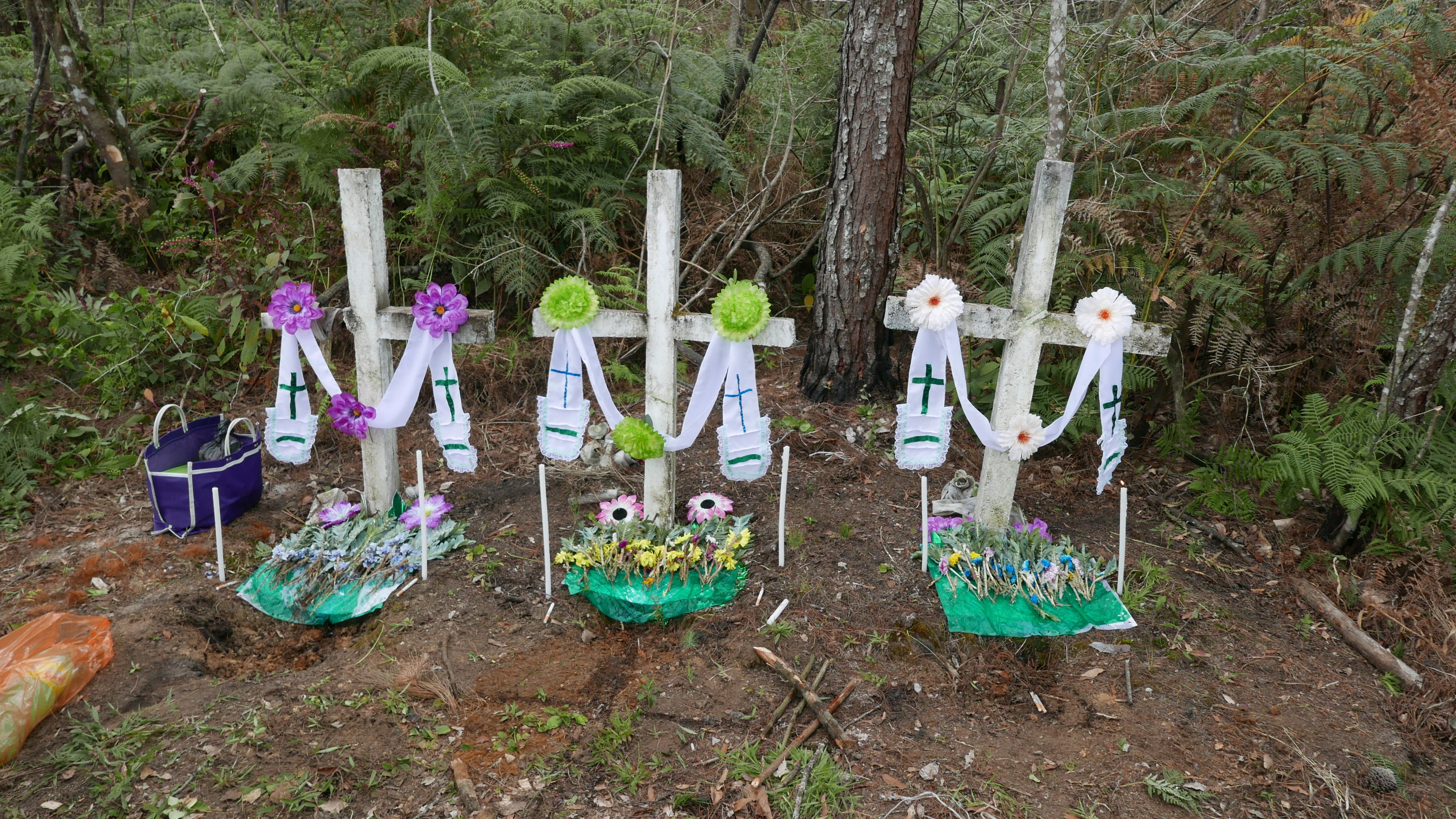
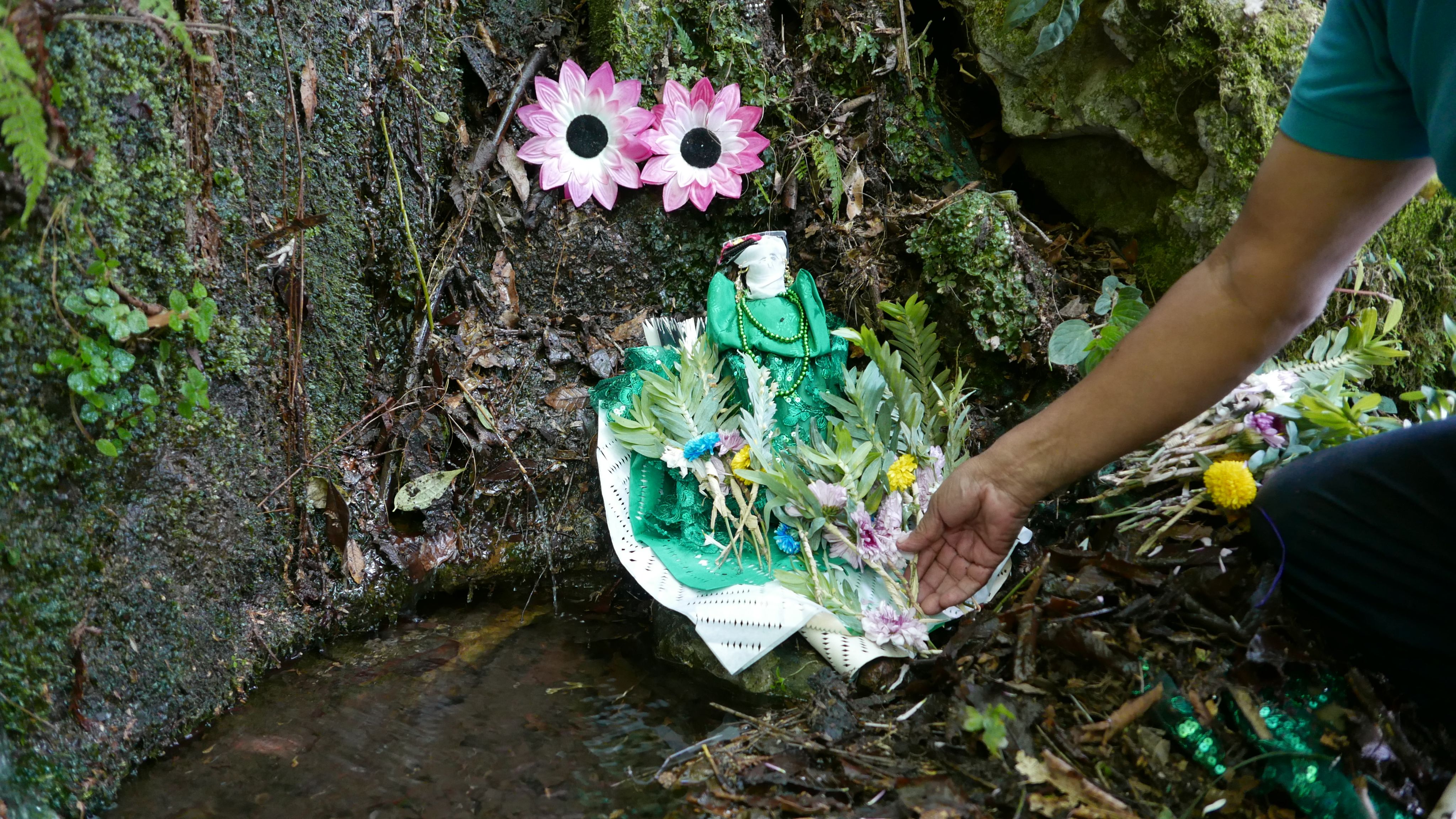
Figure of the water entity dressed in her offering of flowers placed near a spring. Photo by Giulia Cantisani (2025).
Figure of the water entity dressed in her offering of flowers placed near a spring. Photo by Giulia Cantisani (2025).
Fernando Ibarra Molina and Edgar Gonzalez Pioquinto playing the xylophone and drum while the faithful dance in front of the altar on the mountain. Video by Maythe Saldaña (2025)
Fernando Ibarra Molina and Edgar Gonzalez Pioquinto playing the xylophone and drum while the faithful dance in front of the altar on the mountain. Video by Maythe Saldaña (2025)
Ritual specialist Floriberto Tolentino Pérez places the santitos inside the box at the end of the ritual. Video by Giulia Cantisani (2025)
Ritual specialist Floriberto Tolentino Pérez places the santitos inside the box at the end of the ritual. Video by Giulia Cantisani (2025)

Detail of the altar. Cut-out paper figures and flowers are placed next to the image of the Virgin of Guadalupe (2022). Photo by Giulia Cantisani (2022).
Detail of the altar. Cut-out paper figures and flowers are placed next to the image of the Virgin of Guadalupe (2022). Photo by Giulia Cantisani (2022).
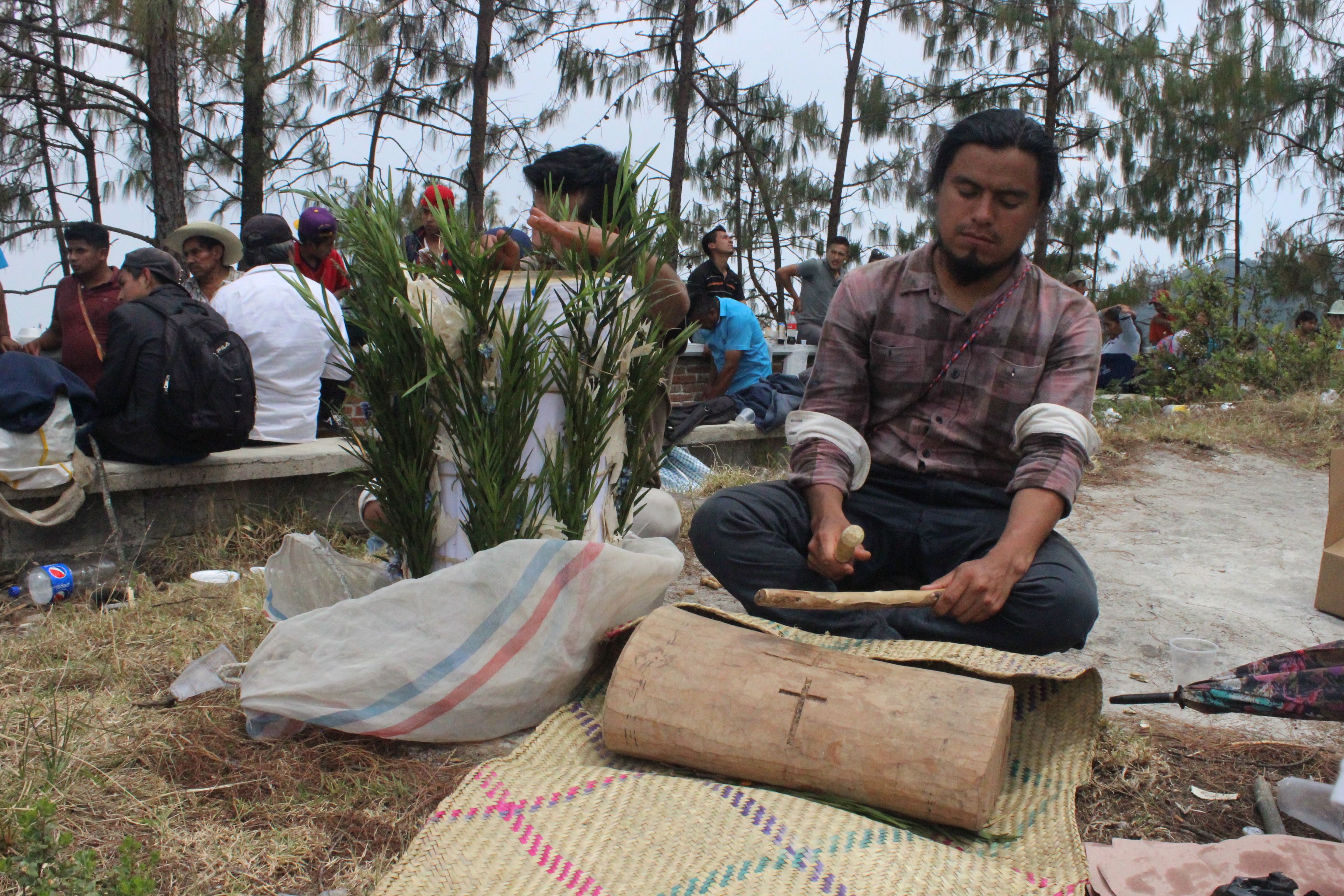
Fernando Ibarra Molina and Edgar Gonzalez Pioquinto playing the xylophone and drum on top of the mountain. Photo by Valeria Bellomia (2019).
Fernando Ibarra Molina and Edgar Gonzalez Pioquinto playing the xylophone and drum on top of the mountain. Photo by Valeria Bellomia (2019).
[The white cloth] signifies the crucifixion of God our Lord, because Jesus showed himself thus, with a cloth on his cross.
They took him down from the Holy Cross with a cloth, where God our Lord gave his life, and this is what we are mourning now.
If the cloth is not brought, [the spirit] becomes angry.
We must do what God has taught us.
06.
Hin'yu ra tsedi: which has no longer power
On the ephemeral and the permanent

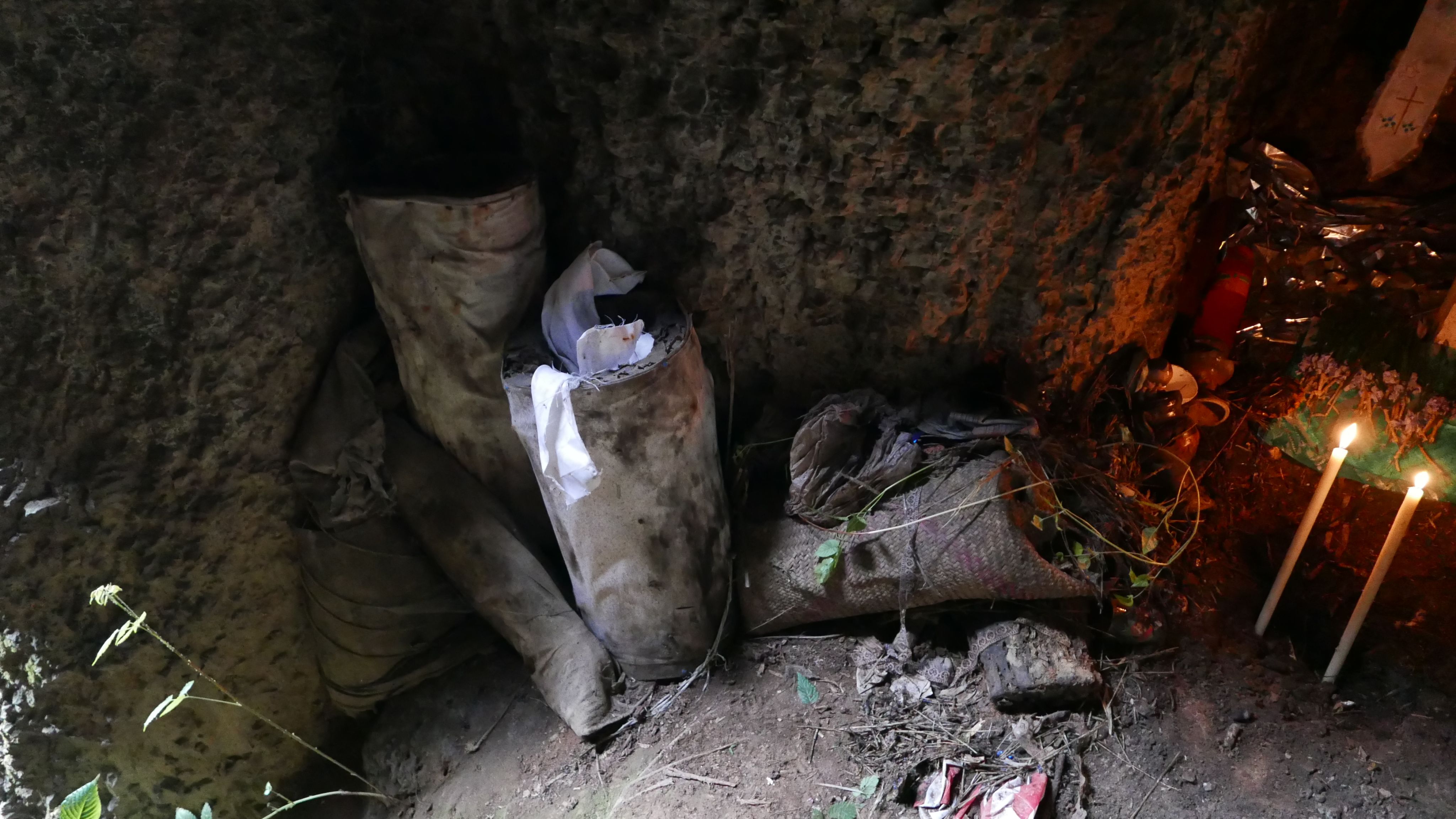
The vitality of ceremonial objects is subject to a process of degradation that makes the periodic renewal of the figures that envelop or fill them an essential step in their biography. However, their life cycle has an end: approximately every eight years, the box containing the santitos, the drum and the xylophone receive their last offering before being returned to the mountain and deposited in a cave. Other artefacts are placed on the altar that "are new, but are the same", as Eriberto says, alluding to the continuity of the divine power that animates them.
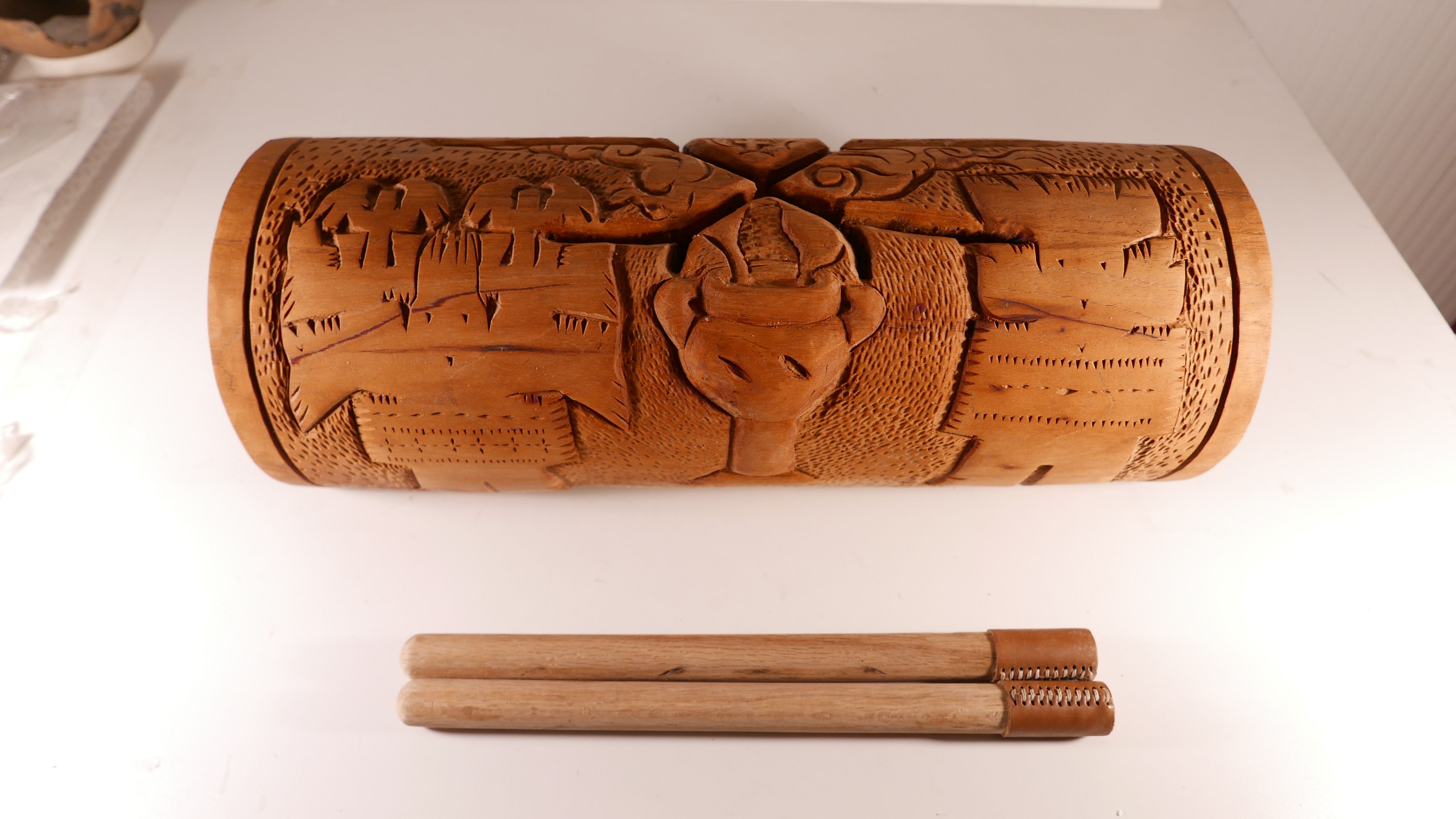
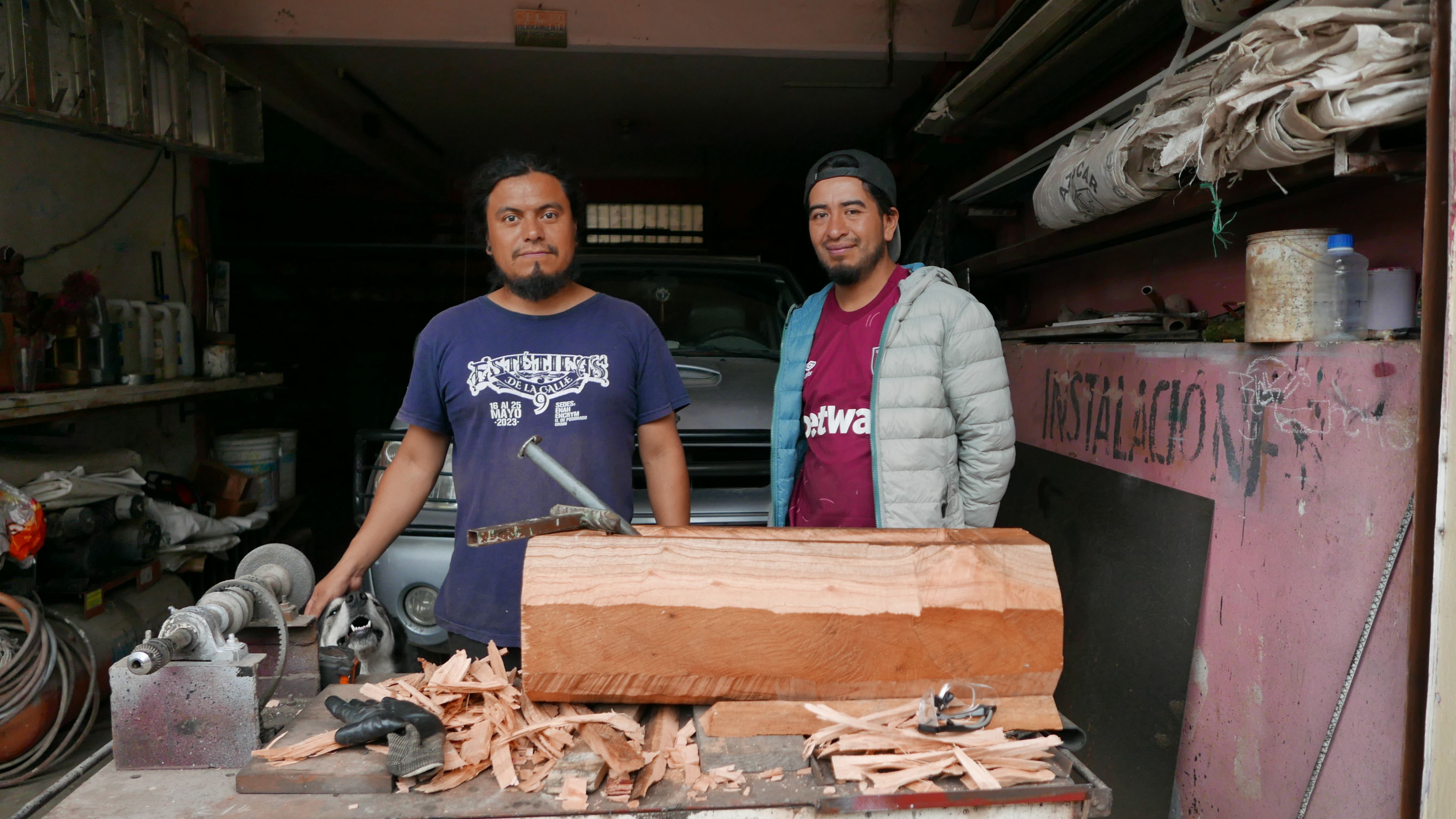
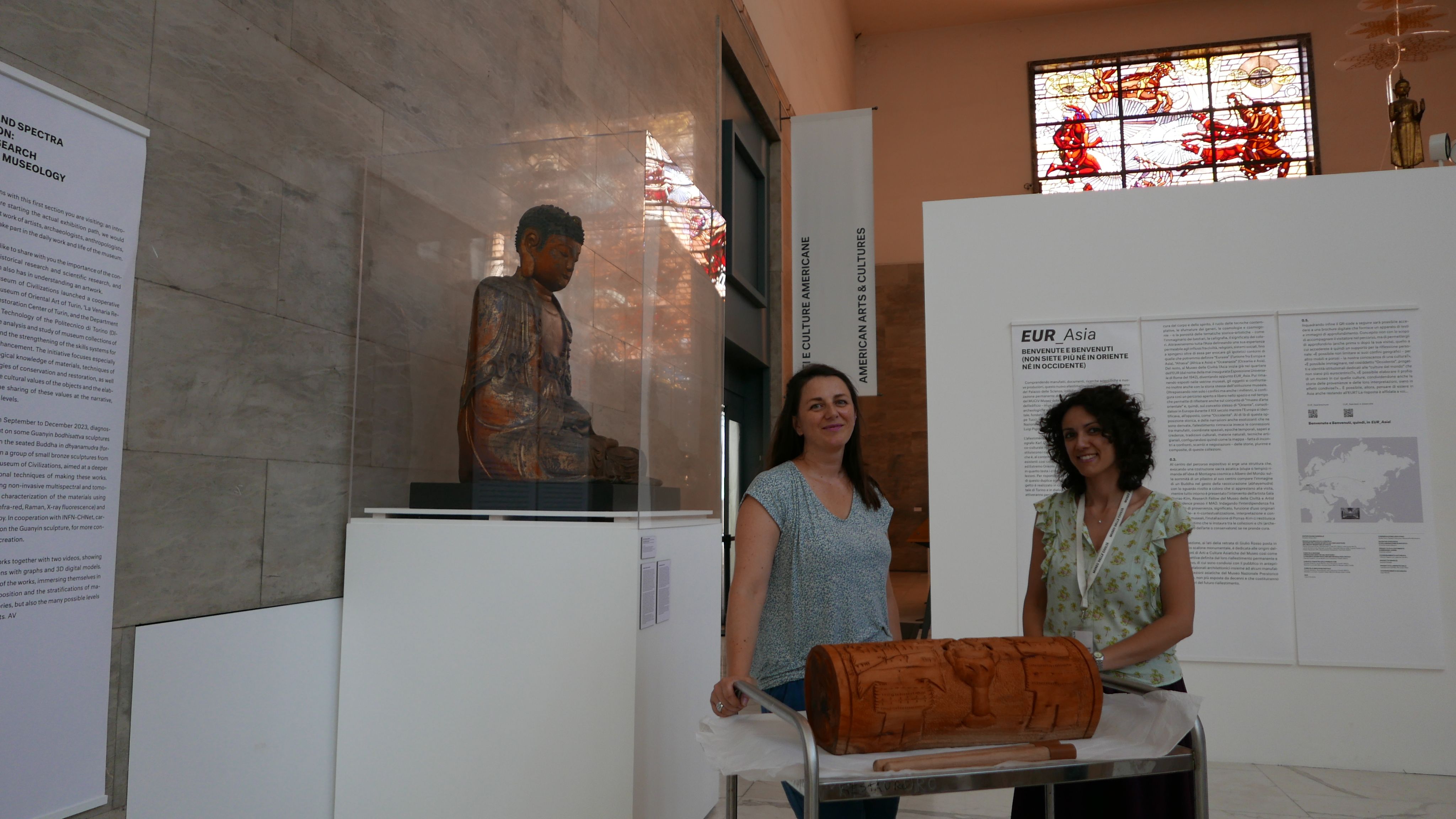
In 2025, artist and musician Fernando Ibarra Molina, in agreement with the community of Tenango, created a cedar wood xylophone for the Museo delle Civiltà in Rome. The opportunity to send such a meaningful object to Italy, whose management must be ritually controlled, as a witness to a cultural horizon, fuelled deep reflection among the organisers of the festival.
In order for the instrument to travel and be displayed in a museum showcase, it was necessary to avoid the power instilled in it through blood, figures and flowers. This inert copy is intended to share the story of its powerful and ephemeral twin with an international community. At this point, the paths of the ritual artefact and the work of art created by Fernando diverge to embody two different but complementary conceptions of what remains.
On the one hand, there is the Otomi conception of the persistence of life through the disintegration of matter, which feeds cultural practices and the relationship with the divine in a potentially infinite cycle. On the other hand, there is the process of conservation and museum exhibition of objects as ambassadors of a different worldview, but one that is familiar in its focus on caring for life, both human and non-human.
The voices, faces and meanings of ritual gestures have been collected with the generous collaboration of the community that gathers every year in the oratory, with the desire to communicate to a wide audience the complexity of these object-persons and the delicacy of their role in the Otomi way of dwelling in the world.

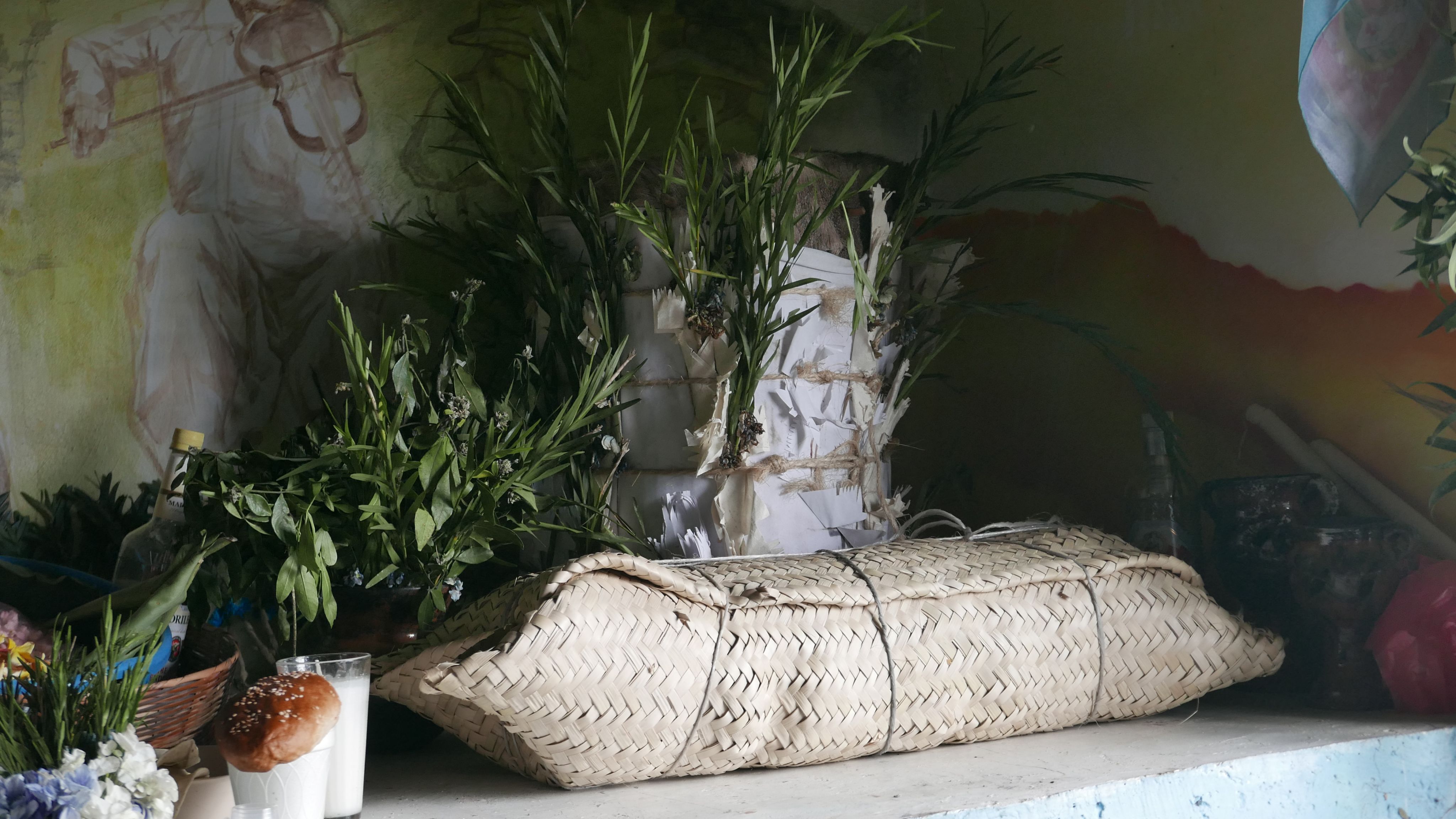




The drum and xylophone return to the altar of the oratory at the end of the celebration. Photo by Giulia Cantisani (2025).
The drum and xylophone return to the altar of the oratory at the end of the celebration. Photo by Giulia Cantisani (2025).
Interior of the cave with the instruments deposited in previous years. Photo by Giulia Cantisani (2025).
Interior of the cave with the instruments deposited in previous years. Photo by Giulia Cantisani (2025).
Fernando Ibarra Molina and Edgar Gonzalez Pioquinto during the first phase of construction of the xylophone for the MUCIV - Museo delle Civiltà - Roma. Photo by Giulia Cantisani (2025).
Fernando Ibarra Molina and Edgar Gonzalez Pioquinto during the first phase of construction of the xylophone for the MUCIV - Museo delle Civiltà - Roma. Photo by Giulia Cantisani (2025).
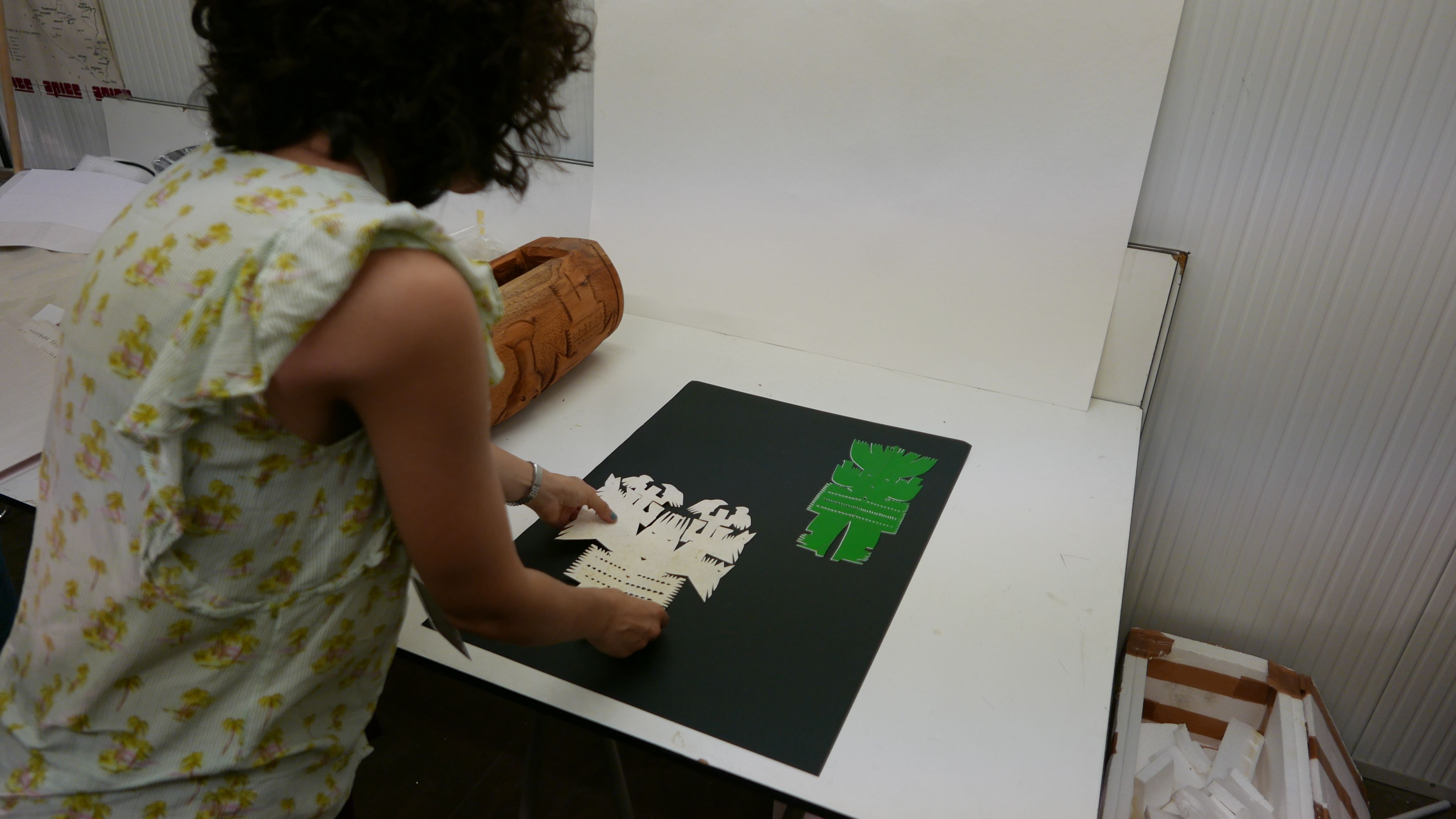
Dr Valeria Bellomia opens the paper cut-outs made by Floriberto Tolentino Pérez for the MUCIV – Museo delle Civiltà – Roma.
Dr Valeria Bellomia opens the paper cut-outs made by Floriberto Tolentino Pérez for the MUCIV – Museo delle Civiltà – Roma.
Curator Camilla Fratini and Dr Valeria Bellomia upon the arrival of the xylophone at the MUCIV - Museo delle Civiltà - Roma.
Curator Camilla Fratini and Dr Valeria Bellomia upon the arrival of the xylophone at the MUCIV - Museo delle Civiltà - Roma.
Don't forget about the custom.
It's not just a celebration, it's a tradition to thank [the spirit of the mountain], to ask him to take care of us and accompany us everywhere.
In various places they have seen the old man, he shows himself so that they believe in him and say that the mountain has power, it has life!
It is a sacred mountain that God placed there for a reason, the old man is in a good place.

 Built with Shorthand