
Invisible artifacts
Guido Boggiani at MUCIV - Museo delle Civiltà - Roma


"I could safely conclude that this silver had belonged to that same belt because among the silver plates I found some of the glass beads that had come loose with the silver [...].
I also bought three more pairs of earrings and two or three original medallions.
So little by little my collection is growing and enriching itself, and I want to continue expanding it"
(Guido Boggiani, Travel Diary, May 14th, 1888)
"Ho potuto desumere con sicurezza che questo argento aveva appartenuto a quella medesima cintura perché fra le piastrine d’argento rinvenni alcune delle perline di vetro che coll’argento s’erano staccate […]. Inoltre ho comprato altri tre paia di orecchini e due o tre medagliette originali. Così poco a poco si va aumentando ed arricchendo la mia collezione che voglio continuamente ingrandire"
(Guido Boggiani, Diario di viaggio,14 maggio 1888)

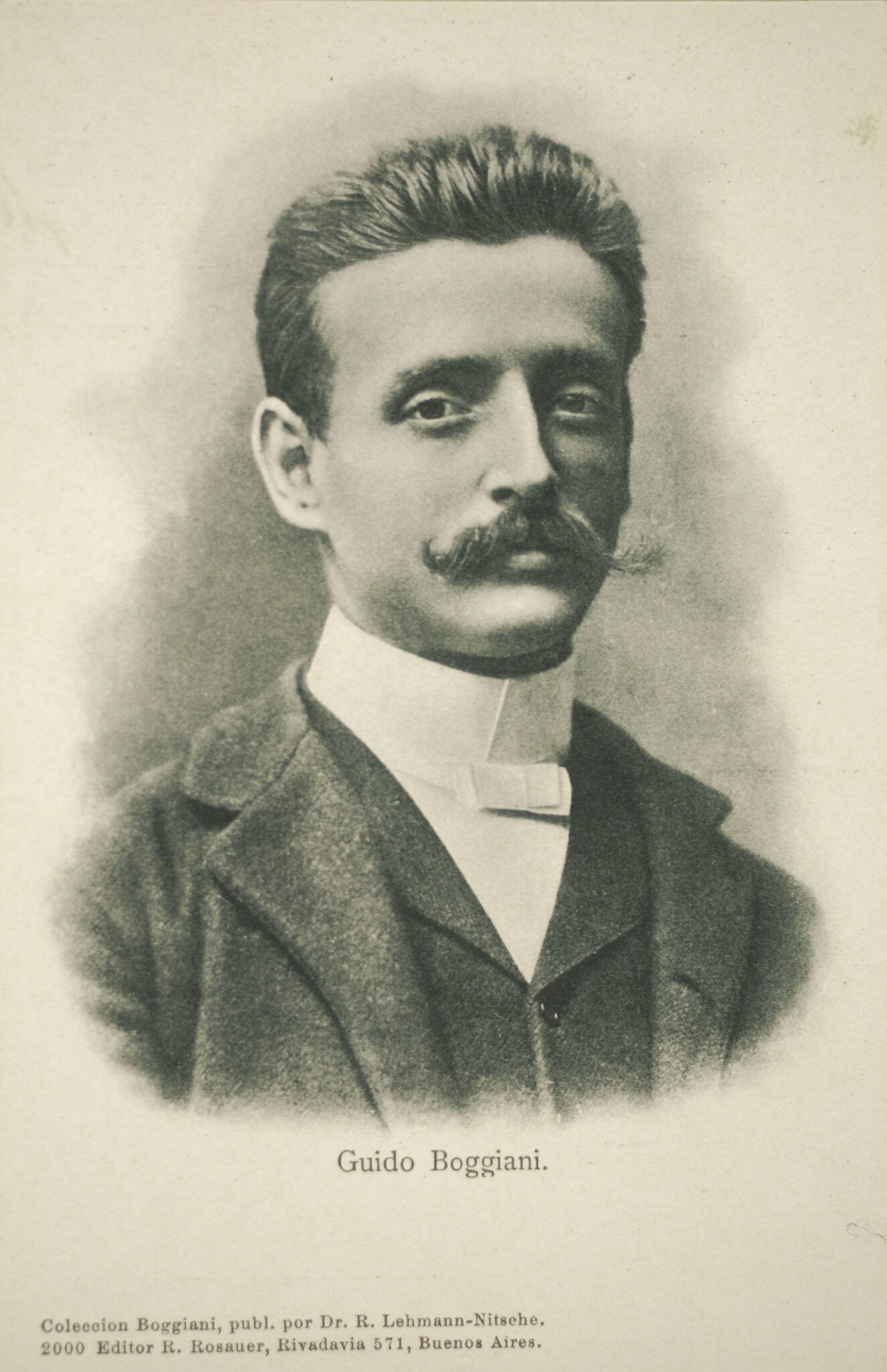
Picture of Guido Boggiani. In: Lehmann-Nitsche Robert, 1926, Collection Boggiani. 2000 Editor R. Rosauer, Rivadavia 571, Buenos Aires.
Picture of Guido Boggiani. In: Lehmann-Nitsche Robert, 1926, Collection Boggiani. 2000 Editor R. Rosauer, Rivadavia 571, Buenos Aires.

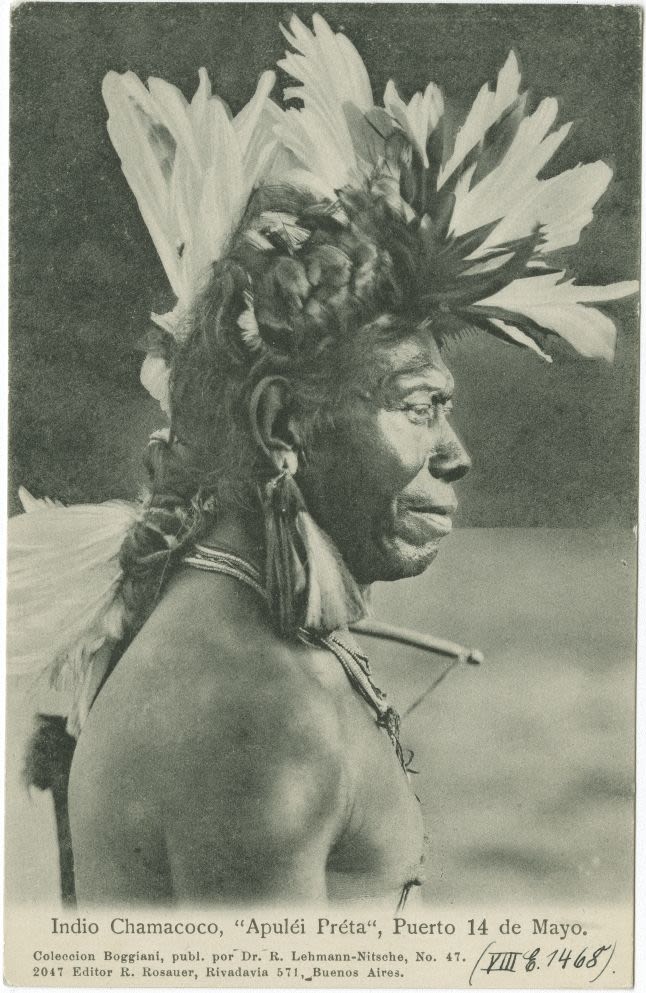
“Apulei Préta”. Photograph taken by Guido Boggiani (1890s). In: Lehmann-Nitsche Robert, 1926, Collection Boggiani. 2000 Editor R. Rosauer, Rivadavia 571, Buenos Aires.
“Apulei Préta”. Photograph taken by Guido Boggiani (1890s). In: Lehmann-Nitsche Robert, 1926, Collection Boggiani. 2000 Editor R. Rosauer, Rivadavia 571, Buenos Aires.
Guido Boggiani collected artifacts mainly from the Gran Chaco region (Alto Paraguay) and southern Mato Grosso. Today, these artifacts are preserved in various state museums in Europe (Museum für Völkerkunde in Berlin, Museum für Völkerkunde in Stuttgart, Museum für Völkerkunde in Vienna), with the largest collection located in Italy (National Museum of Anthropology and Ethnology in Florence, Museum of Civilization in Rome, and Faraggiana-Ferrandi Natural History Museum in Novara).
There are 2,500 objects, of which 2,438 at the Museum of Civilization in Rome, just over a hundred in Florence, and six in Novara. The Roman collection at the Museum in Rome, assembled between 1888 and 1901, is varied: feather art ornaments, weapons (bows, arrows, wooden clubs, stone axes); fabrics and bags made of plant fibers; jewelry made of various metals or composed of coins, shells, teeth, or other animal or plant materials; wooden sculptures and pipes, ceramics, carved bone combs, skeins of plant fibers, wooden weaving knives, ritual ornaments, clothing, various types of textile artifacts, and plant-based body dyes.
Most of the artifacts come from Chamacoco (Yshir) groups; others are Caduveo (Kadiwéu). A “great collection”: the desire to be remembered as the first explorer of the inner Chaco since the Spanish conquistadors went hand in hand with the yearning of many travelers of the time on South America.
Like Paolo Mantegazza (1831-1910) and Adamo Lucchesi (1855-1940), Guido Boggiani (1861-1901) also engaged in forestry trade, land sales, and, indeed, the purchase and sale of ethnographic artifacts and works of art. Bartering, selling, and removing items from their original contexts shed light on the complex ethical issues surrounding these collections.
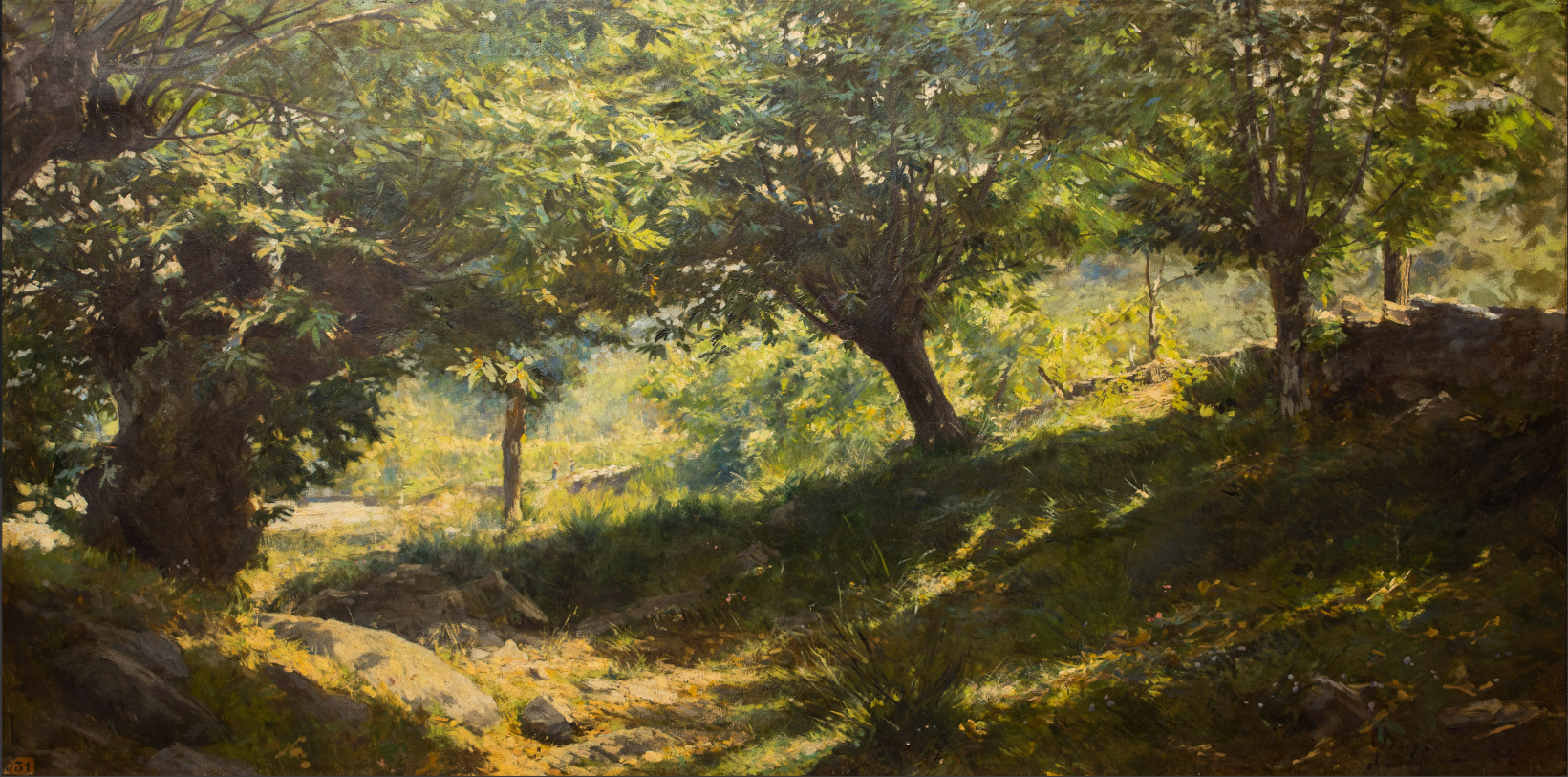
The wagons carrying the Colonel's cargo and my trunks have not yet arrived. So I am condemned to wait, to inaction, since all my painting and photography equipment is in the trunks. I say inaction in a manner of speaking, because I have found a very useful and beautiful occupation here. Twice a day I mount my horse and set off, sometimes alone, sometimes with Pablito, the Colonel's eldest son, on long excursions around the Estancia.
Guido Boggiani, travel diary, March 19th, 1888
Ancora non sono arrivati i carri che portano il carico del Colonnello ed i miei bauli. Così sono condannato, aspettando, all’inazione, avendo tutti i miei attrezzi di pittura e di fotografia nei bauli. Dico alla inazione per modo di dire perché ho trovato qui una occupazione utilissima e bellissima. Due volte al giorno monto a cavallo e me ne vado, a volte solo a volte con Pablito, il figlio primogenito del Colonnello, a fare delle lunghe escursioni nell’Estancia.
Guido Boggiani, Diario di viaggio, 19 Marzo, 1888



01.
Guido Boggiani
painter, photographer, collector and ethnographer



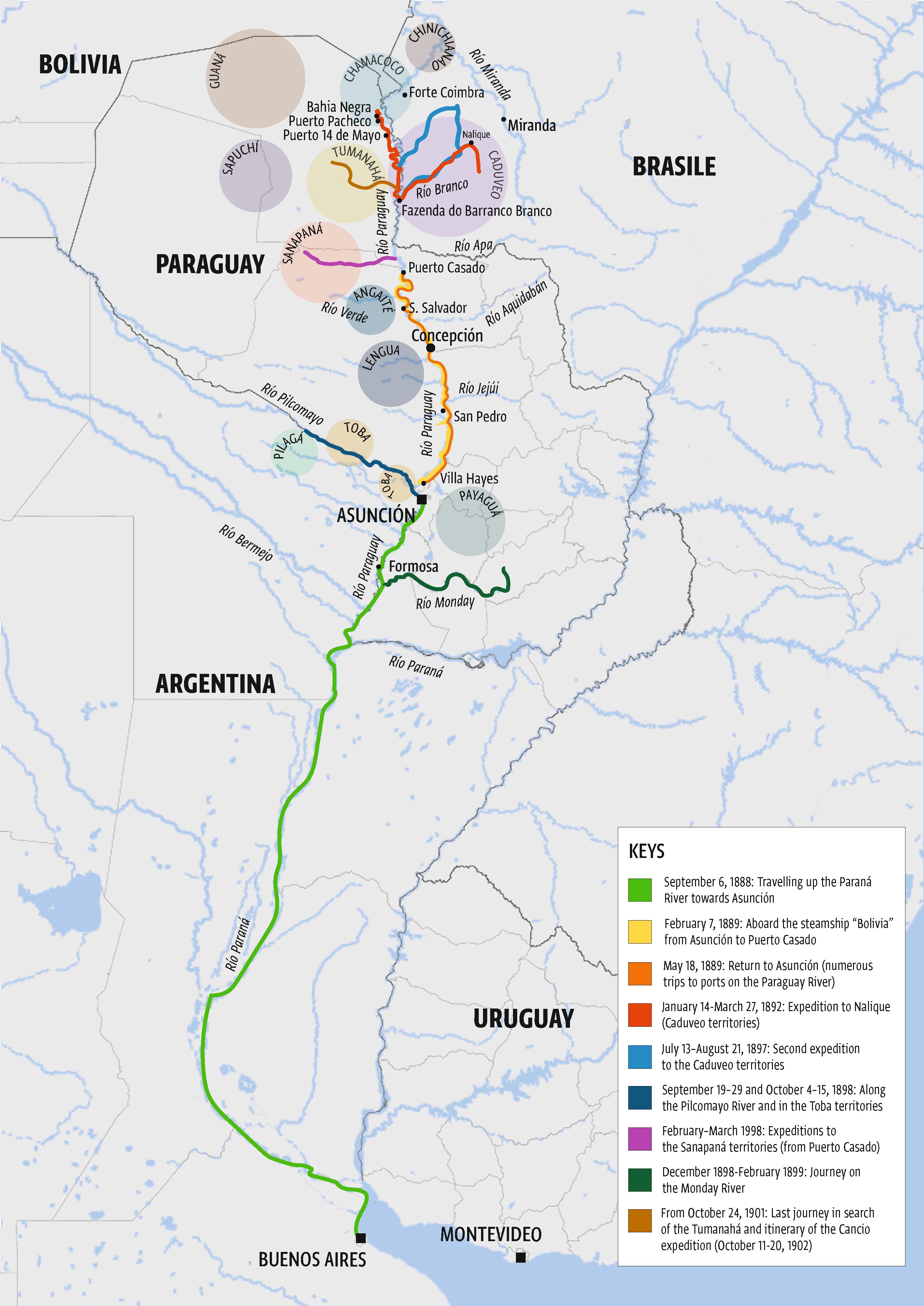
Guido Boggiani’s travels in Paraguay and contacts with indigenous peoples
Guido Boggiani’s travels in Paraguay and contacts with indigenous peoples

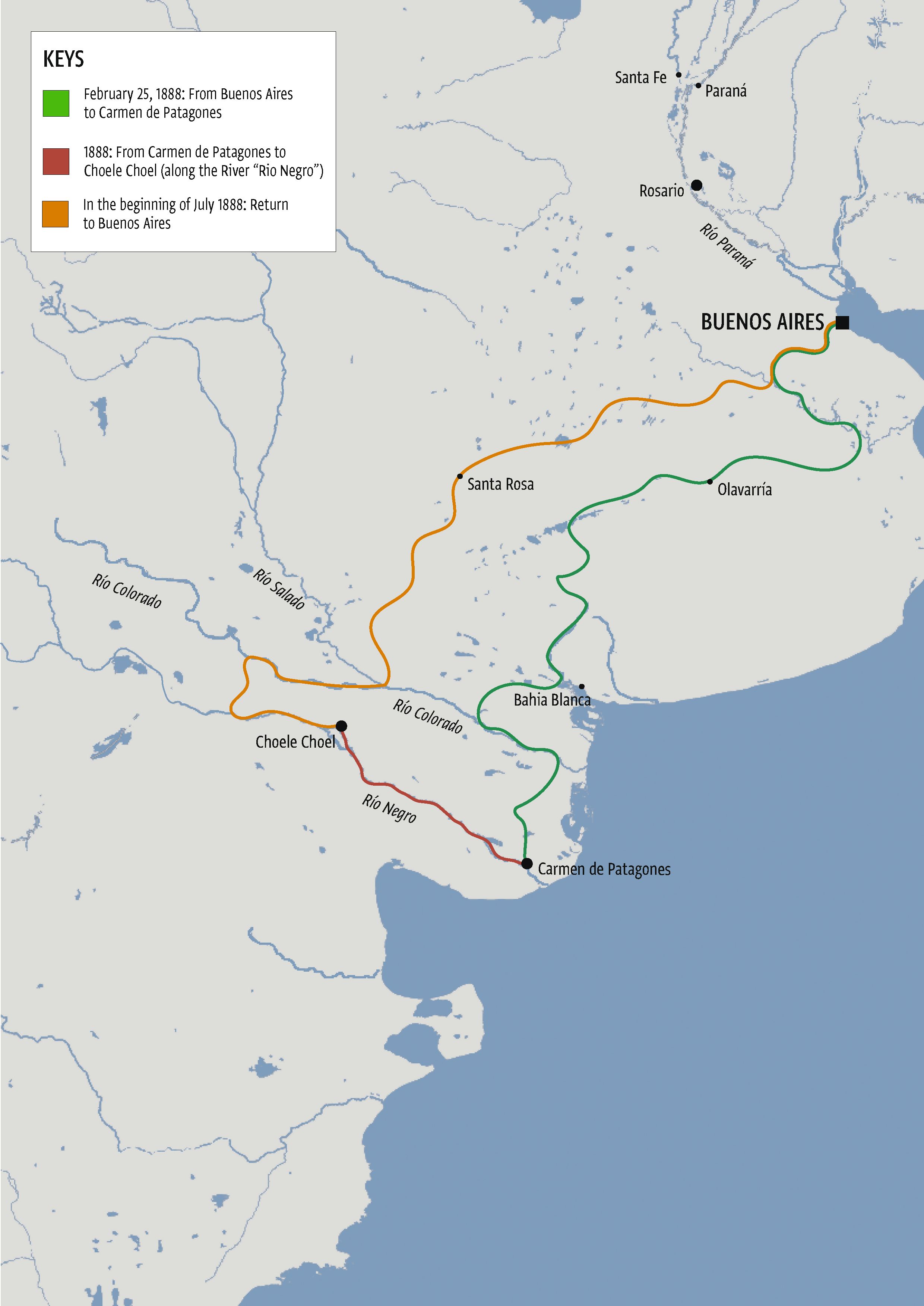
Guido Boggiani’s first trips to Argentina: from February 1888 to July 1888
Guido Boggiani’s first trips to Argentina: from February 1888 to July 1888
Guido Boggiani was an Italian painter, photographer and ethnographer. He began studying painting with Filippo Carcano – father of Lombard naturalism – and in 1881 embarked on a promising artistic career. During those years, he moved to Rome, where he frequented Roman high society and the artistic circles of the time.
In 1887, he left for Argentina, wanting to paint South American landscapes, sell his paintings and explore commercial opportunities between Argentina and Italy.
We know his itineraries thanks to his travel diary, the manuscript of which has been preserved: firstly, he devoted himself to hunting, painting and taking photographs on a journey that would take him to Carmen de Patagones, Choele Choel, Viedma, and Bahía Blanca up to Buenos Aires.
In the Argentine capital, he got in contact with leading members of the Italian community (including Anzani Canzio, Garibaldi’s nephew) and some art dealers. From there, he left for Asunción to begin a journey along the Paraguay River to Puerto Casado, the centre of the “Compañía Casado” tannin enterprise.
From then on, Boggiani became increasely interested in Indigenous art and in the ethnic groups that lived there. He remained in this region for four months, making expeditions to various “ports” in the Upper Paraguay. He painted the indigenous guaná, sanapaná and angaité “tolderías”.
On May 18th 1889, he left Puerto Casado and returned to Asunción.
He then began making trips between Asunción and the Upper Paraguay, where he worked surrounded by Chamacoco people, at first as a trader, and later at a timber extraction site he established. The last part of the diary recounts the expedition to the caduveo territory across the Nabileque River in Mato Grosso. Those pages were revised and expanded in its, Viaggi d’un artista nell'America meridionale (Rome, 1895).
At the end of these travels, Boggiani devoted himself to ethnology (he studied with Angelo Colini) and became one of the leading authorities of his time on the ethnography and ethnohistory of Paraguay and Brazilian Mato Grosso.
From 1893 to 1896, he remained in Italy while studying in Rome.
In 1896, he set sail again for Paraguay to continue his research. At the end of 1901, while on what was to be his last expedition into the jungle before returning to Italy, he was murdered by a group of Chamacocos bravos.

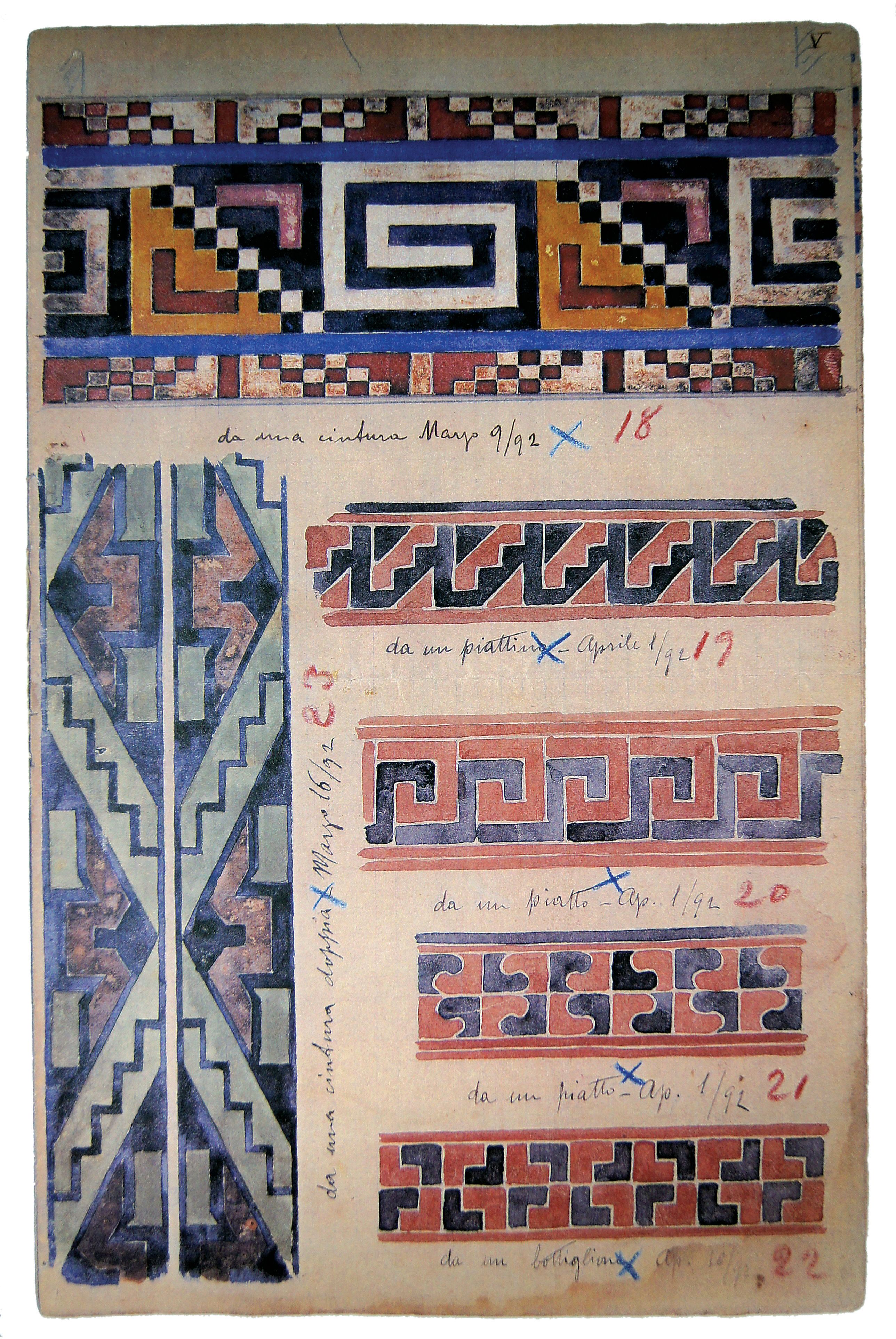


Drawing from the travel diary.1887-1892 Folio V (Bossert F., Franceschi Z.A., Braunstein J. (éds.), 2019)
Drawing from the travel diary.1887-1892 Folio V (Bossert F., Franceschi Z.A., Braunstein J. (éds.), 2019)
Drawing from the travel diary.1887-1892 Folio V (Bossert F., Franceschi Z.A., Braunstein J. (éds.), 2019)
Drawing from the travel diary.1887-1892 Folio V (Bossert F., Franceschi Z.A., Braunstein J. (éds.), 2019)
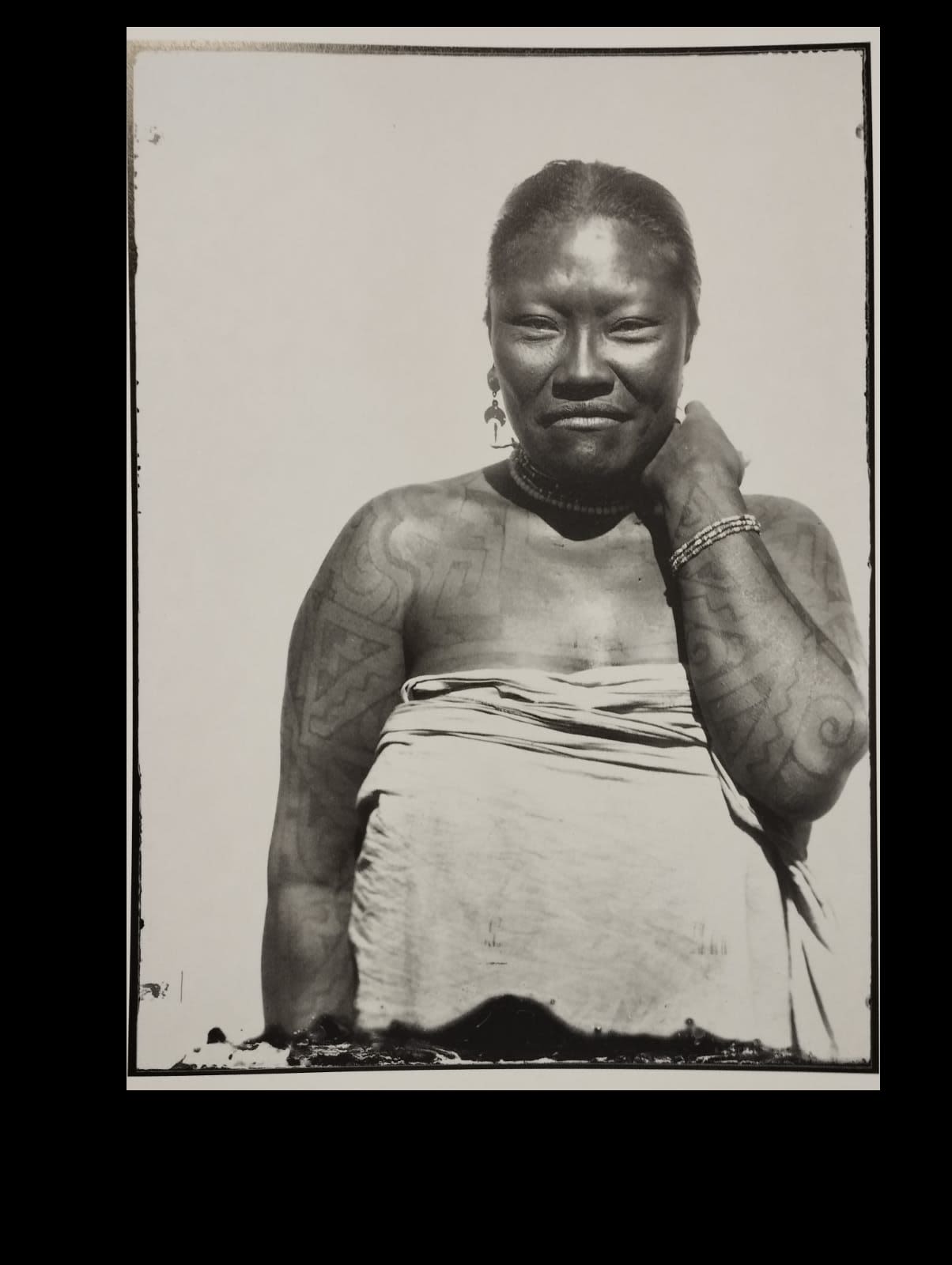
Photograph taken by Guido Boggiani: “chamacoco slave” (Frič P., Fričova Y., 1997)
Photograph taken by Guido Boggiani: “chamacoco slave” (Frič P., Fričova Y., 1997)
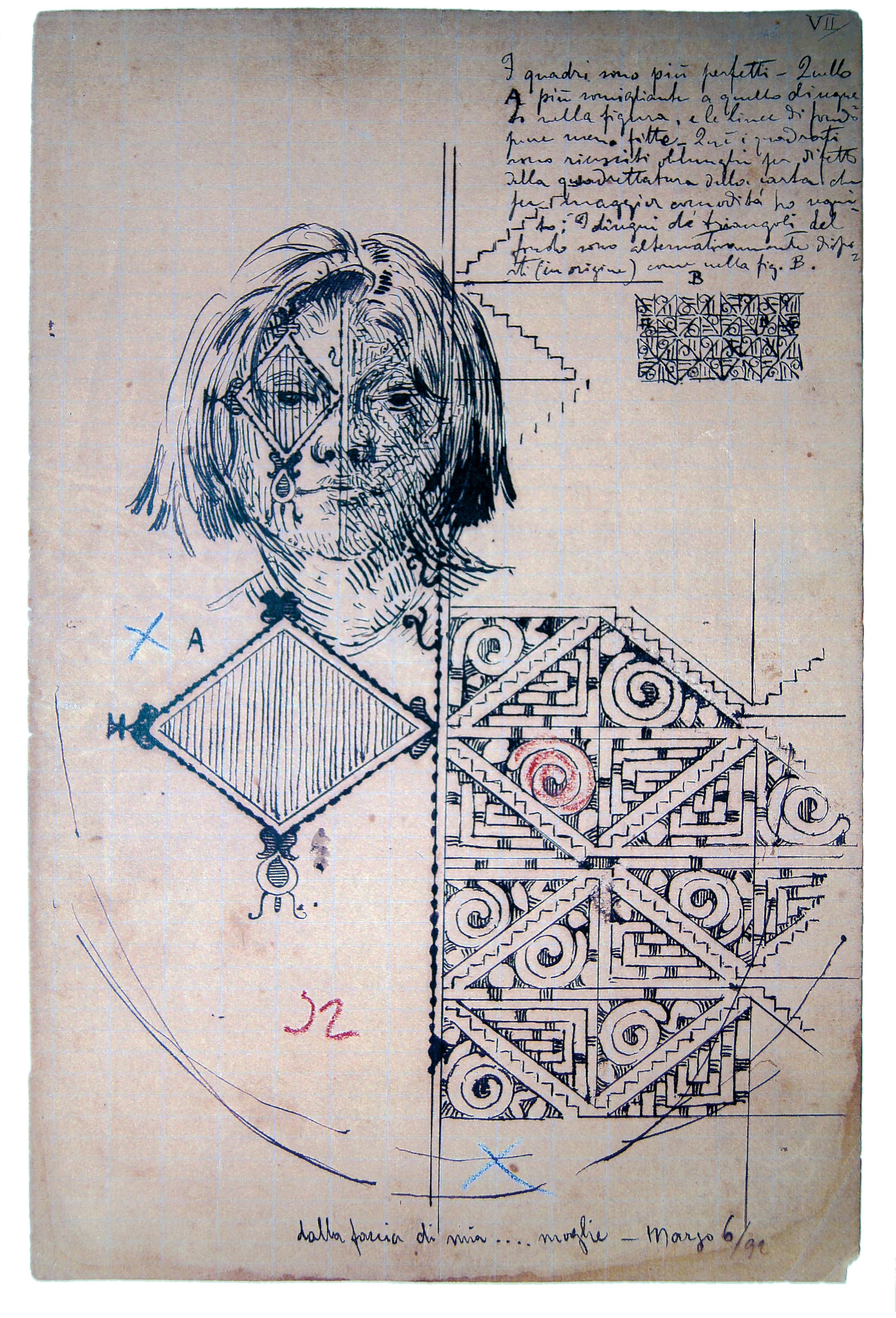
Drawing from the travel diary 1887-1892 Folio VII (Bossert F., Franceschi Z.A., Braunstein J. (éds.), 2019)
Drawing from the travel diary 1887-1892 Folio VII (Bossert F., Franceschi Z.A., Braunstein J. (éds.), 2019)
02.
The great collection of Guido Boggiani
"Now, returning to the question of donating my collections to this museum, I will tell you my strongly-held view.
First of all, I will tell you that the loyalty with which you have confirmed my belief in the importance of the objects I have patiently collected over a long period of time among the Ciamacoco, the Caduvei, and other tribes of the Chaco, prompts me to show the same loyalty in dealing with this matter, which is so dear to my heart."
Letter from Guido Boggiani to Luigi Pigorini, December 28th, 1893
"Ora tornando alla questione di cedere le mie collezioni a questo museo le dirò fermamente la mia idea. Prima di tutto le dirò che la lealtà con la quale Lei mi ha confermato la sua idea che io mi era fatta sull’importanza del valore degli oggetti pazientemente raccolti da me durante il lungo tempo passato tra i Ciamacoco, i Caduvei e le altre tribù del Chaco, mi spinge ad usarne altrettanta da parte mia nel trattare questo affare che mi sta tanto a cuore."
Lettera di Guido Boggiani a Luigi Pigorini, 28 dicembre 1893

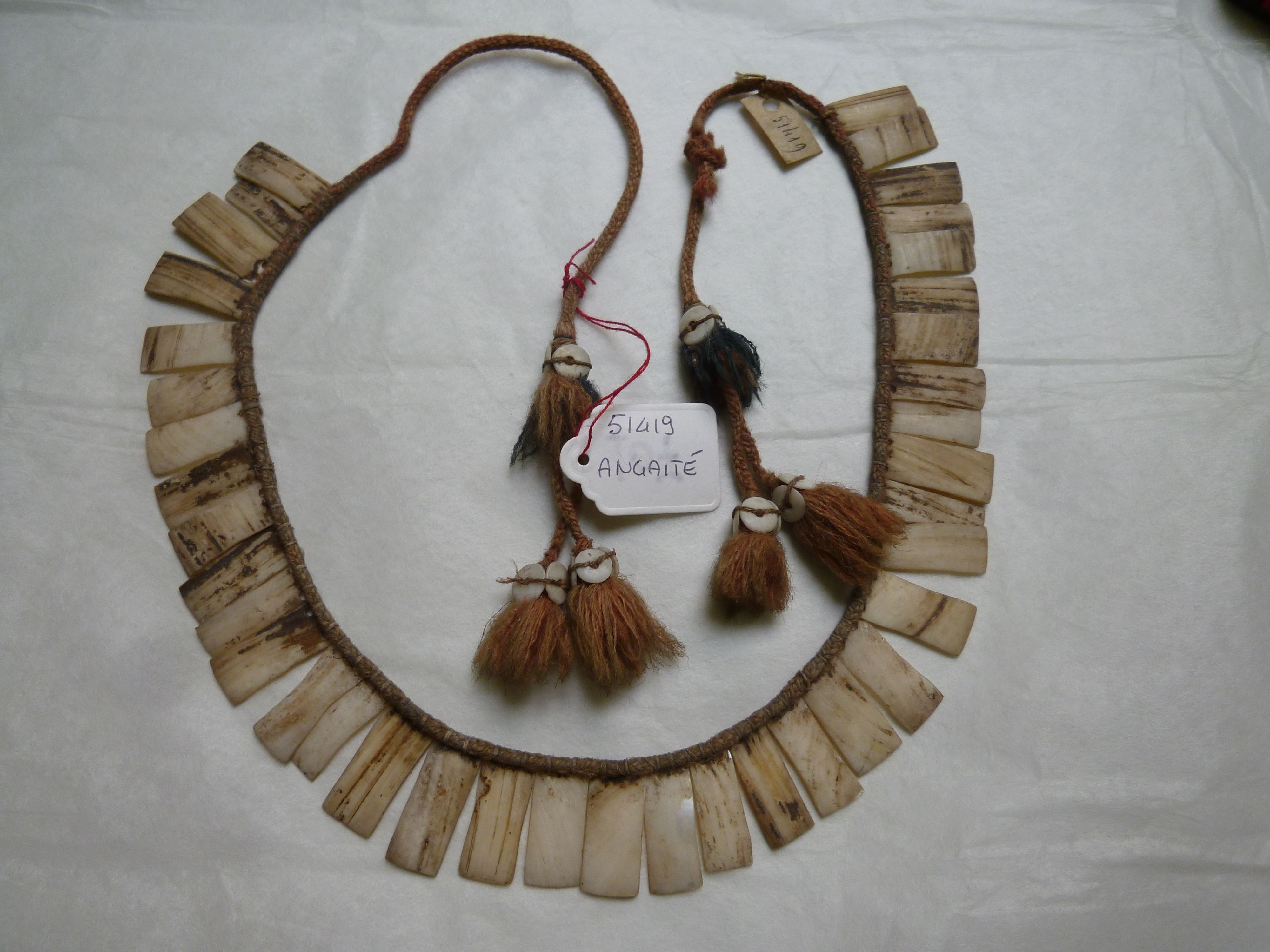
Necklace made of mother-of-pearl (angaité) preserved at MUCIV – Museo delle Civiltà – Roma (inventory no. 51519)
Necklace made of mother-of-pearl (angaité) preserved at MUCIV – Museo delle Civiltà – Roma (inventory no. 51519)
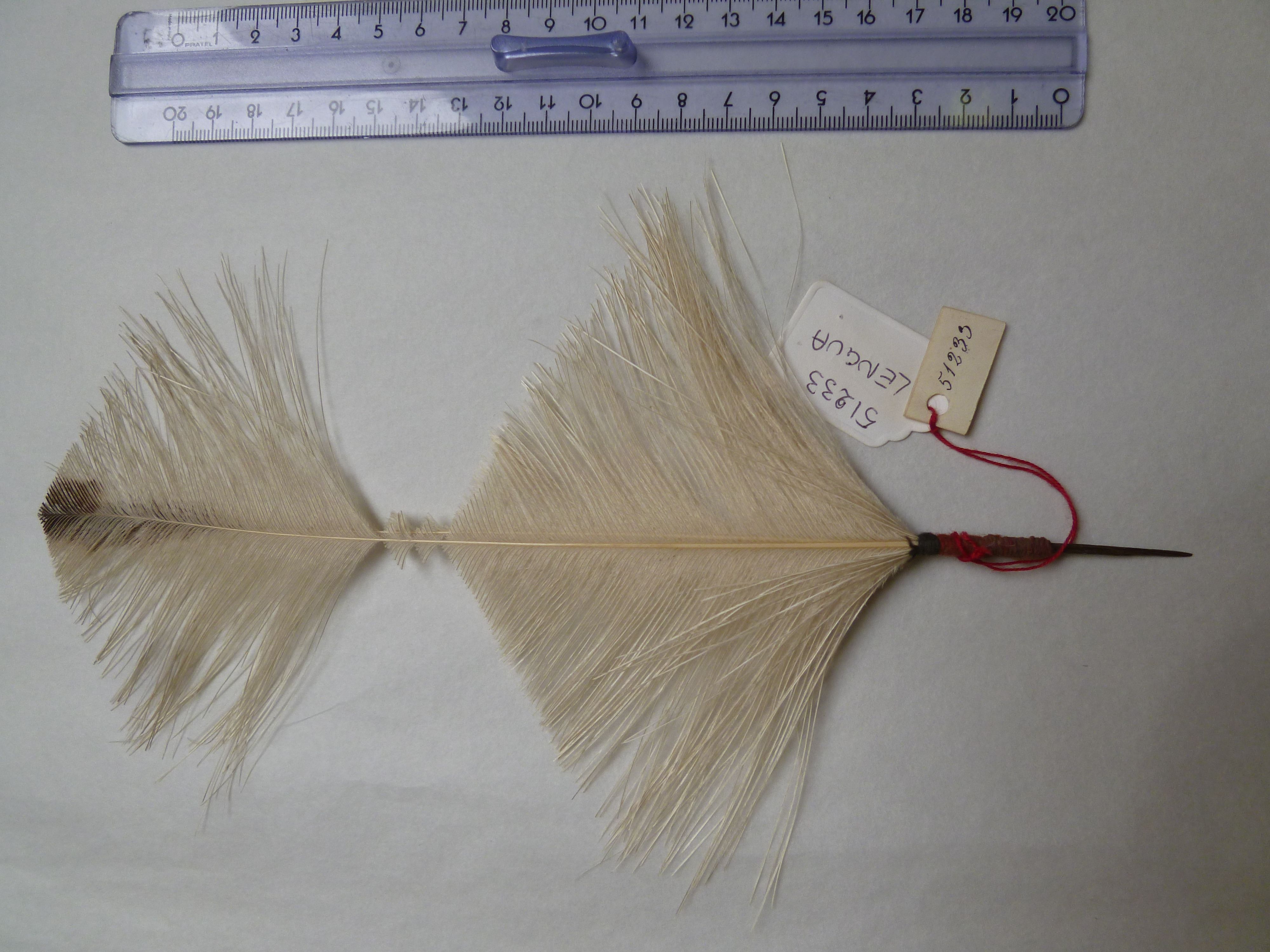
Head ornament coming from lengua (now maskoi), composed of light white and gray/brown feathers. MUCIV – Museo delle Civiltà – Roma
Head ornament coming from lengua (now maskoi), composed of light white and gray/brown feathers. MUCIV – Museo delle Civiltà – Roma
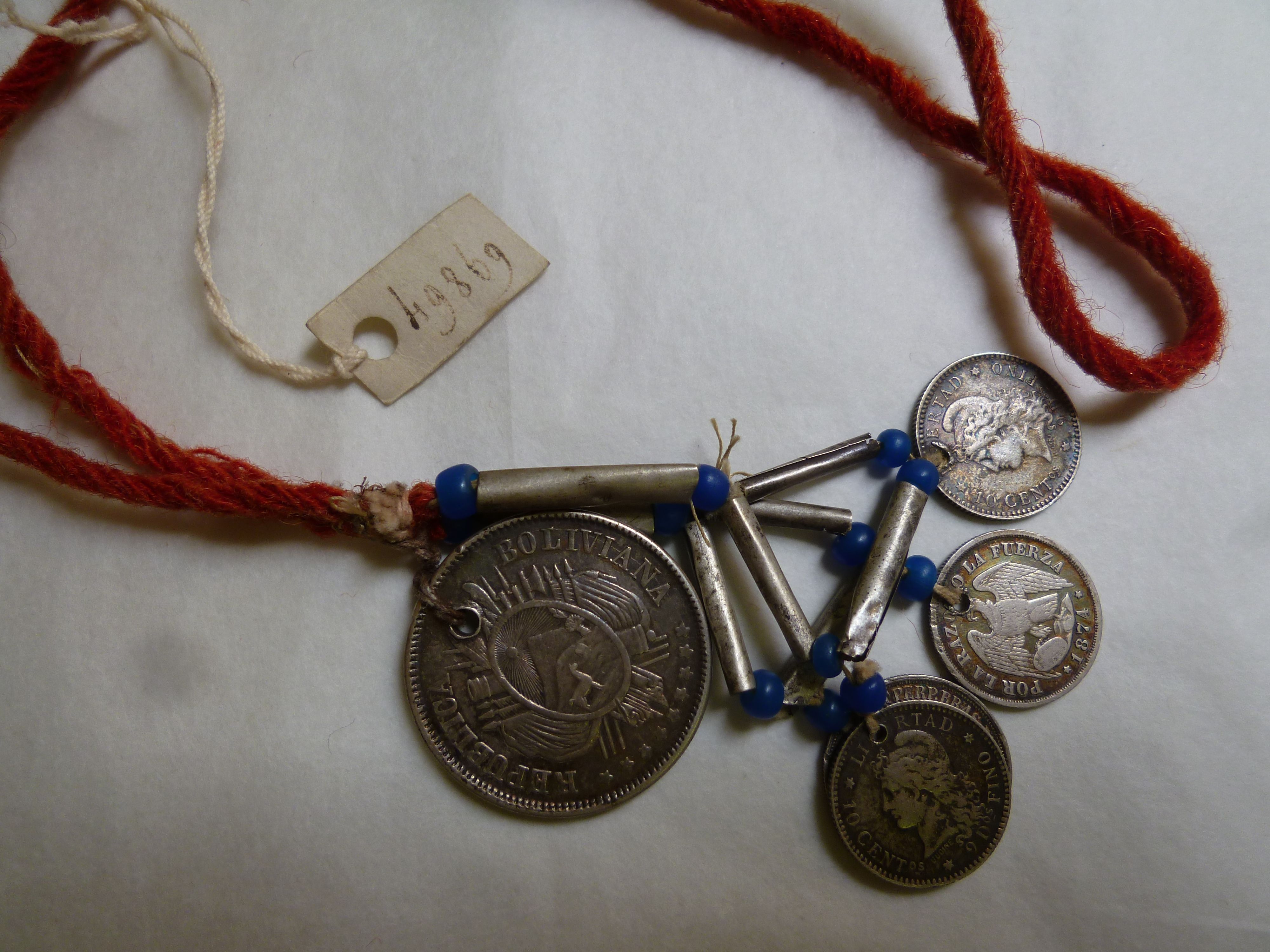
Necklace made of red fabric, blue beads, and silver coins, originating from Kadiweu and preserved at the MUCIV – Museo delle Civiltà – Roma.
Necklace made of red fabric, blue beads, and silver coins, originating from Kadiweu and preserved at the MUCIV – Museo delle Civiltà – Roma.
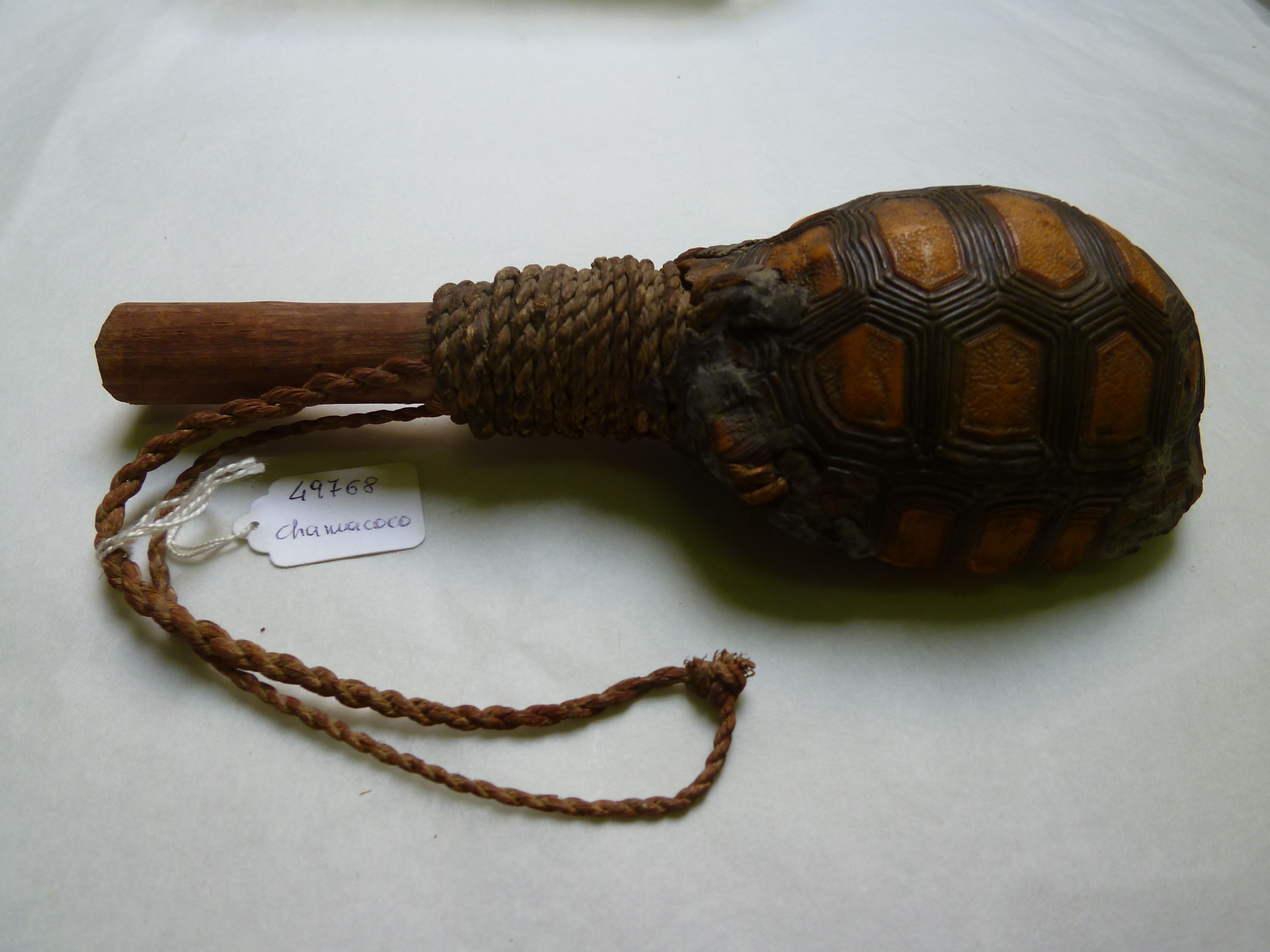
Chamacoco rattle made from small turtle shells and vegetable fiber (bromeliad sp.). Preserved at the MUCIV – Museo delle Civiltà – Roma.
Chamacoco rattle made from small turtle shells and vegetable fiber (bromeliad sp.). Preserved at the MUCIV – Museo delle Civiltà – Roma.
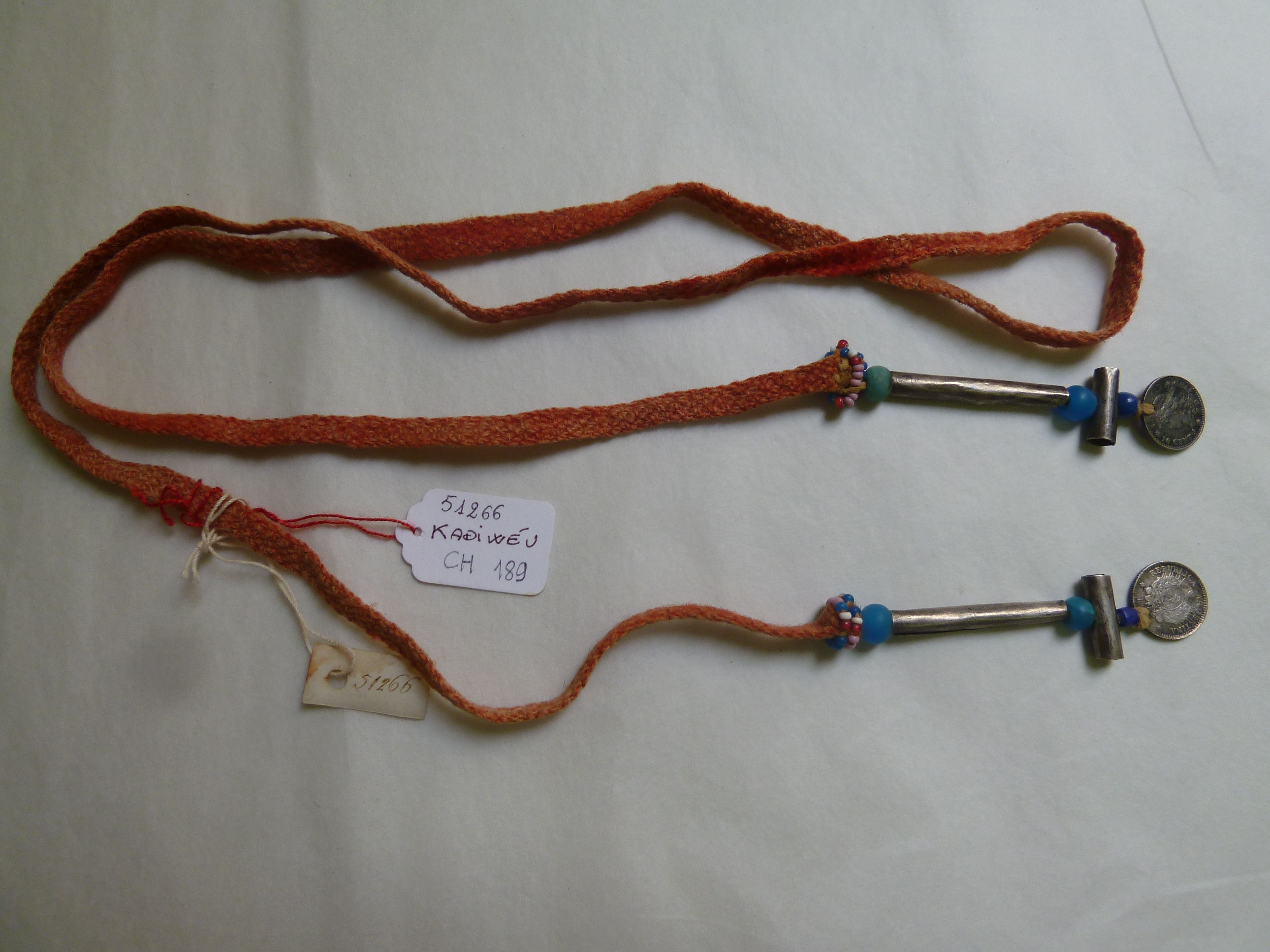
Red wool necklace with blue and white beads, metal inserts, and coins. Preserved at the MUCIV – Museo delle Civiltà – Roma.
Red wool necklace with blue and white beads, metal inserts, and coins. Preserved at the MUCIV – Museo delle Civiltà – Roma.

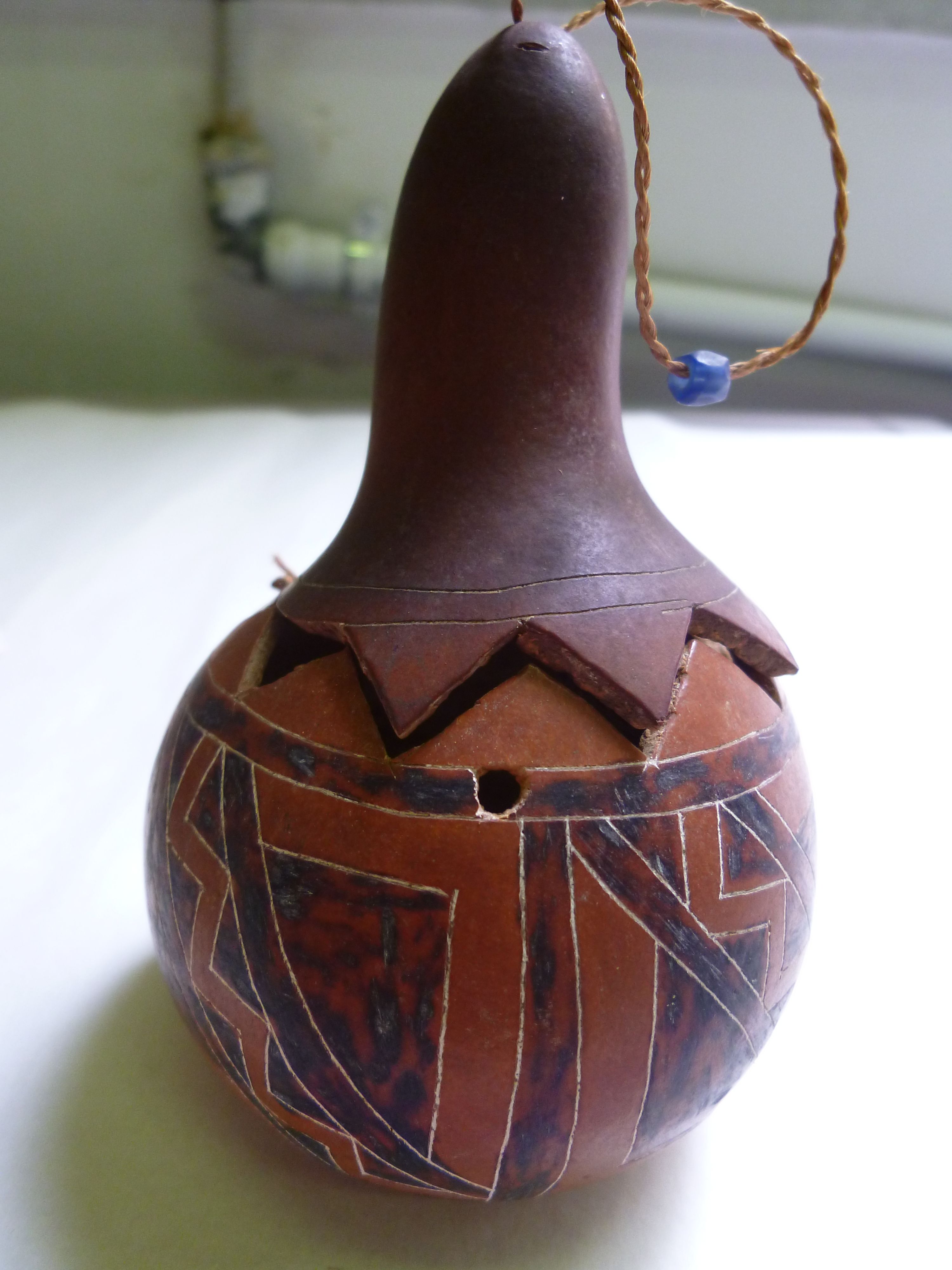
Small vessel made from a carved and painted pumpkin pericarp, vegetable fiber cord (bromelia sp), and blue bead. Object of Kadiweu origin, preserved at the MUCIV – Museo delle Civiltà – Roma.
Small vessel made from a carved and painted pumpkin pericarp, vegetable fiber cord (bromelia sp), and blue bead. Object of Kadiweu origin, preserved at the MUCIV – Museo delle Civiltà – Roma.

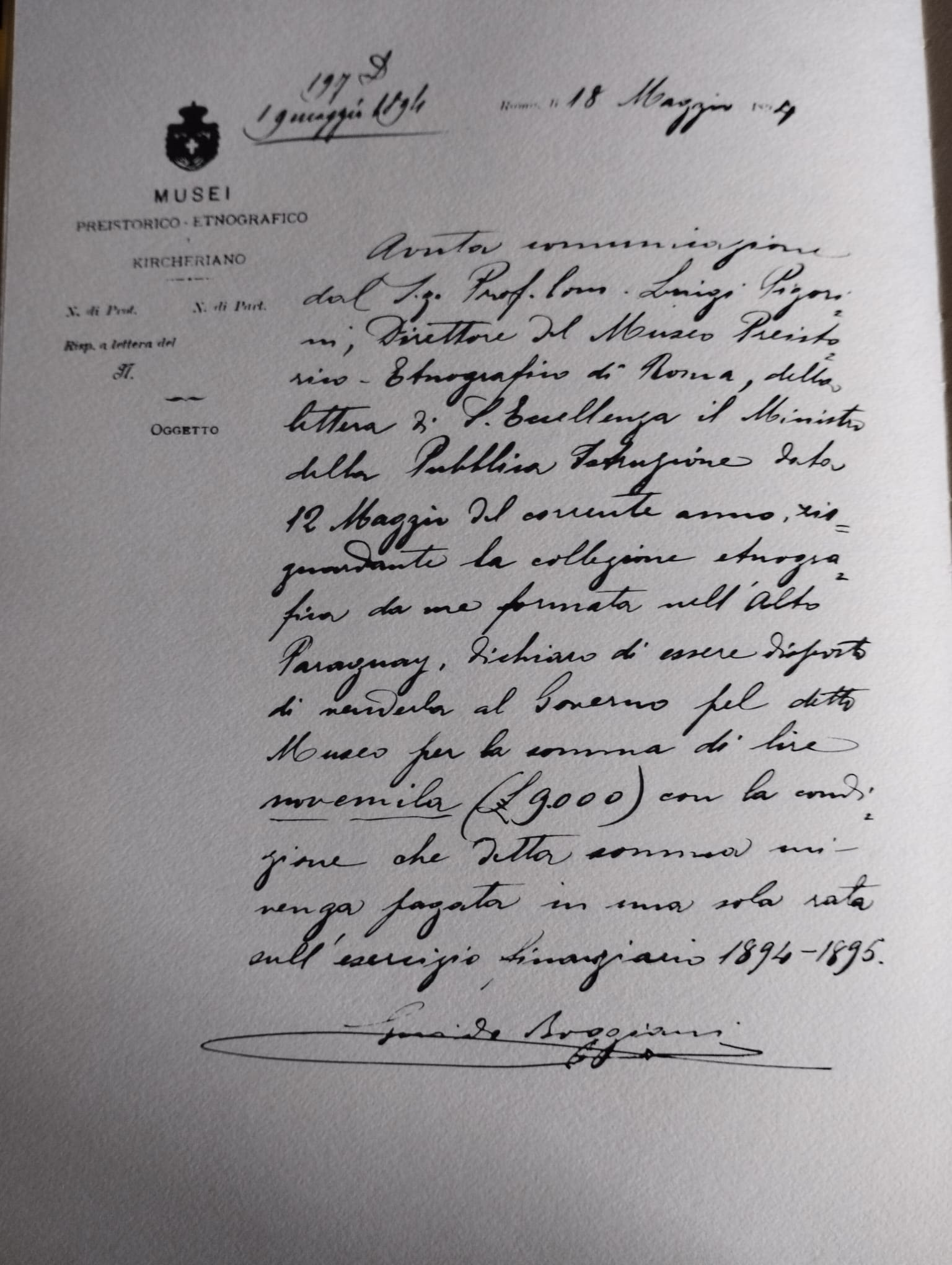
Letter from Guido Boggiani (May 18, 1894) addressed to Luigi Pigorini: part of the negotiations for the sale of the collection to the Kircherian Museum
Letter from Guido Boggiani (May 18, 1894) addressed to Luigi Pigorini: part of the negotiations for the sale of the collection to the Kircherian Museum

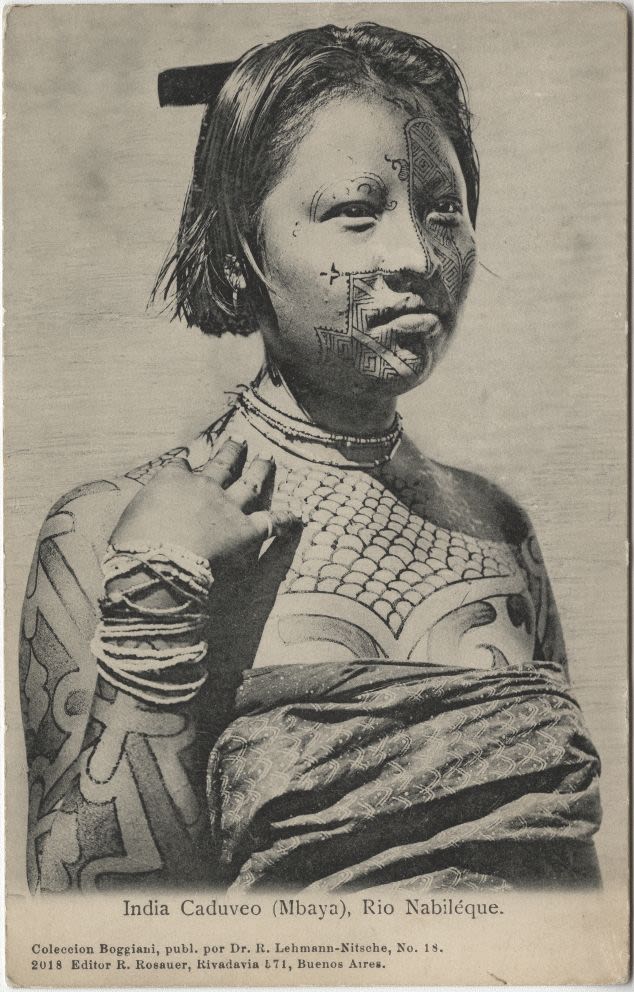
“India Caduveo (Mbayà), Rio Nabileque.” In: Lehmann-Nitsche Robert, 1926, Collection Boggiani. 2000 Editor R. Rosauer, Rivadavia 571, Buenos Aires.
“India Caduveo (Mbayà), Rio Nabileque.” In: Lehmann-Nitsche Robert, 1926, Collection Boggiani. 2000 Editor R. Rosauer, Rivadavia 571, Buenos Aires.

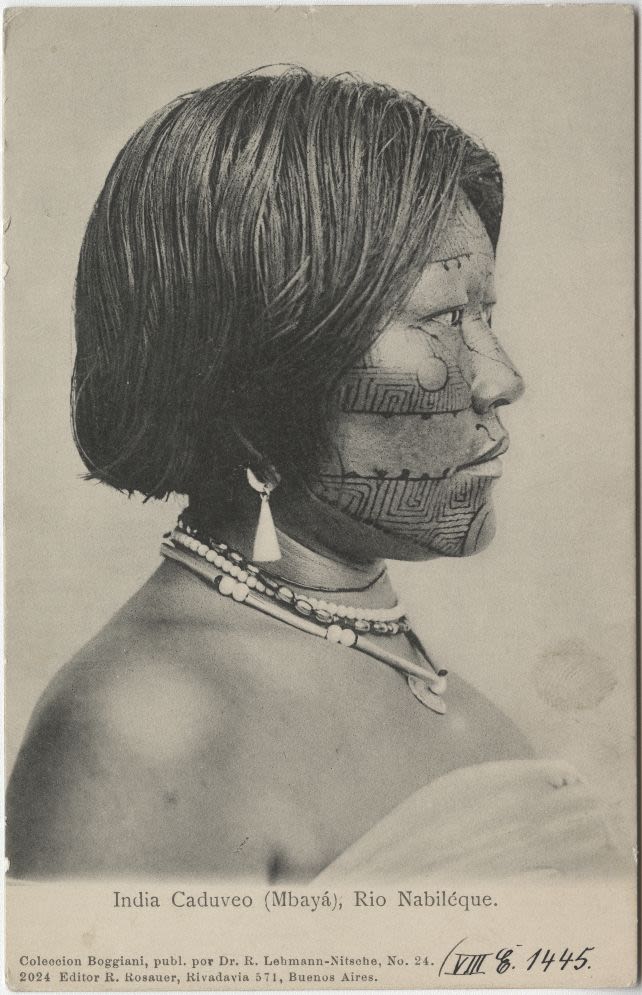
“Chamacoco Indian ‘Apuléi Préta’, Puerto 14 de Mayo.” In: Lehmann-Nitsche Robert, 1926, Collection Boggiani. 2000 Editor R. Rosauer, Rivadavia 571, Buenos Aires.
“Chamacoco Indian ‘Apuléi Préta’, Puerto 14 de Mayo.” In: Lehmann-Nitsche Robert, 1926, Collection Boggiani. 2000 Editor R. Rosauer, Rivadavia 571, Buenos Aires.
Guido Boggiani's collection entered the Museo delle Civiltà of Rome in three separate stages. In 1894, after a long correspondence with the palethnologist Luigi Pigorini, then director of the Kircherian Museum, Boggiani sold the first part of his collection.
Then he donated about 40 pieces in October of the same year. Finally, in July 1905, the last part of the collection was sold by his brother Oliviero.
The objects arrived at the museum in Rome at a time when Pigorini himself was asserting that “the life of today’s savages” was indispensable “for understanding that of prehistoric man” (1891, 3-8).
The sale by travellers, ethnographers and collectors took place in a context in which the Prehistoric and Ethnographic Museums of Rome and Florence were competing to create the first ethnographic collections.
Boggiani’s artefacts come from the Chamacoco (Yshir), Kadiwéu (Caduveo), Sanapaná, Guaná, Enlhet and Enxet (before called Lengua), Maká, Toba (Qom), Enenlhet, Bororo and Aché (before called Guayakí).
Particularly noteworthy are the elaborate headdresses made of feathers, diadems, bracelets, anklets and other body ornaments, as well as perfectly preserved shamanic objects.
Also remarkable are the geometrically decorated ceramics of the kadiwéu peoples, as well as horn combs, rosewood (Dalbergia sp) or palo santo (Bursera graveolens sp) pipes, and some finely inlaid wooden weaving knives.
Kadiwéu objects include silver jewellery or jewellery made of coloured beads and finely decorated vegetable fibre bags.
The collection at the Museo delle Civiltà has never been exhibited. Its history reflects a frenzy of accumulation (by individuals and institutions) typical of that historical moment. Boggiani collected not only artefacts but also insects, fish and plants, as can be seen from his correspondence with Raffaele Gestro, deputy director of the Civic Museum of Natural History in Genoa. He sold almost everything, but practically nothing saw the light of day in the museum’s display cases. He was the first professional collector of artefacts from Alto Paraguay (some claim that this is precisely why he met his death).
03.
The Feather Art Collection
Beautiful quills and feathers “to look at”
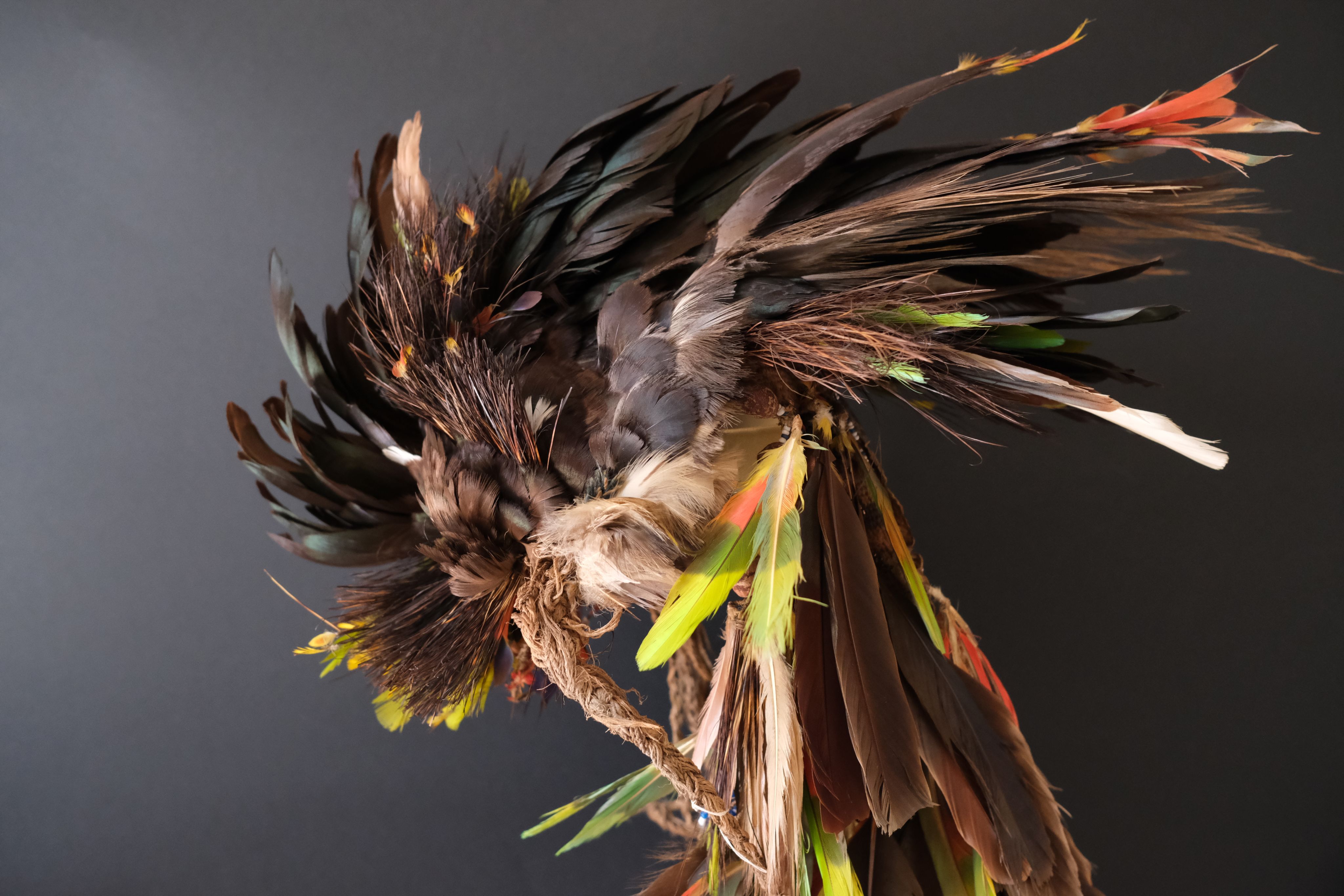
"The Ciamacoco often make their own ornaments. The most beautiful ones they can make are undoubtedly those made of feathers.
Diadems, earrings, long pendants, pretty bows, and elegant hairpins; necklaces, belts, bracelets, and leggings.
The feathers are often mixed with amulets of all kinds: locks of hair, rattlesnake tails, small bones, beaks, shells, curious insects, and finally, anything else that superstition has given any value to".
Boggiani, I Ciamacoco, 1894, pp. 61-62
"I Ciamacoco s’occupano spesso di fabbricarsi degli ornamenti. I più belli ch’essi sanno fare sono senza dubbio quelli di piume. Diademi, orecchini, lunghi pendenti, graziosi fiocchetti ed eleganti spilloni pel capo; collane, cinture, braccialetti, gambali. Alle piume vengono spesso mescolati amuleti d’ogni genere: ciocche di capelli, code di serpenti a sonagli, ossetti, becchi, conchigliette, insetti curiosi, e tutto ciò, infine, cui la superstizione ha dato un valore qualunque".
Boggiani, I Ciamacoco, 1984, p. 61-62

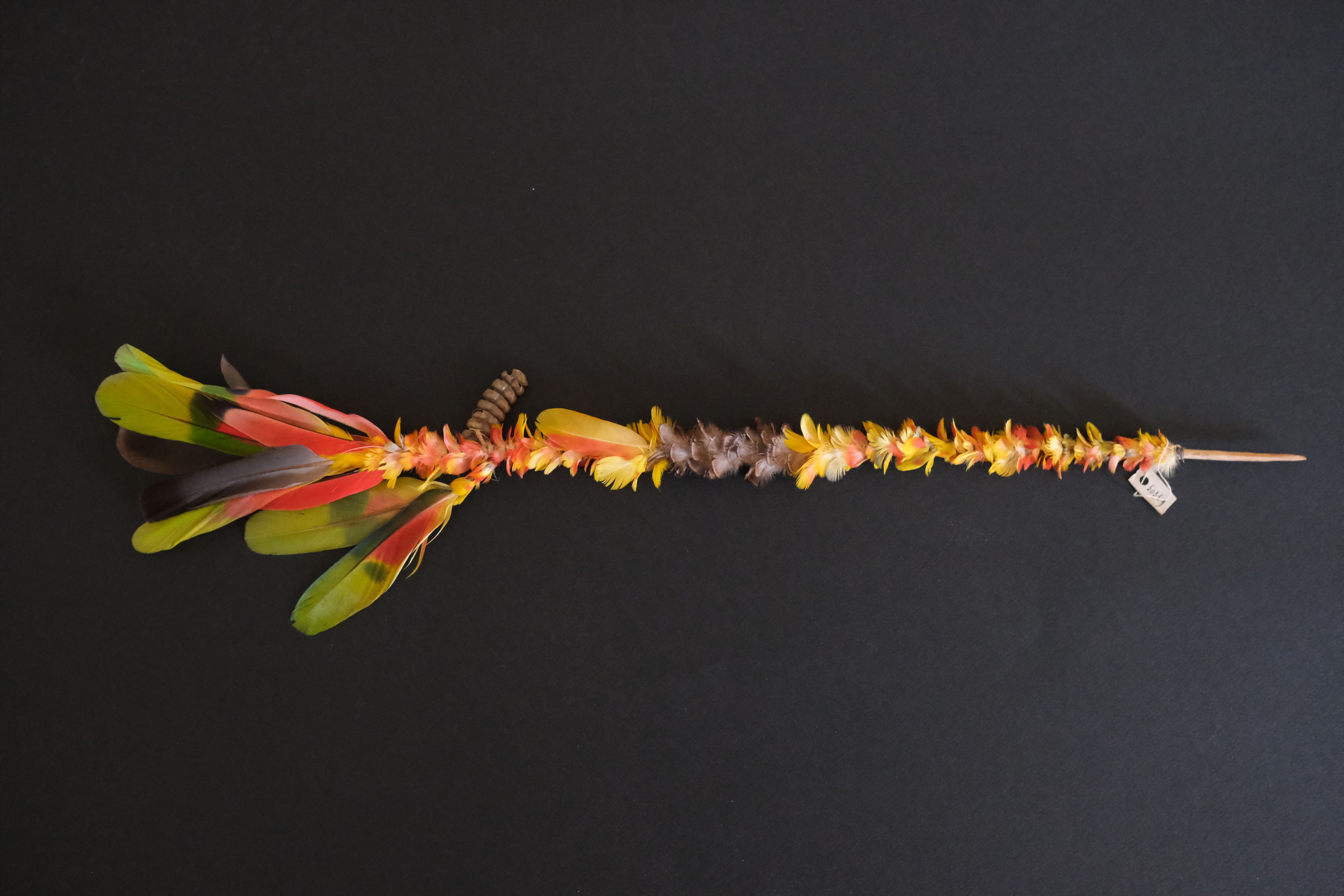
Chamacoco ritual head ornament (inventory number 50369). MUCIV – Museo delle Civiltà – Roma
Chamacoco ritual head ornament (inventory number 50369). MUCIV – Museo delle Civiltà – Roma
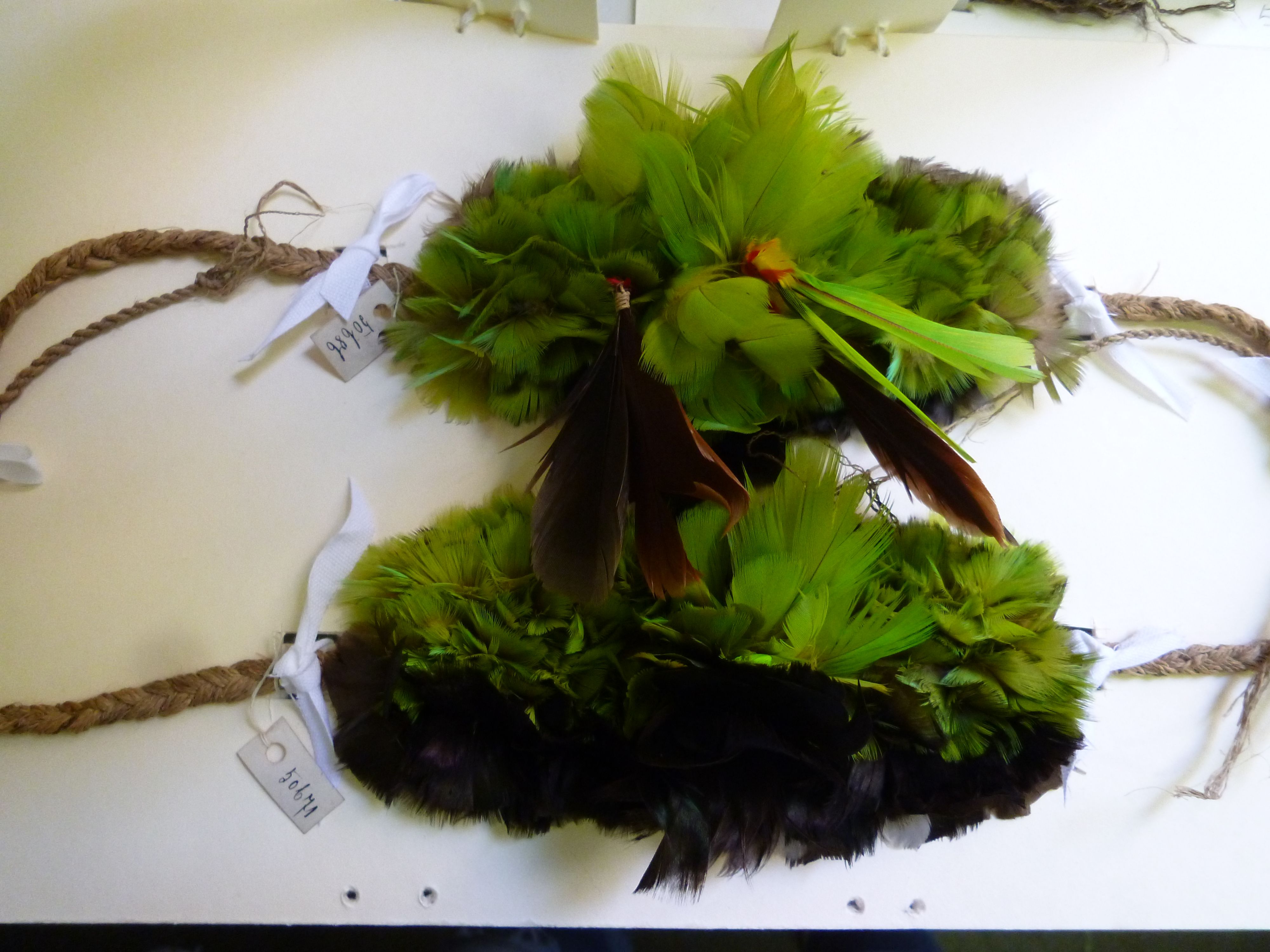
Diadems of green and black feathers and other longer feathers in the middle (Chamacoco); preserved in pairs (inv. 50686 and 50671). MUCIV – Museo delle Civiltà – Roma
Diadems of green and black feathers and other longer feathers in the middle (Chamacoco); preserved in pairs (inv. 50686 and 50671). MUCIV – Museo delle Civiltà – Roma
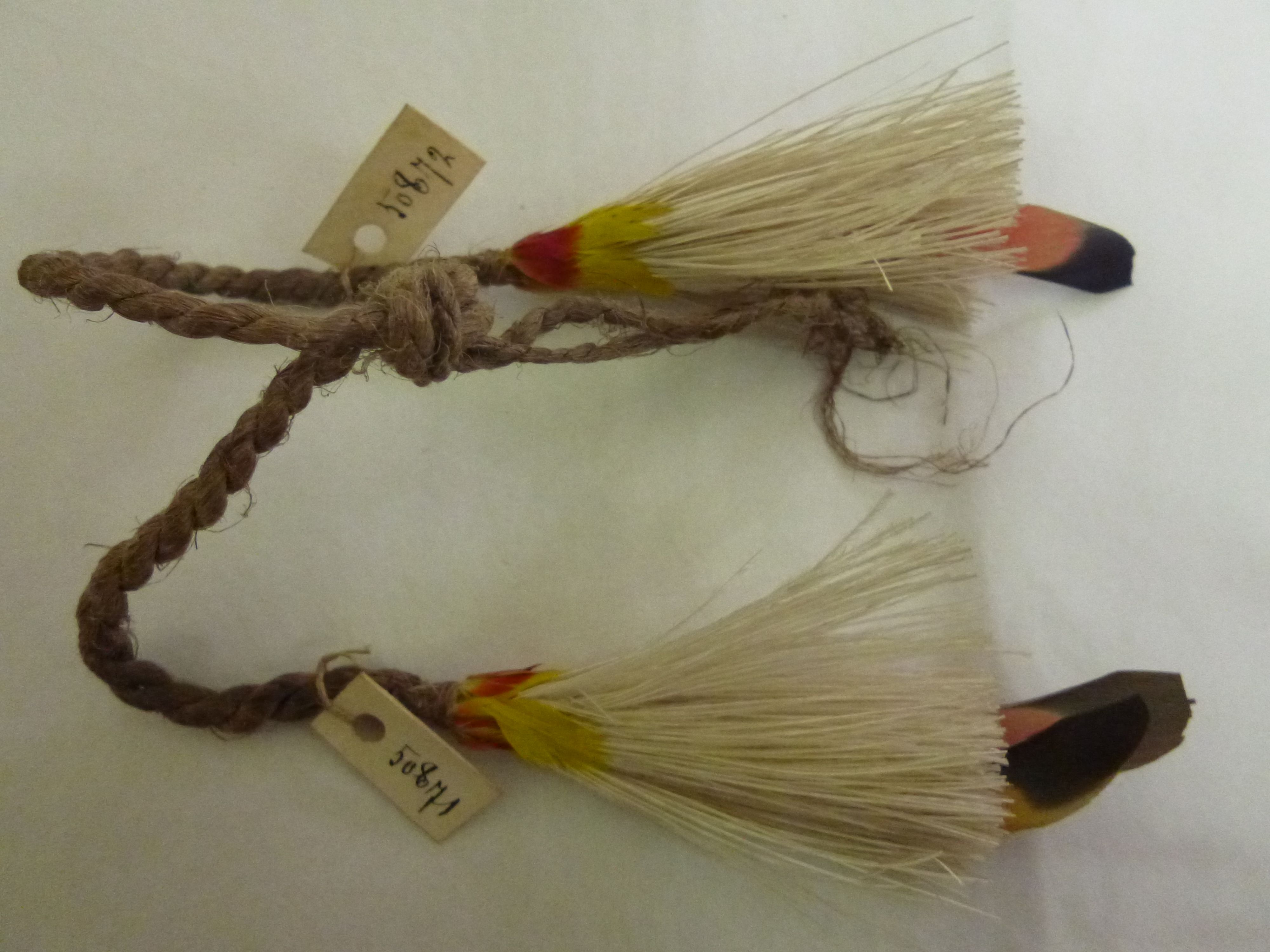
Chamacoco earrings made of white and red/black feathers (inv. 50871 and 50872). MUCIV – Museo delle Civiltà – Roma
Chamacoco earrings made of white and red/black feathers (inv. 50871 and 50872). MUCIV – Museo delle Civiltà – Roma
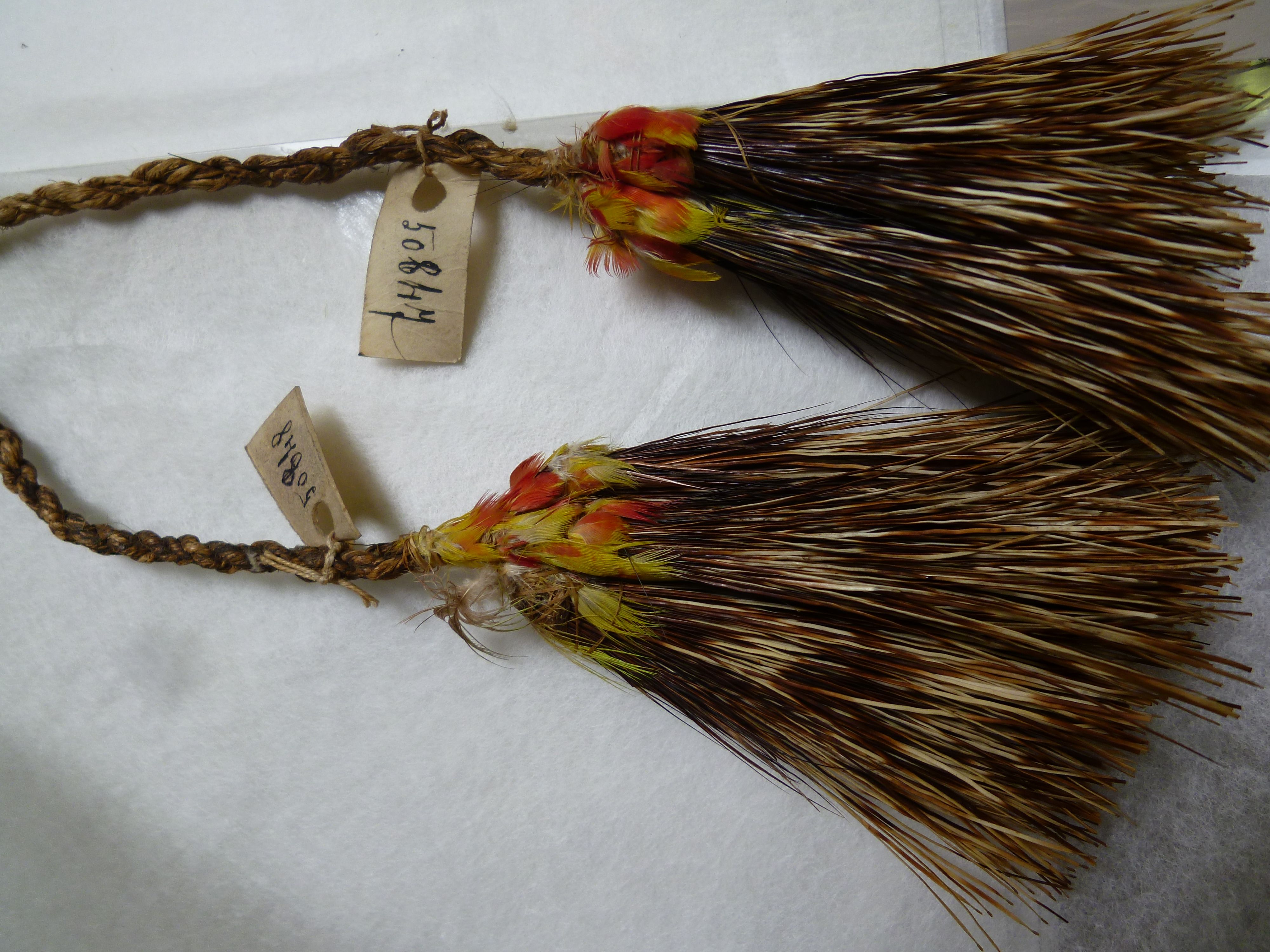
Chamacoco earrings made of peccary bristles and parrot feathers (inv. 50847 and 50858). MUCIV – Museo delle Civiltà – Roma
Chamacoco earrings made of peccary bristles and parrot feathers (inv. 50847 and 50858). MUCIV – Museo delle Civiltà – Roma
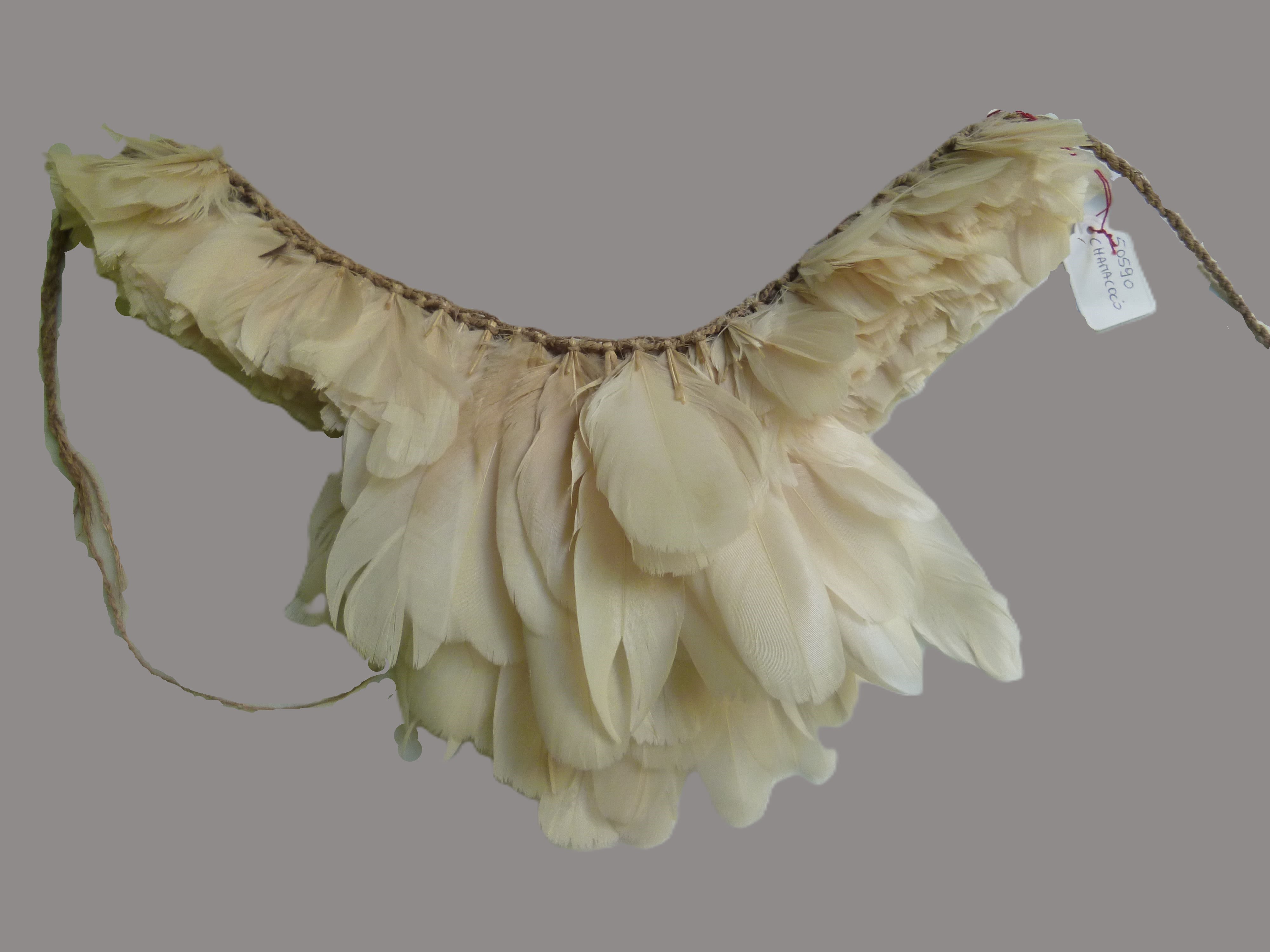
Chamacoco headdress made of white heron feathers (inv. 50590). MUCIV – Museo delle Civiltà – Roma
Chamacoco headdress made of white heron feathers (inv. 50590). MUCIV – Museo delle Civiltà – Roma
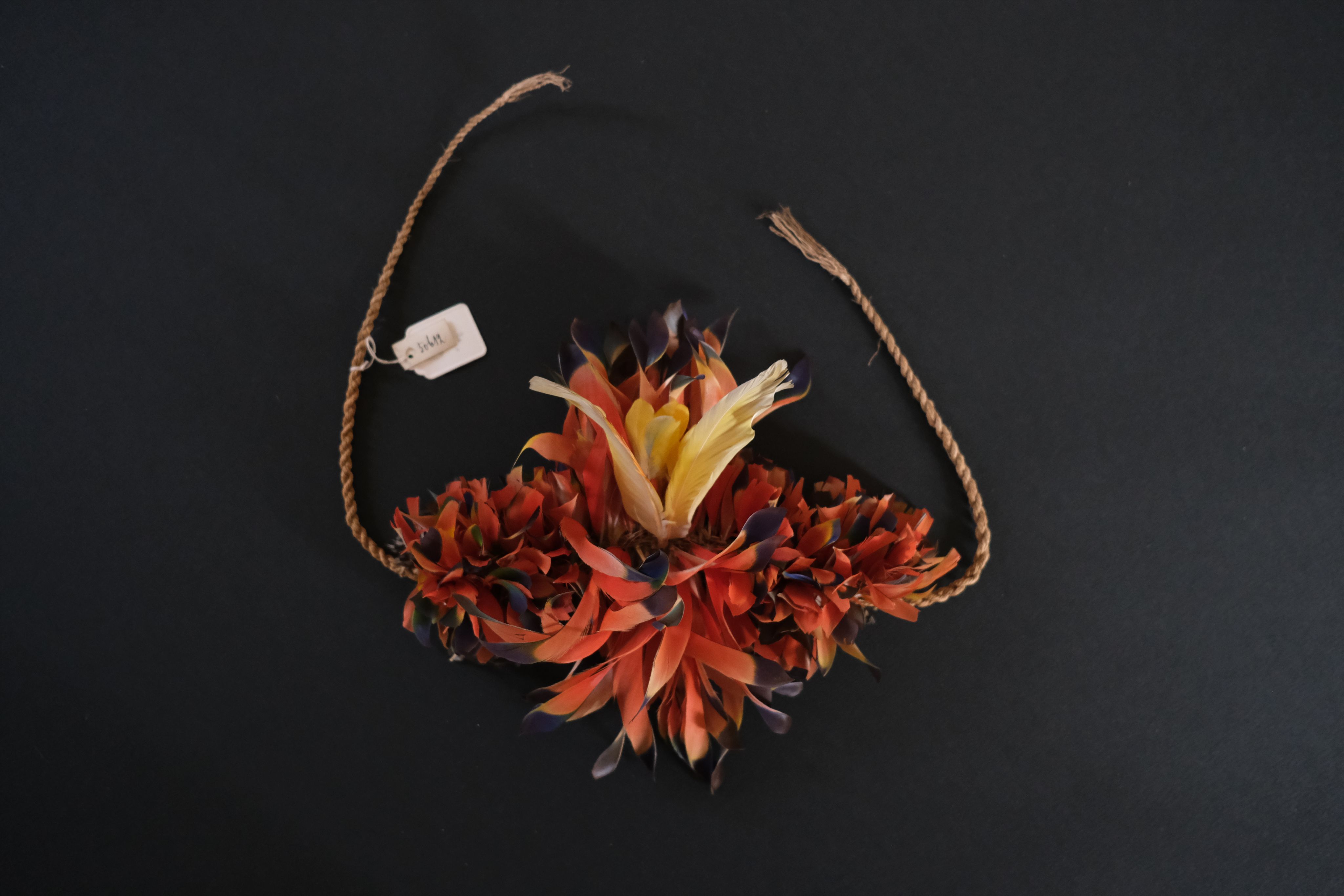
Headdress made of pink flamingo feathers and unidentified yellow feathers (inv. 50612). MUCIV – Museo delle Civiltà – Roma
Headdress made of pink flamingo feathers and unidentified yellow feathers (inv. 50612). MUCIV – Museo delle Civiltà – Roma
A “collection within a collection” which comprises more than a 1000 objects, solely at the Museo delle Civiltà, mainly Chamacoco (yshir) but also Sanapaná, Pilagá, Angaité and Enlhet, Cainguá (tupi-guaraní language family).
In I Ciamacoco (1894), Boggiani presents 55 images of artifacts but does not explore their socio-ceremonial system or investigate their meaning.
He spoke of them as objects linked to “superstition”, but it was not until the 1950s that studies (ethnographic, linguistic, aesthetic-artistic) on the Chamacoco ritual world revealed their refined symbolism.
These were the instruments (ishò in the yshir language) of the cult specialist (konsaha) who worked with feather and pen ornaments, using his hands and singing.
The art of weaving feathers onto a karaguatá fibre net (Bromelia sp) and fixing them with beeswax has a threefold meaning: the first, visible, is aesthetic and ornamental, the second is therapeutic and propitiatory, and the third is sociological, as each yshir-chamacoco clan possessed a particular type of feathers and quills with which to identify and differentiate themselves.
Just as different categories of specialists used feathers and quills from different birds, they depend on the area to which they referred for their propitiatory or healing rituals.
Myths provide us with clues about social composition (the origin of human beings and clans, the appearance of the anabsoro, the main deities of the yshir pantheon, the relationship between clans and animal worlds) and the “great ceremony” (called debylyby). This ritual took place in spring and consolidated and affirmed membership of the male initiation society.
It was a riot of performative practices, sports games and initiations of young people. During this ceremony, the artefacts in this collection were worn and displayed. With evangelisation (Christian and Evangelical), the chamacoco themselves gradually abandoned their practices.
The censorship to which these cults were subjected caused crises and “cultural amnesia” that explain and recount the complex cultural fragility of these groups today.
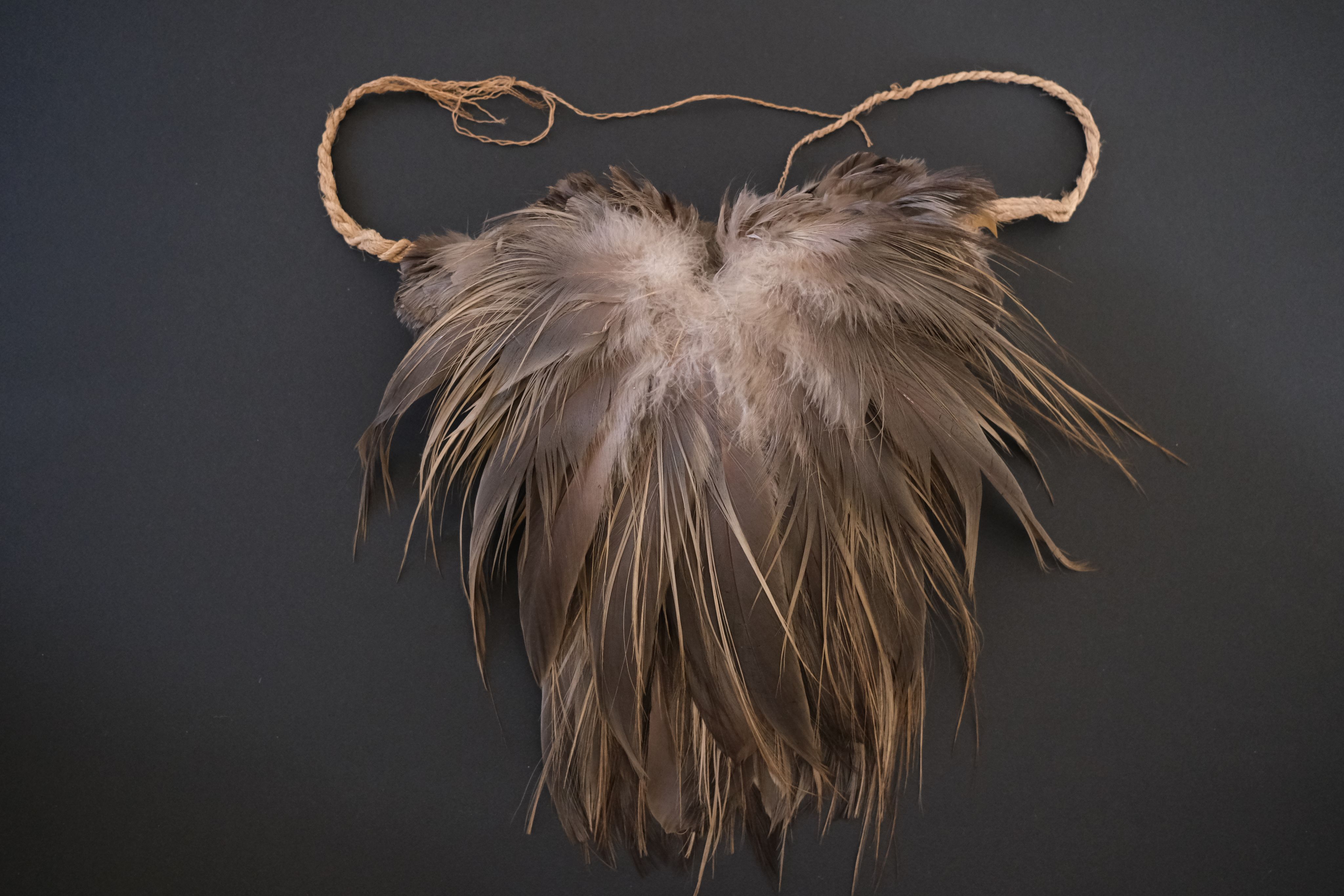
Chamacoco ostrich feather headdress (inv. 50603). MUCIV – Museo delle Civiltà – Roma
Chamacoco ostrich feather headdress (inv. 50603). MUCIV – Museo delle Civiltà – Roma
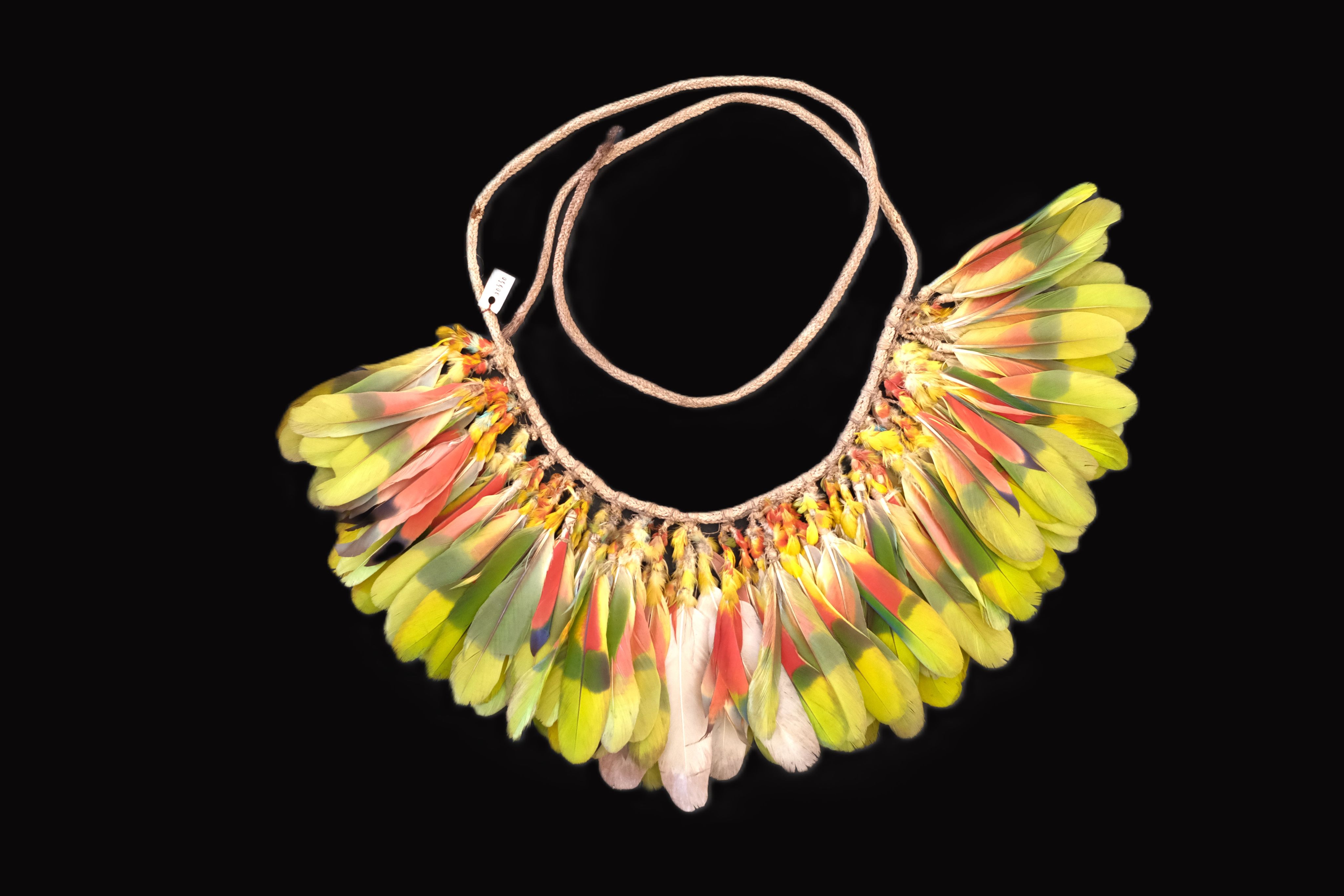
Chamacoco blue-crested parrot headdress (inv. 50550). MUCIV – Museo delle Civiltà – Roma
Chamacoco blue-crested parrot headdress (inv. 50550). MUCIV – Museo delle Civiltà – Roma
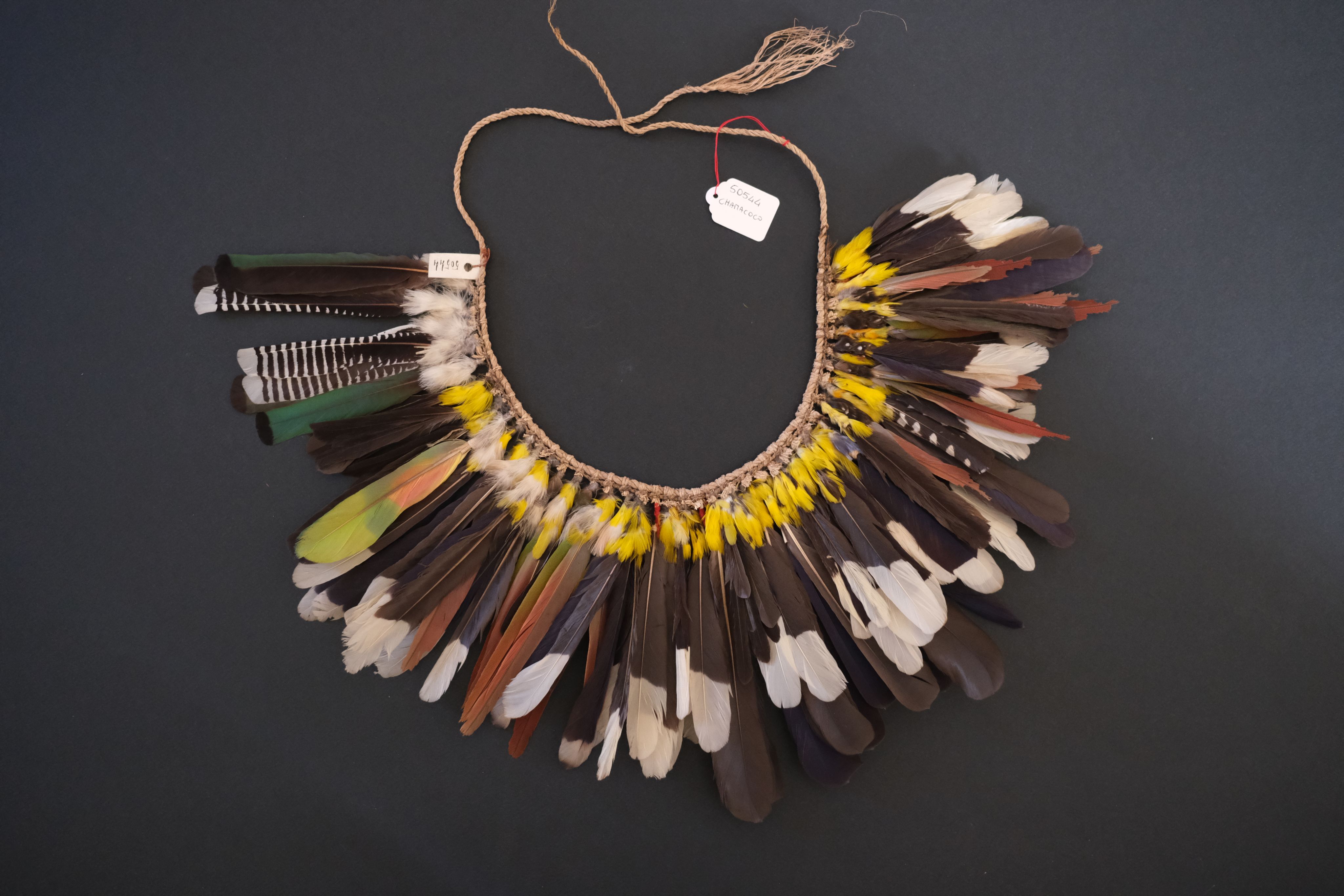
Chamacoco headdress made of various bird feathers and small yellow feathers (possibly painted) (inv. 50544). MUCIV – Museo delle Civiltà – Roma
Chamacoco headdress made of various bird feathers and small yellow feathers (possibly painted) (inv. 50544). MUCIV – Museo delle Civiltà – Roma
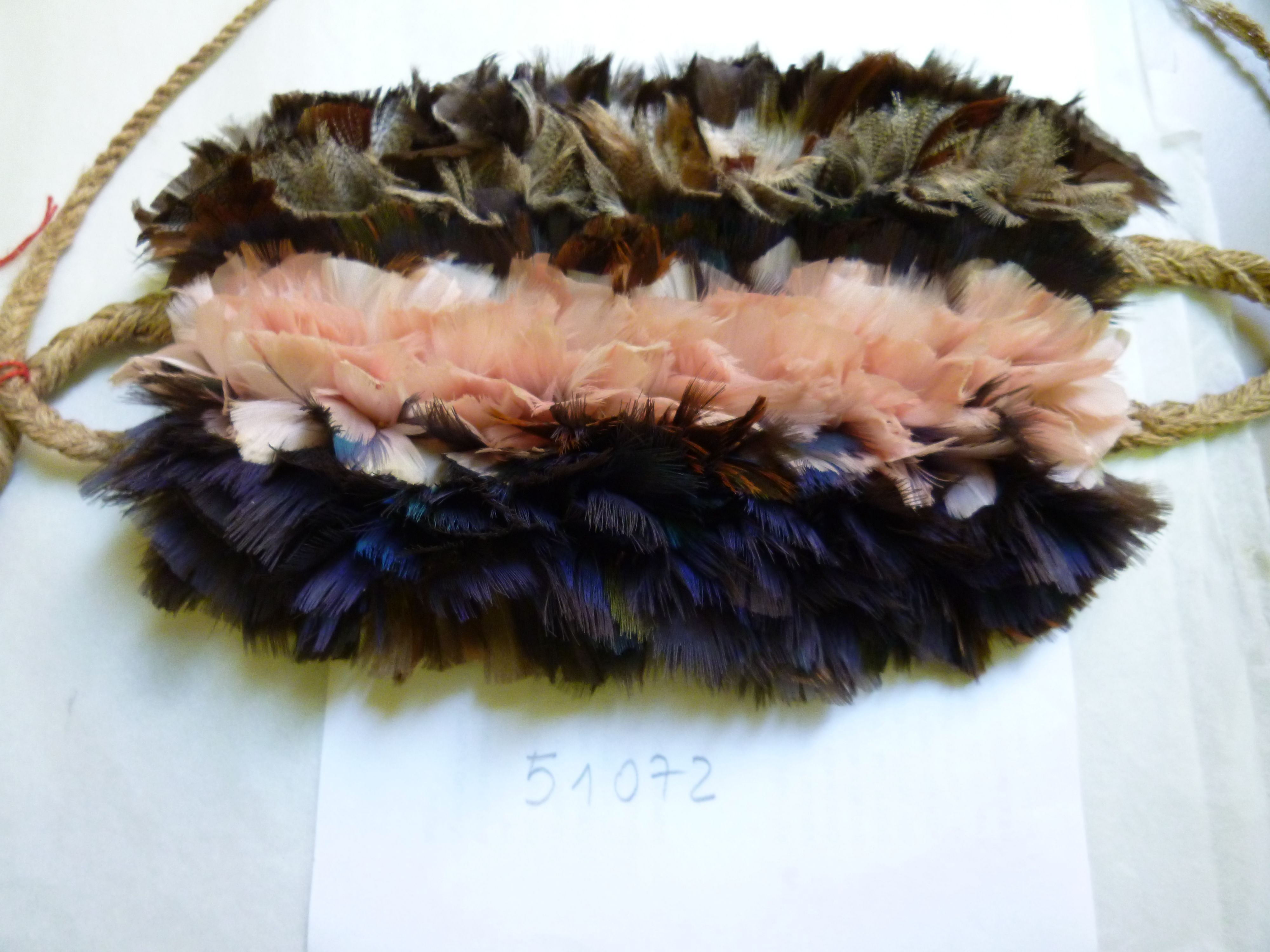
Three-color headband or leg band made of pink spoonbill feathers and other unidentified feathers (inv. 51072). MUCIV – Museo delle Civiltà – Roma
Three-color headband or leg band made of pink spoonbill feathers and other unidentified feathers (inv. 51072). MUCIV – Museo delle Civiltà – Roma
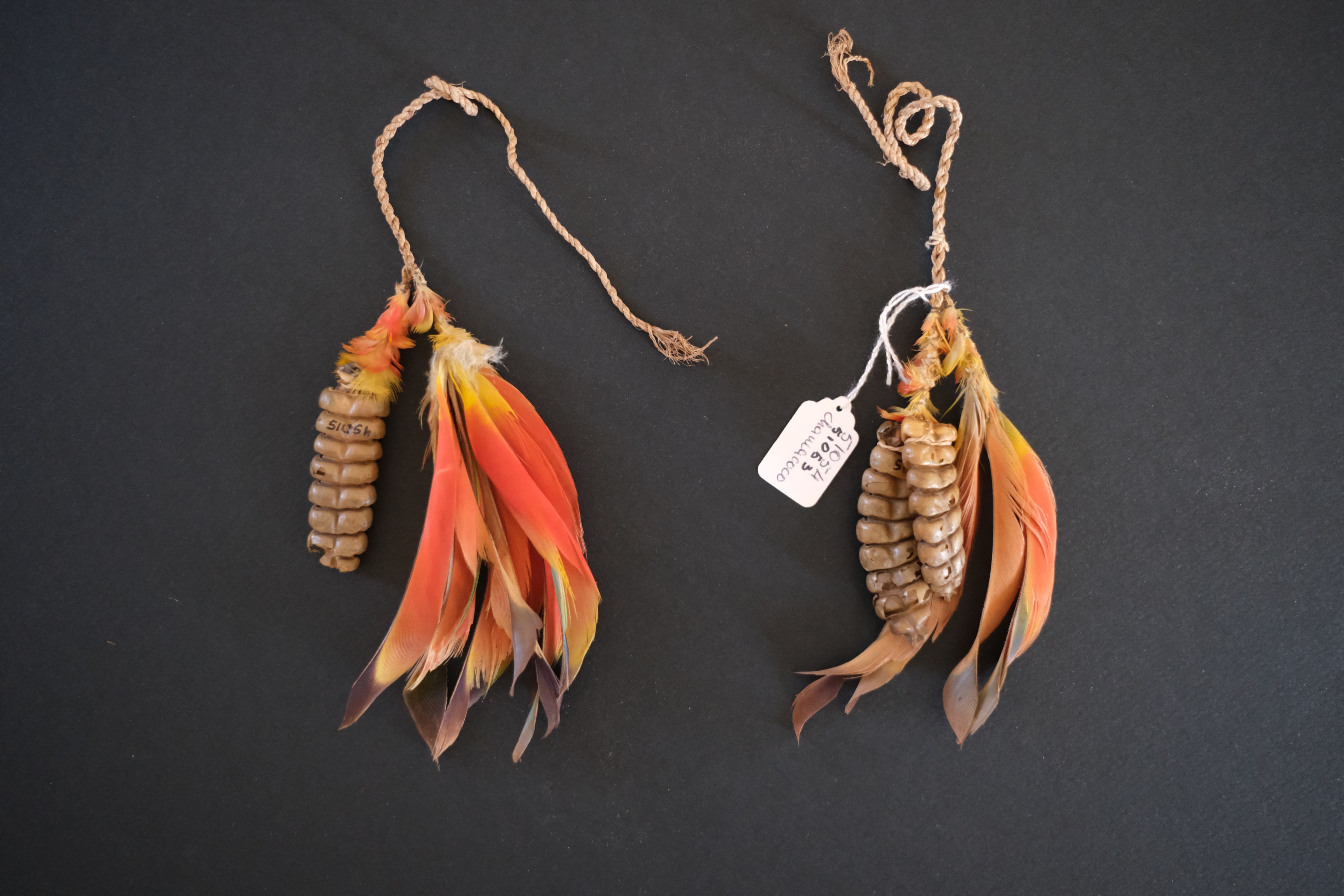
Chamacoco earrings made of flamingo feathers and rattlesnake tails. MUCIV – Museo delle Civiltà – Roma
Chamacoco earrings made of flamingo feathers and rattlesnake tails. MUCIV – Museo delle Civiltà – Roma
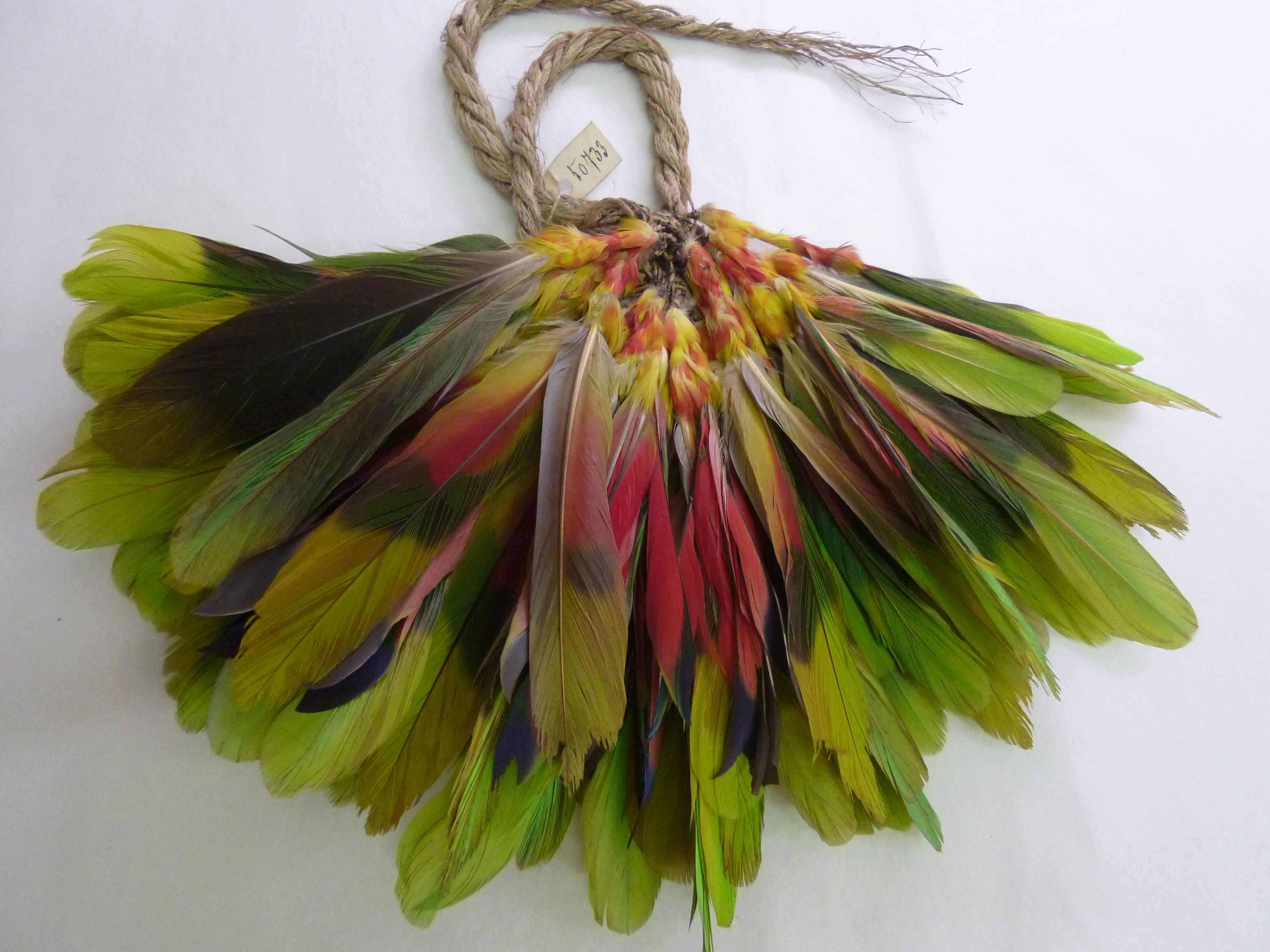
Hair pendant made of blue-crested parrot feathers (inv. 50573). MUCIV – Museo delle Civiltà – Roma
Hair pendant made of blue-crested parrot feathers (inv. 50573). MUCIV – Museo delle Civiltà – Roma
04.
Fuerte Olimpo
Fieldwork and virtual restitution

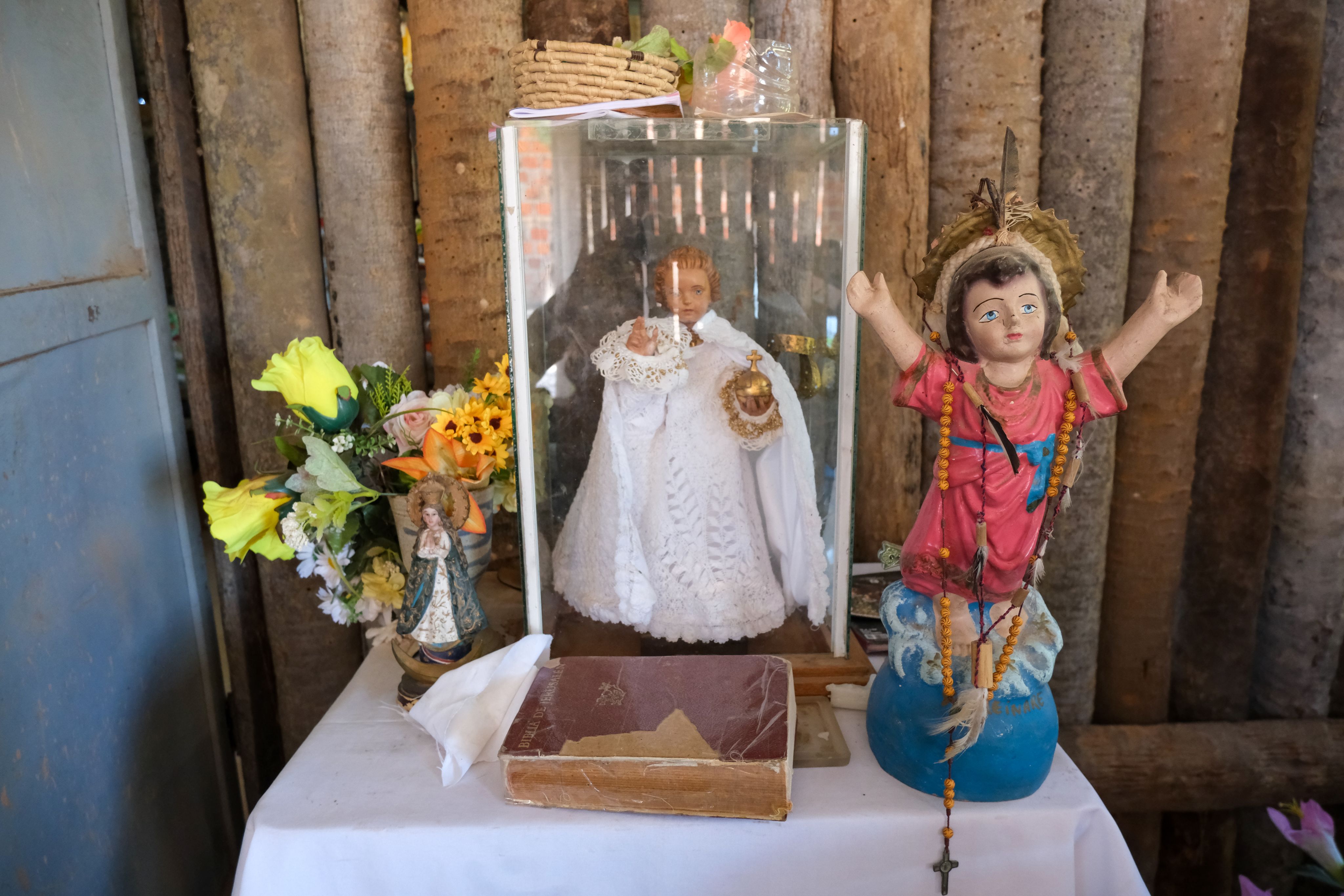
Chapel of the Niño Jesus of the indigenous community of Abundancia (Fuerte Olimpo), feather inserts-Fuerte Olimpo November 2024. (Photo by Anita Gamberini)
Chapel of the Niño Jesus of the indigenous community of Abundancia (Fuerte Olimpo), feather inserts-Fuerte Olimpo November 2024. (Photo by Anita Gamberini)

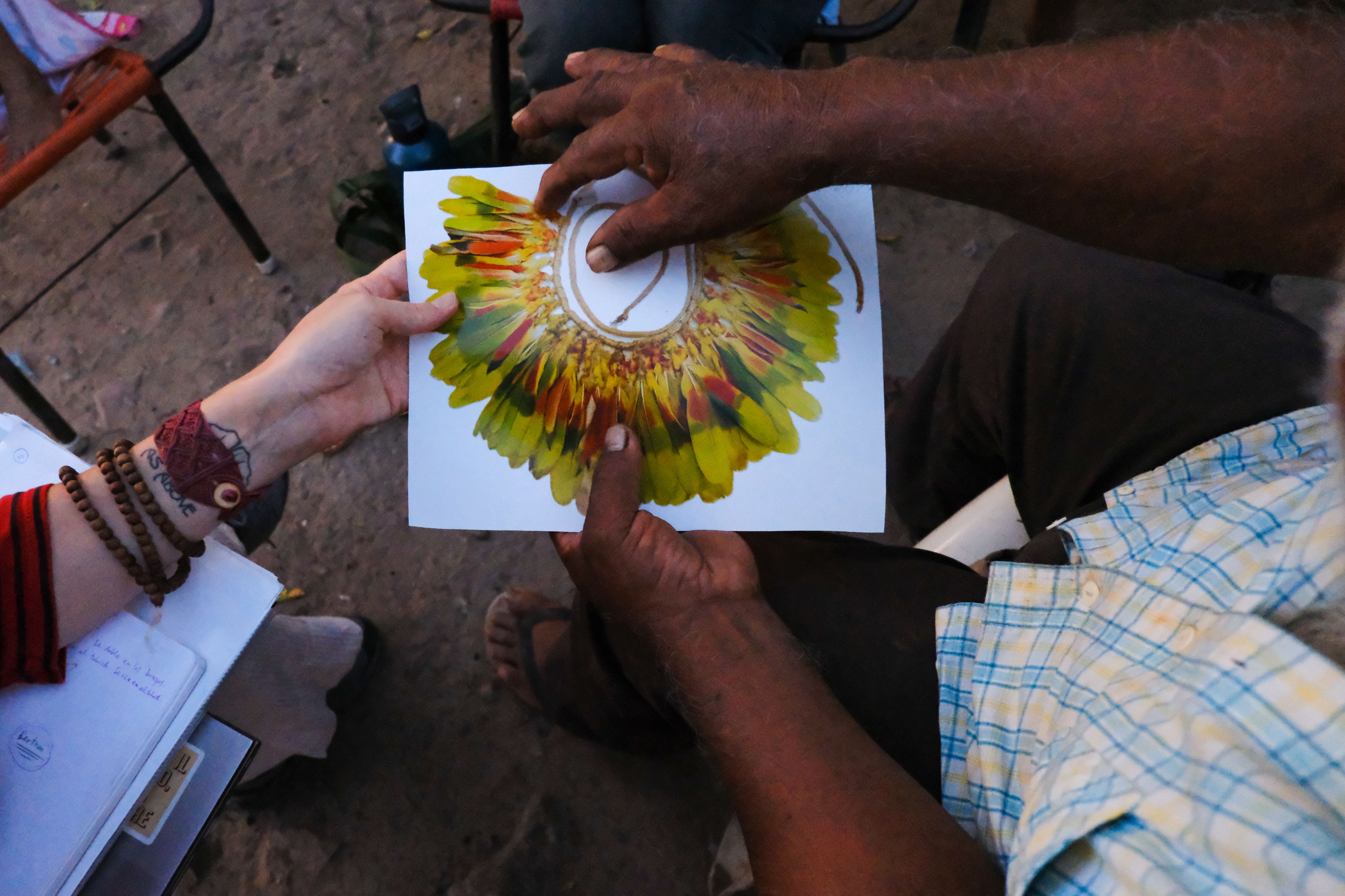
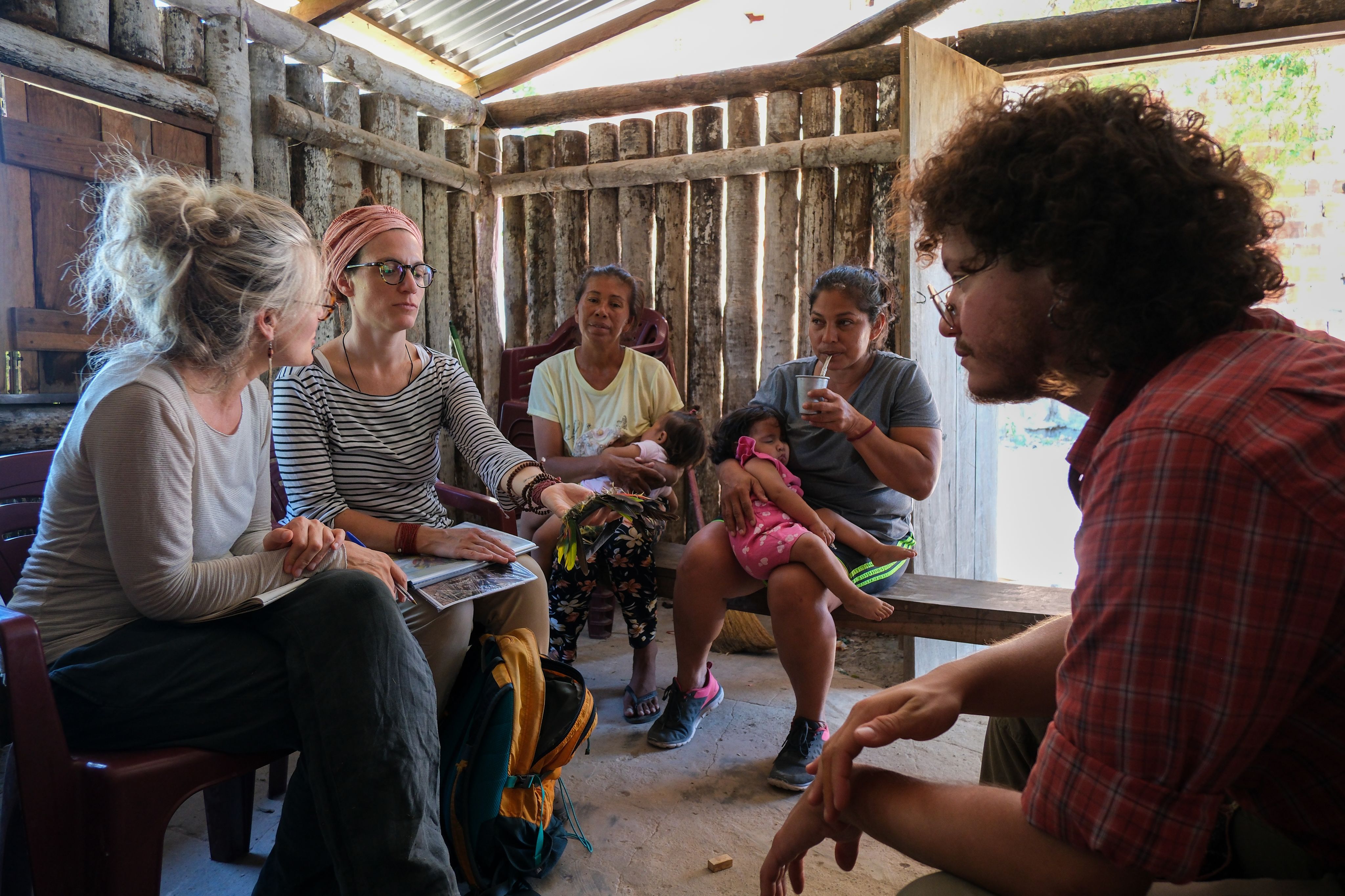
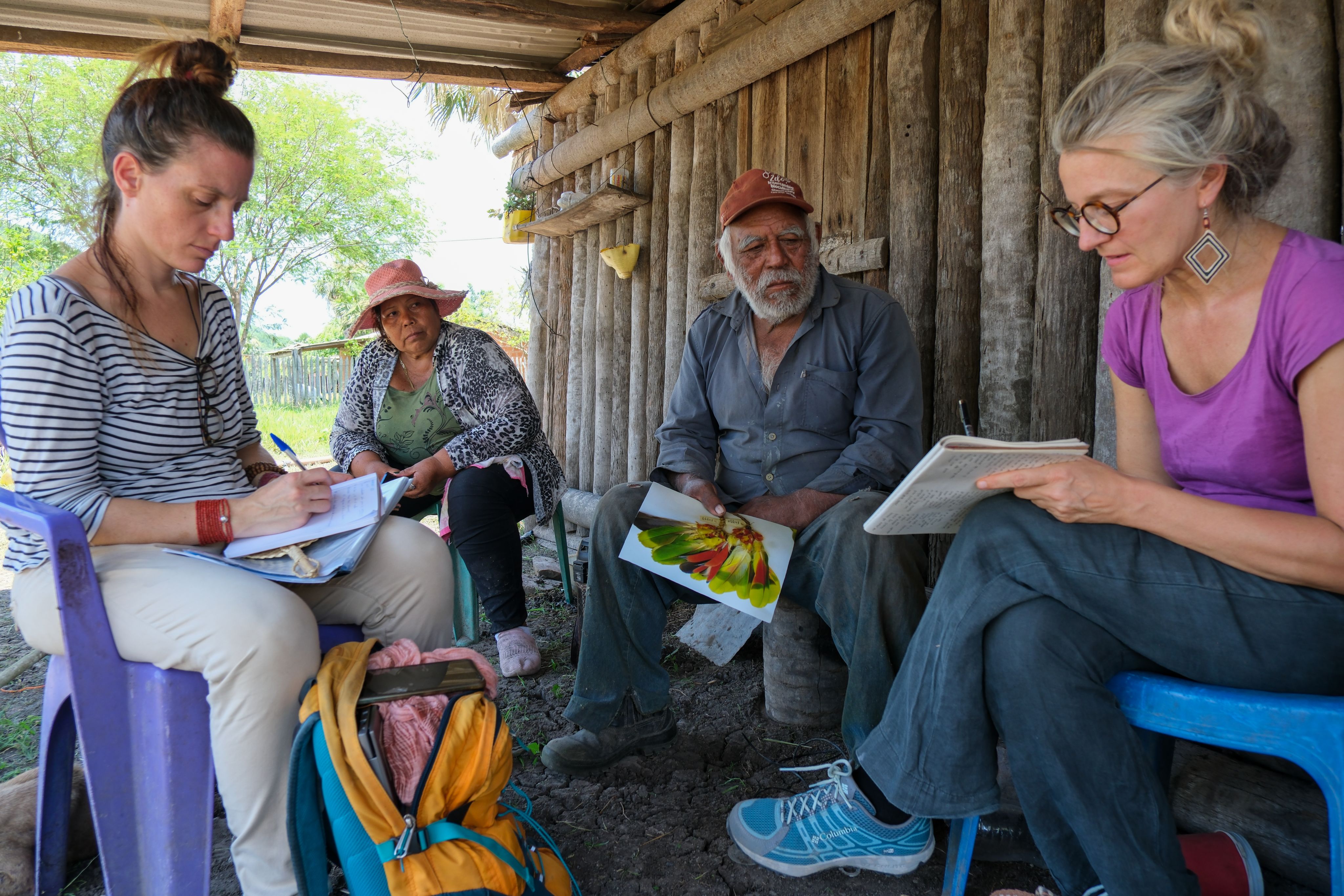
Questioning an elderly yshir man using a photo of objects from the Boggiani collection-Fuerte Olimpo November 2024. (Photo by Anita Gamberini)
Questioning an elderly yshir man using a photo of objects from the Boggiani collection-Fuerte Olimpo November 2024. (Photo by Anita Gamberini)

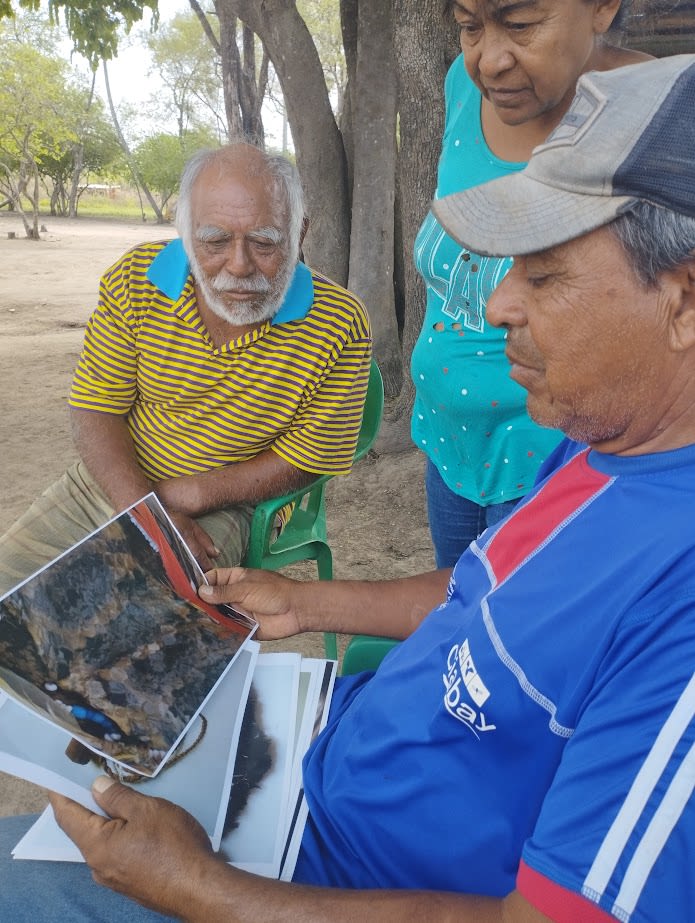
Some yshir ybytoso look at photos of objects from the Boggiani collection at the Museum of Civilization-Fuerte Olimpo November 2024. (Photo by Anita Gamberini)
Some yshir ybytoso look at photos of objects from the Boggiani collection at the Museum of Civilization-Fuerte Olimpo November 2024. (Photo by Anita Gamberini)
In November 2024, we visited the town of Fuerte Olimpo and, in particular, the two Yshir communities of Virgen Santísima and Abundancia. Zelda Franceschi, Caterina Fidanza, Niccoló Santelia and Agostino Gamberini (University of Torino), as well as Anita Gamberini (University of Palermo) were present on the field.
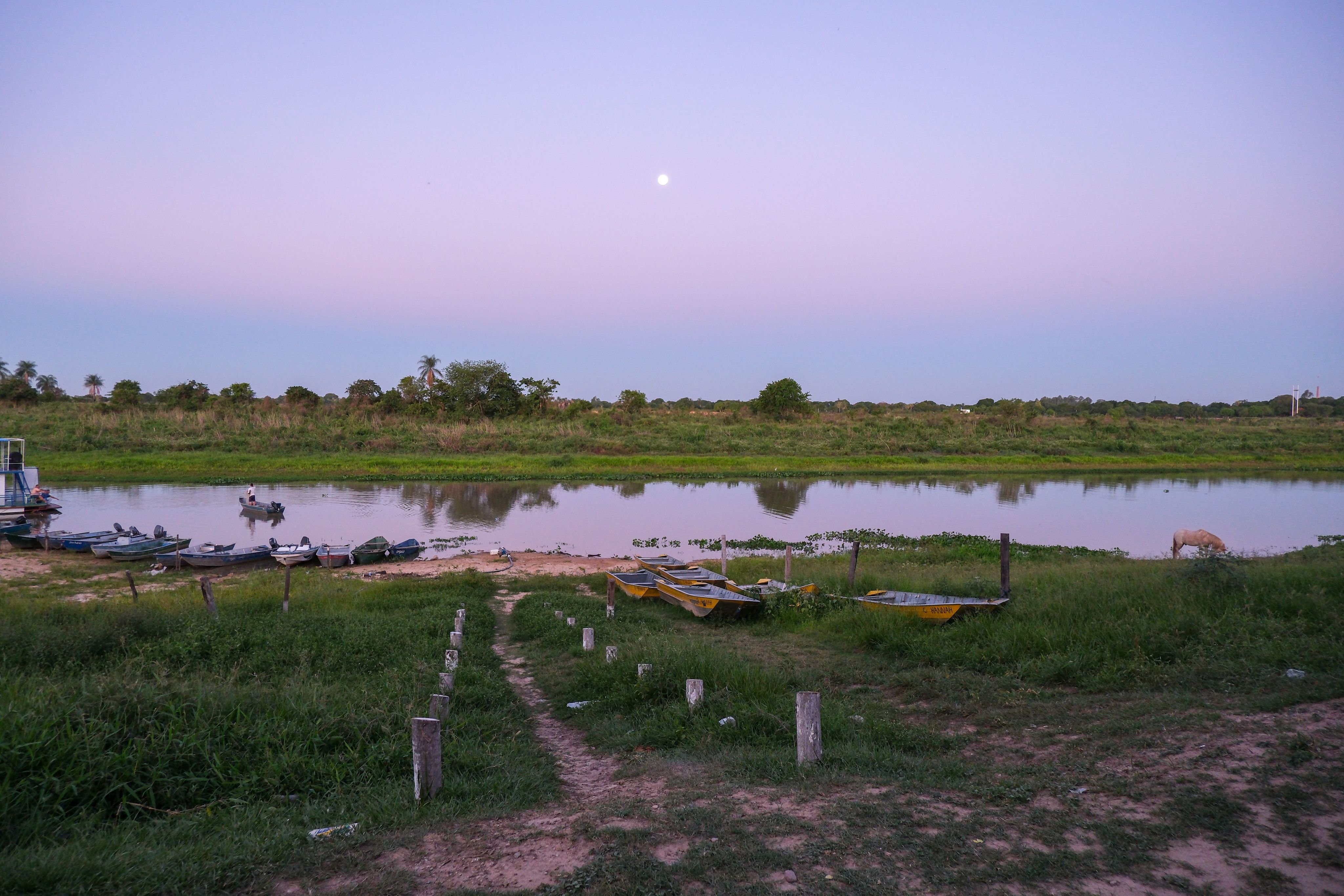
Fuerte Olimpo, today the capital of the Department of Alto Paraguay, was founded in 1792 under the name of Fuerte Borbón as a fort to contain the siege of the indigenous people and Portuguese penetration into Spanish-controlled lands.
It was the epicentre of Boggiani’s commercial activities. Together with Miguel Ignacio Acevedo, he was responsible for supplying goods to settlers and soldiers. Boggiani traded indigenous artefacts on his own account. The diary contains explicit references to the slave trade (by settlers, but also inter-ethnic) and the sale of indigenous children (practices endorsed by local urban centres, where they were employed as domestic servants).
The descendants of those chamacoco who knew Guido Boggiani now live in Fuerte Olimpo. As in almost all of the indigenous Gran Chaco, they too have now opted for a new name, yshir (the men/the people), because chamacoco is an arawak term that designated groups considered inferior (“the dogs”, “the slaves”). According to the 2022 Paraguayan census, they are divided into two subgroups, the tomaraho (213 people known in literature as “bravos”) and the ybytoso (2.126 people known in literature as“mansos”) of the same linguistic family (zamuco).
The aim of our trip was, on the one hand, to make a digital restitution of these artifacts and, on the other, to share our reflections on our knowledge of them. Today, they are no longer part of everyday ritual life, as Salesian missionaries have been present in Fuerte Olimpo since 1920. Certainly, some of the indigenous interlocutors showed a deep interest in these artifacts, photographs of which we showed them: some struggled to reconstruct their manufacture and ritual use, while others were able to recognise every detail. There is a desire to “preserve” a symbolic and ritual heritage and an awareness that what was taken and “collected” by Boggiani constitutes a precious “cultural heritage”, their “culture”.
This is something that needs to be worked on today.
05.
Working with Salomon
Stories of life and objects

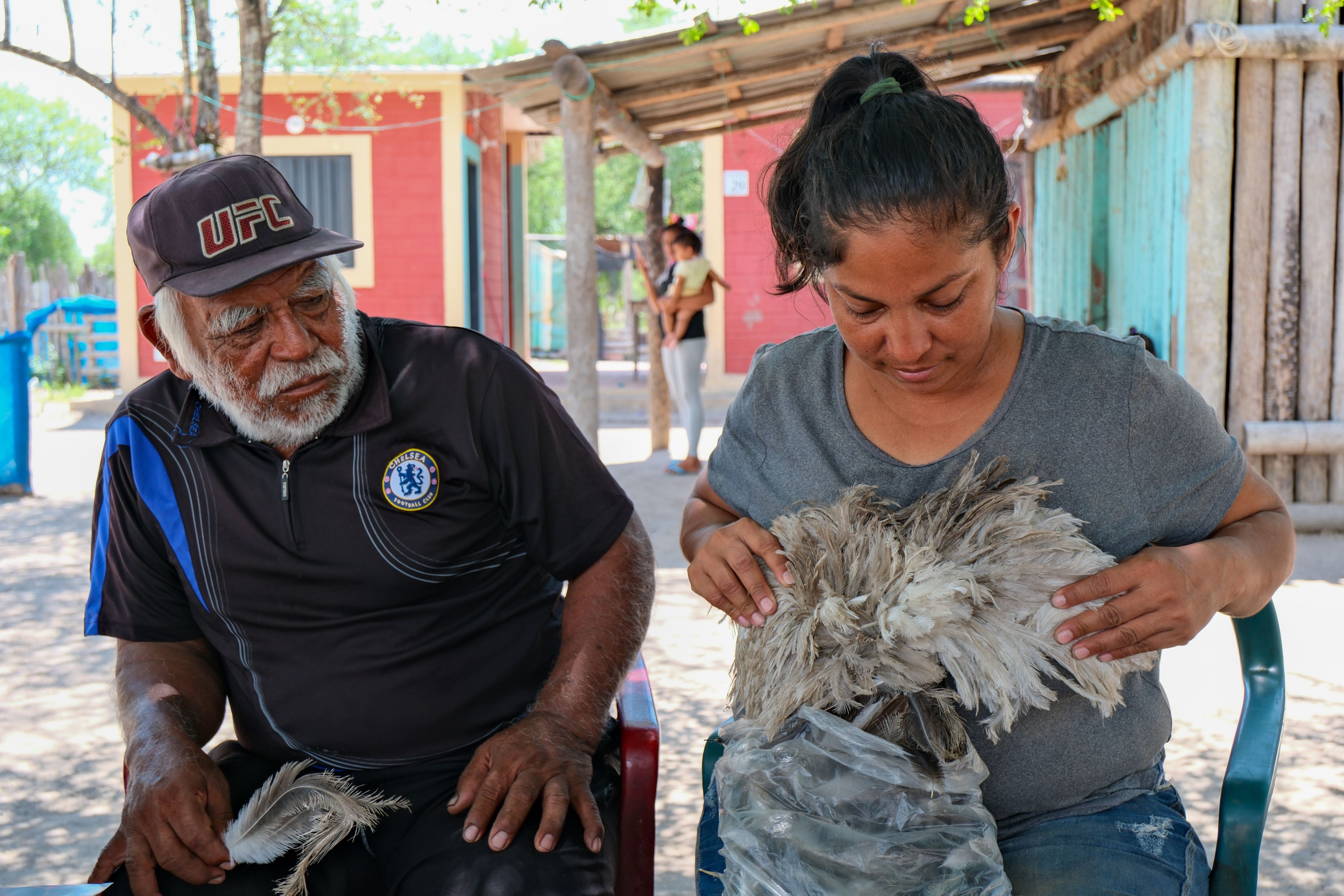
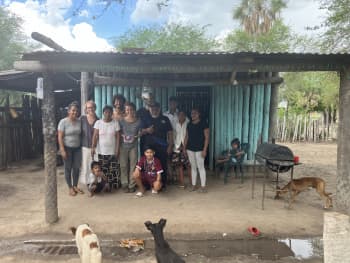
The two communities of Abundancia and Virgen Santísima welcomed us thanks to the mediation of Sister Blanca Ruíz, a Salesian nun who has been living in Fuerte Olimpo for four years and who works mainly with the tomaraho community of María Elena. We worked mainly with the family of Salomon Báez, with his granddaughters Edith Sandra Martínez Romero and Ángela Vera Barboza.
Salomon settled in the community of Abundancia in 1963. He remembers Father Angel Muzzolon (the first apostolic bishop and vicar of the Paraguayan Chaco) building the chapel.
Carlos Casado's Company paid for its construction. He recalls when he was ten years old and travelled with his father and his bull, going around the area (Puerto Mihanovich, Puerto Guaraní, Puerto Casado) to work, cutting trees and working with quebracho tannin.
Agustina, Salomon’s mother, was a konsaha, in particular she “worked” with the entities that live underground, and his grandmother, also a konsaha, practised with birds of the aquatic realm. Salomon’s father was also a konsaha. He did not inherit the spiritual office but, having lived with his father and grandparents, he knows the ritual use and material aspects of almost every artefact.
Salomon tells us that the meikher herbo object is made of feathers painted with natural plants (tapirage) and consists of three inserts of karaguatá netting and feathers, which are then woven together. According to him, this type of ornament is worn only in the male ceremonial circle (tobich) by young initiates (wetern).
He tells us about another object, how the insertion of the tail of a species of rattlesnake served as a “rattle” for the konsaha , but also as protection against external attacks by other cult specialists. The history of Salomon’s family is intertwined with that of the Salesians, who had contacts with Casado’s company, which employed many indigenous people, and with that of the cult specialists whose artefacts Boggiani collected and which arrived at the museum then directed by Luigi Pigorini, the same artefacts that we have shown in the photographs.
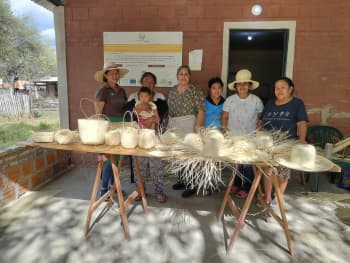
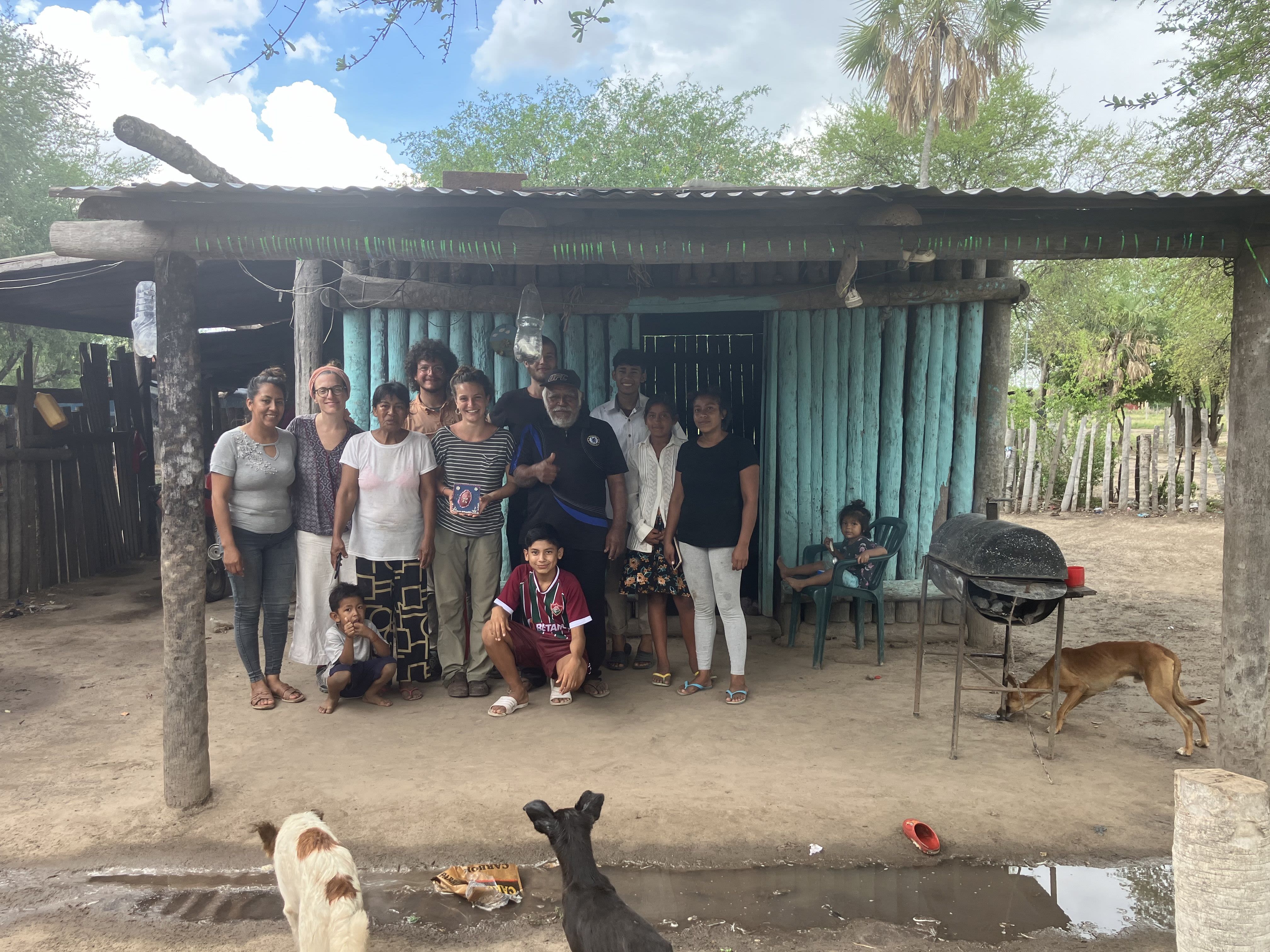
06.
Return. Display. Understand

Este palo es tekà, es bambù. Se limpia bien se hace un agujerito y se usa. …
No, no son huesos, parece hueso, se hace el molde, se fina, se toma un agujerito, se hace un agujerito.
Es takuara.
(takuara es bambù en guaranì, en ishir es teká)”
Fuerte Olimpo, Noviembre 2024, Salomón Báez
This stick is tekà, it's bamboo. It's cleaned thoroughly, a small hole is made, and it can be used. ...
No, they're not bones, they look like bones, the mould is made, it's refined, a small hole is made, a small hole is made. It is takuara.
(Takuara is bamboo in Guaraní, in Ishir it is teká)".
Fuerte Olimpo, November 2024, Salomón Báez
These are the words of Salomón Báez, an yshir man and privileged witness during our stay in Fuerte Olimpo. Together with Salesian nun Blanca Ruíz and other men and women from the town of Fuerte Olimpo, he guided us in reading, interpreting and understanding part of Guido Boggiani’s collection.
What emerged was a complex, delicate and surprising picture. Sister Blanca Ruiz showed us the entire shamanic apparatus entrusted to her by a specialist in the cult, the shaman Anselmo Amarilla, and commented as follow.
"Me entregó el señor Anselmo Amarilla para que venda, necesita algún sustento y se está quedando ciego. Pero Z. me dijo que no se venden, que no convendría vender las plumas del chamán porque es vender su espíritu. Ellos no quieren vender, pero aunque muchas veces por necesidad venden su atuendo al museo porque pagan bien".
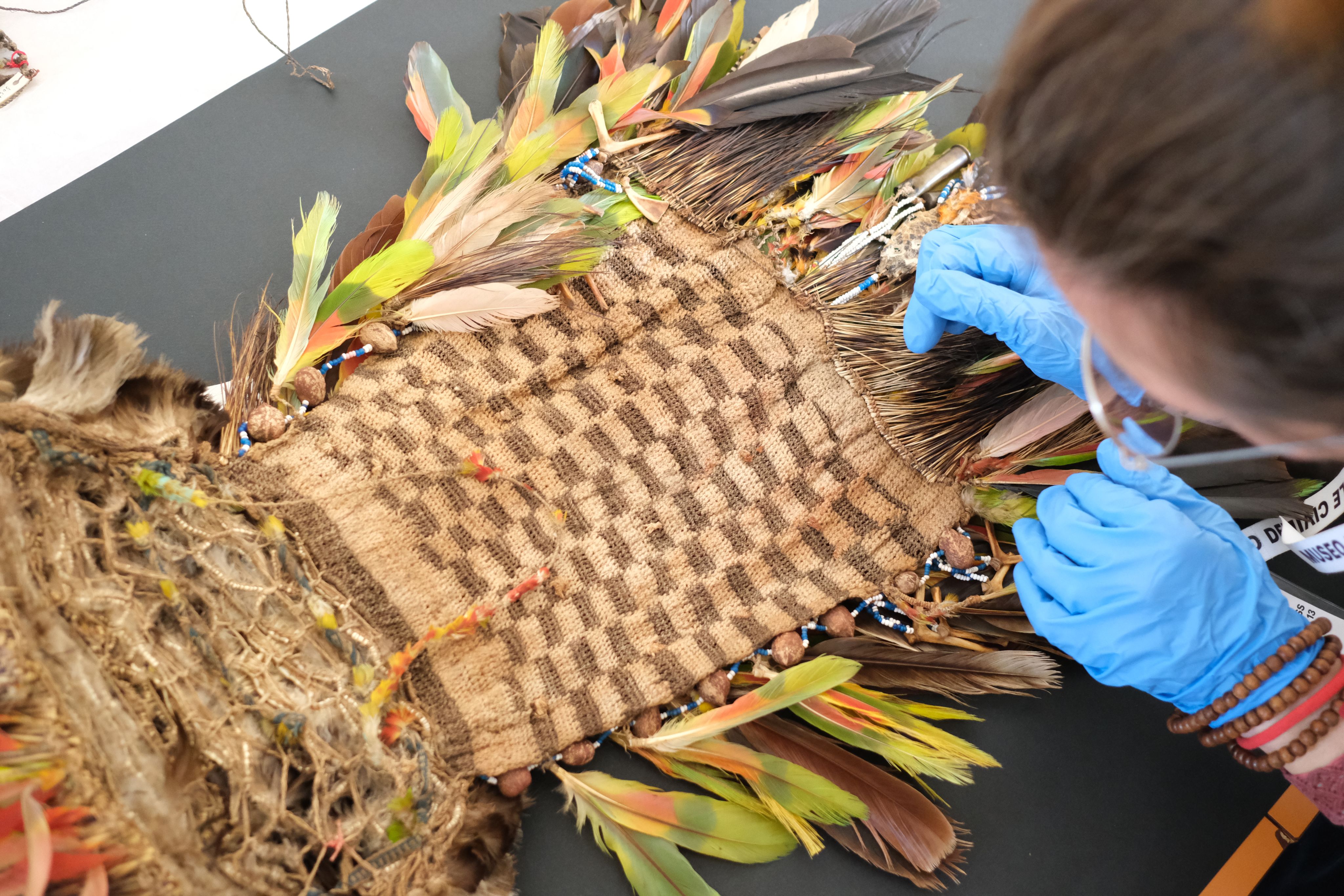
Taking a closer look at a yshir-chamacoco headdress on display at the MUCIV – Museo delle Civiltà – Roma. (Photo by Valerio di Martino)
Taking a closer look at a yshir-chamacoco headdress on display at the MUCIV – Museo delle Civiltà – Roma. (Photo by Valerio di Martino)
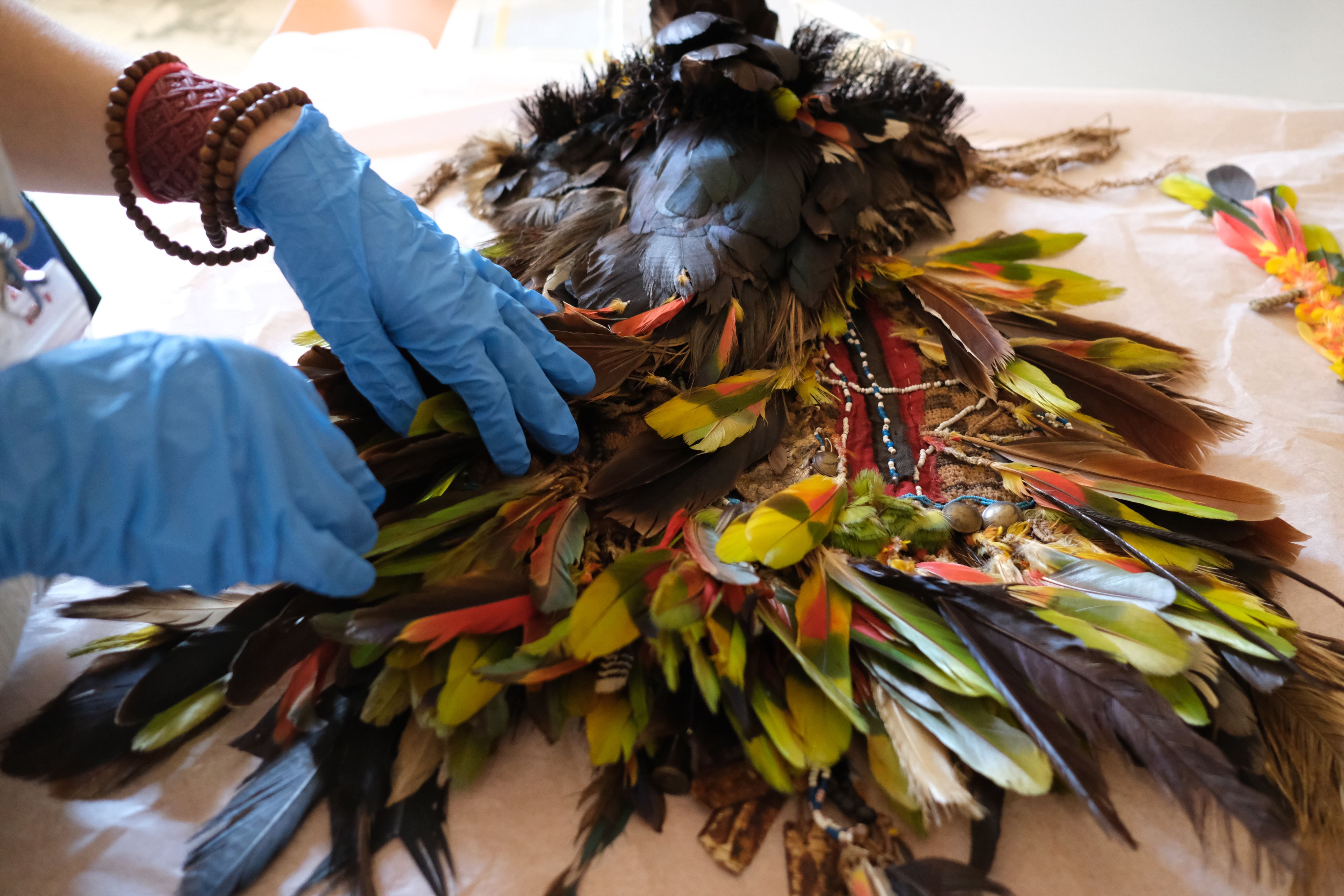
Observing the details of the feathers and other objects present on feather art artifact no. 50615. MUCIV – Museo delle Civiltà – Roma (Photo by Valerio di Martino)
Observing the details of the feathers and other objects present on feather art artifact no. 50615. MUCIV – Museo delle Civiltà – Roma (Photo by Valerio di Martino)
Selling to museums is a fairly common practice, as can be seen from the permanent exhibition at the Museo del Barro in the capital, Asunción.
How are these collections sold and acquired, and how do local communities relate to them today?
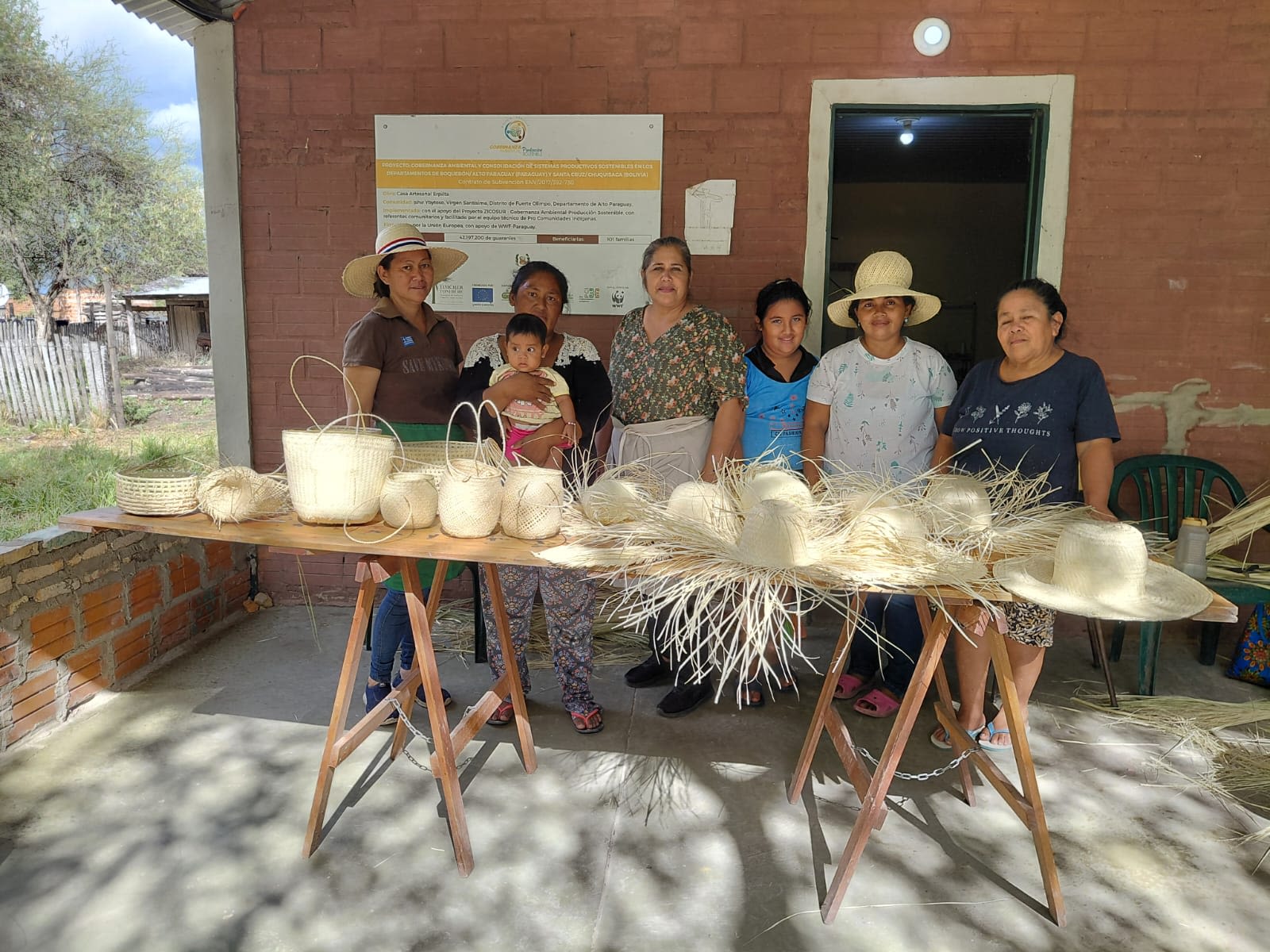
Ethnographers, artists and art dealers are currently working on this very issue. It is therefore increasingly necessary to decentralise our gaze and give prominence to the Yshir and the world that revolves around the communities today (schools, churches, various local associations and NGOs).
This is what is required to carry out good ethnographic practices and to give meaning to this (and other) collections: ethical practices of sharing and restitution, a commitment to investigating the local dynamics of heritage preservation.
What does “creating culture” mean today? What is the point of studying these artefacts, the diaries that accompanied Guido Boggiani's journey, the local exhibition of these objects in contemporary Paraguay? They remain powerful objects - so should they be exhibited? Are they works of art and how should we look at them? Are they handicrafts that we can also find in small craft shops in Asunción or any Paraguayan town? Who makes them and who sells them, and to whom are they sold?
 Built with Shorthand