
Tayka Tales
Selk’nam Continuity and Re-Existence Through a Rush Basket from Tierra del Fuego

01.
How many stories does a rush basket hold?
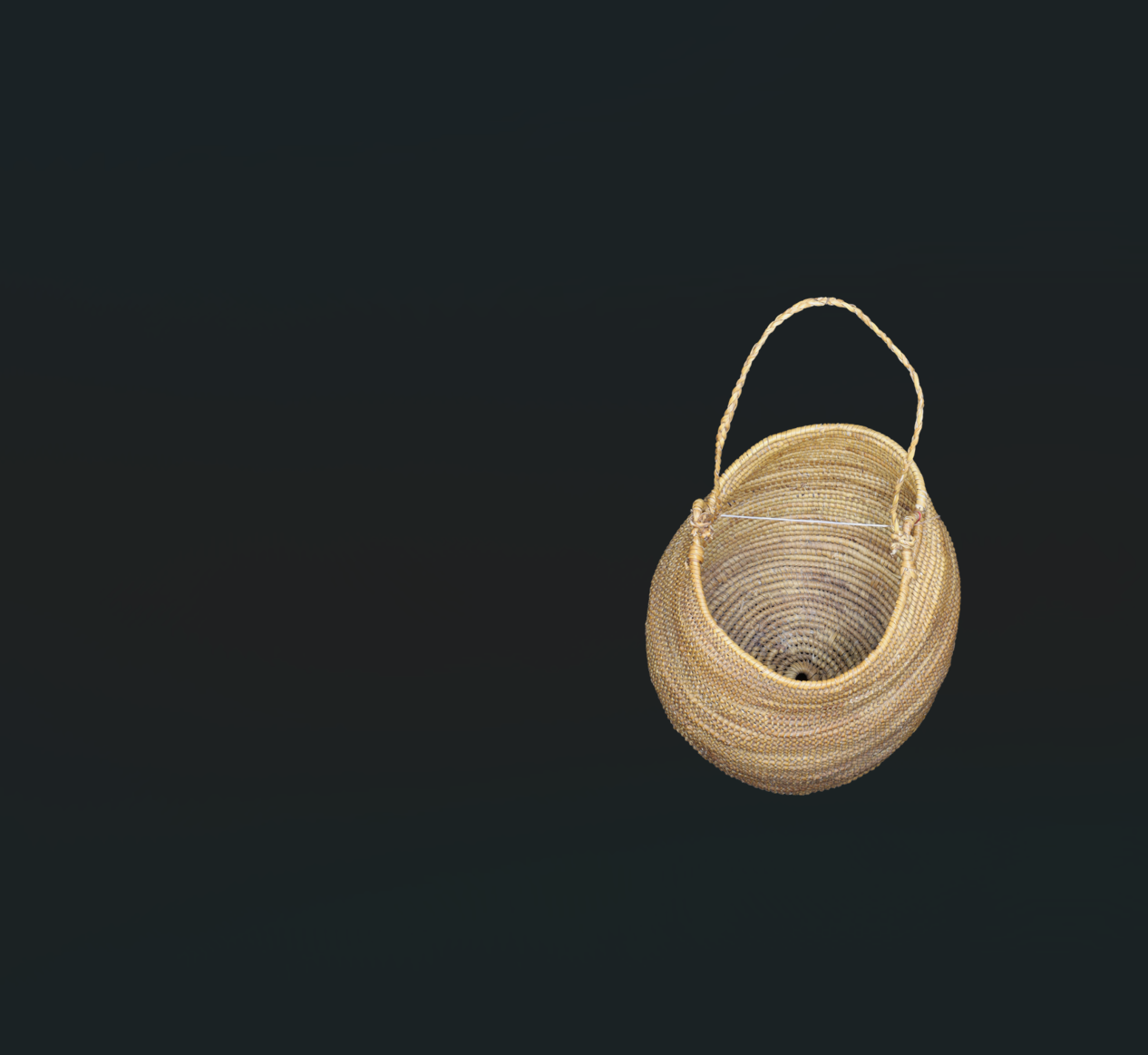
At the beginning of the twentieth century, a basket woven from rushes arrived in northern Italy from the southernmost inhabited region of the world: Tierra del Fuego. Today, the basket is displayed alongside other objects in a glass case at the Missionary Ethnological Museum of Colle Don Bosco (Asti). It is part of a heterogeneous group of Fuegian artefacts originating from the Salesian missions established in the archipelago at the end of the nineteenth century, a territory now divided between Argentina and Chile.
Although the provenance of these artefacts often remains obscured by the classificatory criteria of the period, most are of Selk’nam (known as Ona) and Kawésqar (or Alakaluf) origin. The semi-nomadic Indigenous societies, together with the Yagán (or Yámana) and the Haus/Haush (Manekem), inhabited the lands and waters of Tierra del Fuego, moving across different hunting, fishing, and gathering territories.

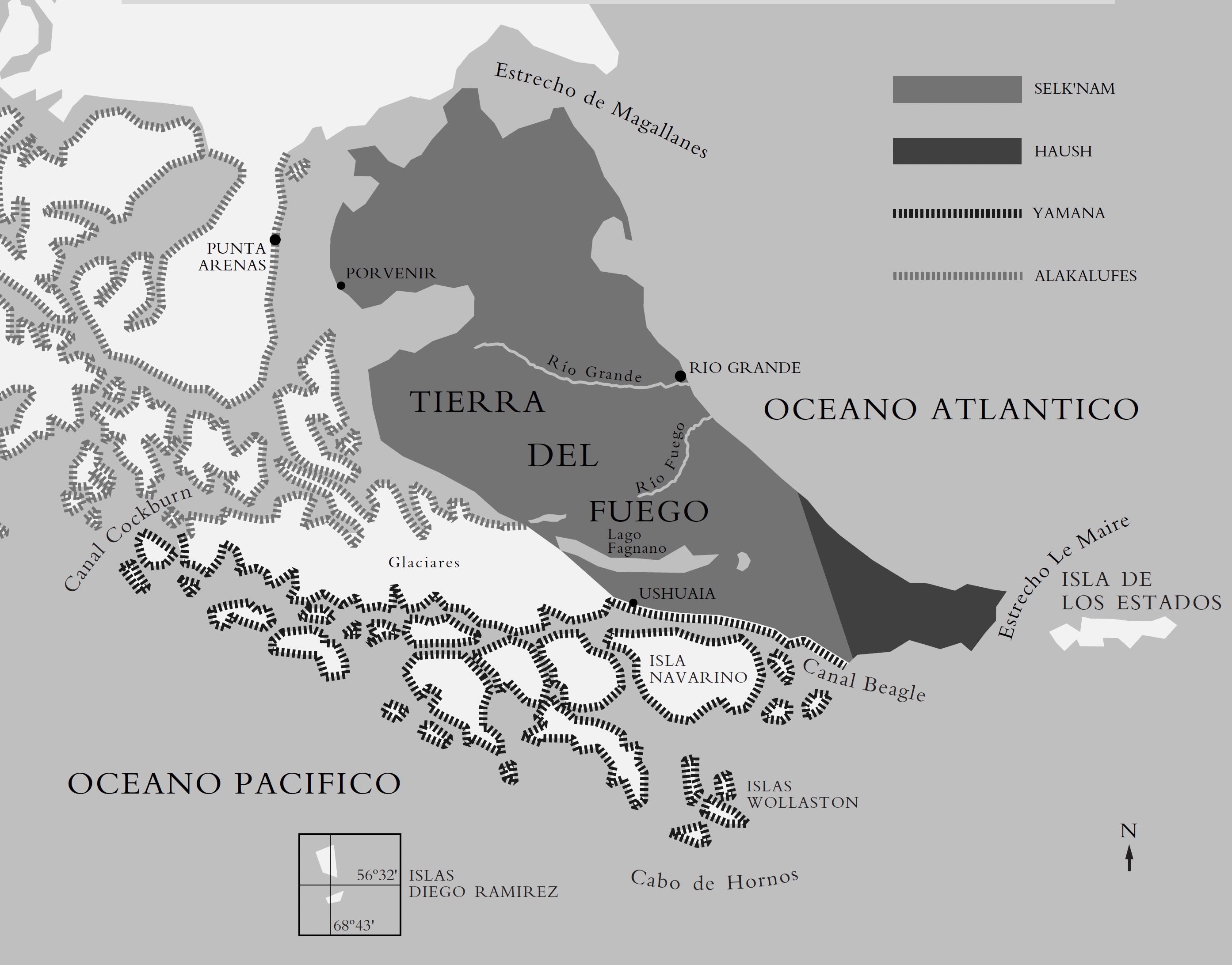
Historical territorial distribution of the Indigenous Fuegian societies. Source: Anne Chapman “Fin de un mundo. Los Selk’nam de Tierra Del Fuego”. Santiago, Chile: Taller Experimental Cuerpos Pintados, 2002.
Historical territorial distribution of the Indigenous Fuegian societies. Source: Anne Chapman “Fin de un mundo. Los Selk’nam de Tierra Del Fuego”. Santiago, Chile: Taller Experimental Cuerpos Pintados, 2002.

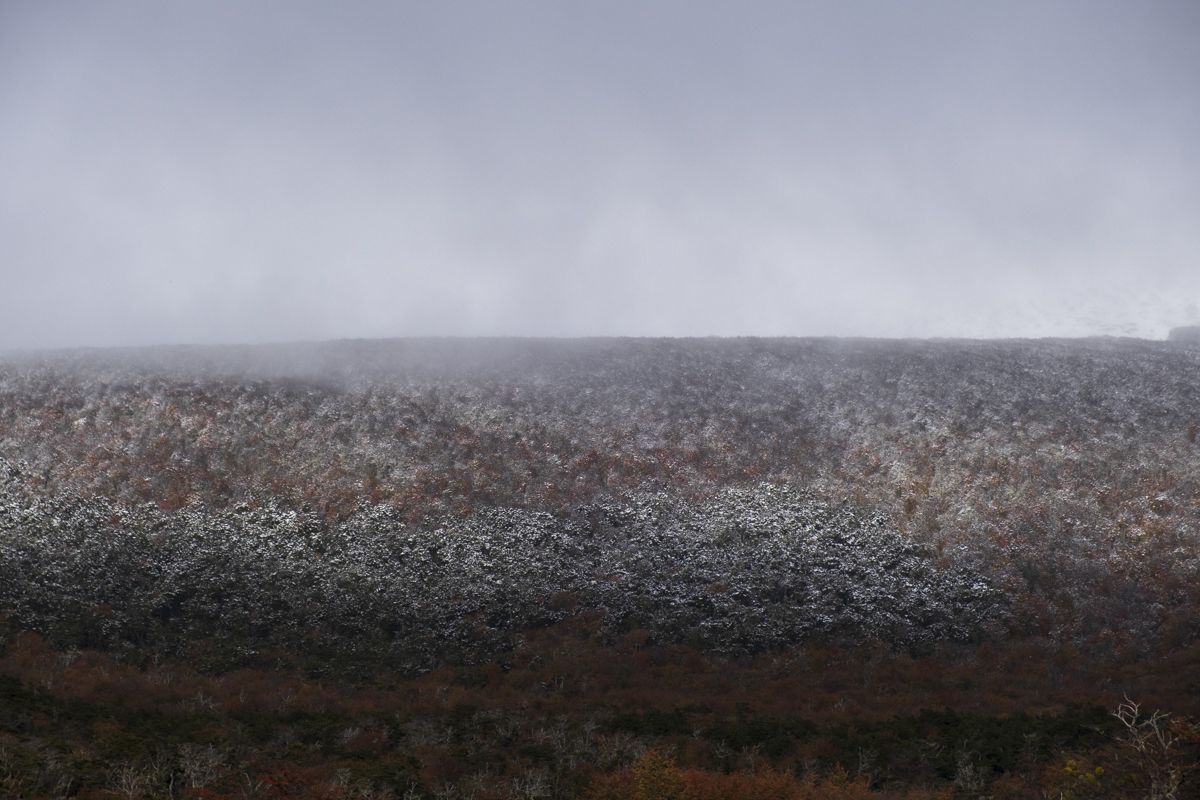
Snow-covered forest, Isla Grande of Tierra del Fuego (April 2024). © Chiara Scardozzi
Snow-covered forest, Isla Grande of Tierra del Fuego (April 2024). © Chiara Scardozzi
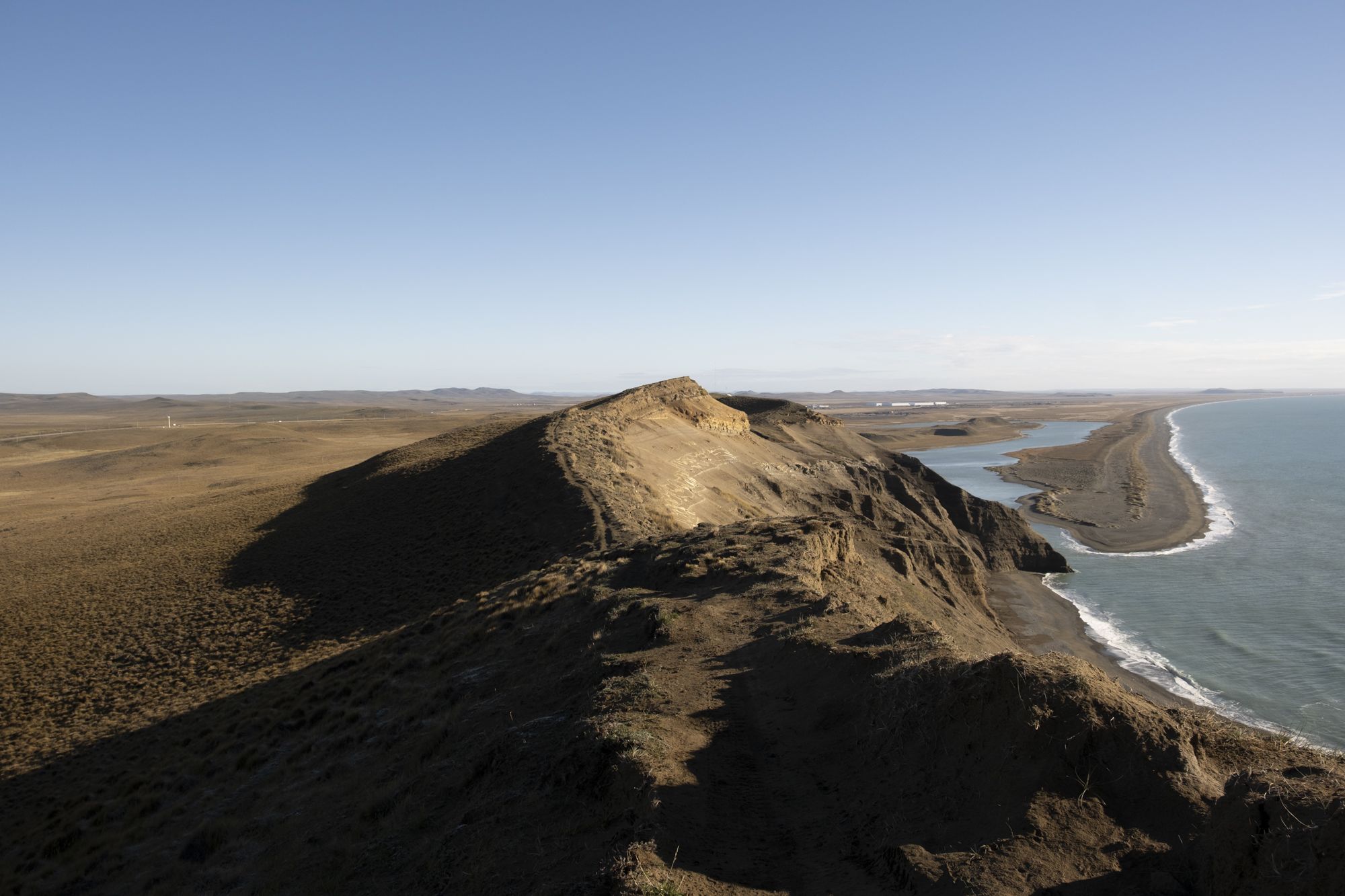
The Selk’nam territories, called haruwen, corresponded to the grassland and forest area of the central-northern part of the main island of Tierra del Fuego – Karukinka.
People moved on foot, and their economy was based on practices such as hunting wild animals like guanacos, rodents, birds, collecting eggs, fungi, and plants, as well as exploiting coastal resources: shellfish, fish, stranded whales, and seals.
Every part of the guanaco, called yowen, was used: the meat for food, the hide for making clothing, and the leather for constructing tents.
All products were redistributed and shared within the group. The social division of roles meant that women were responsible for caring for children, preparing food, and making certain tools, such as baskets.

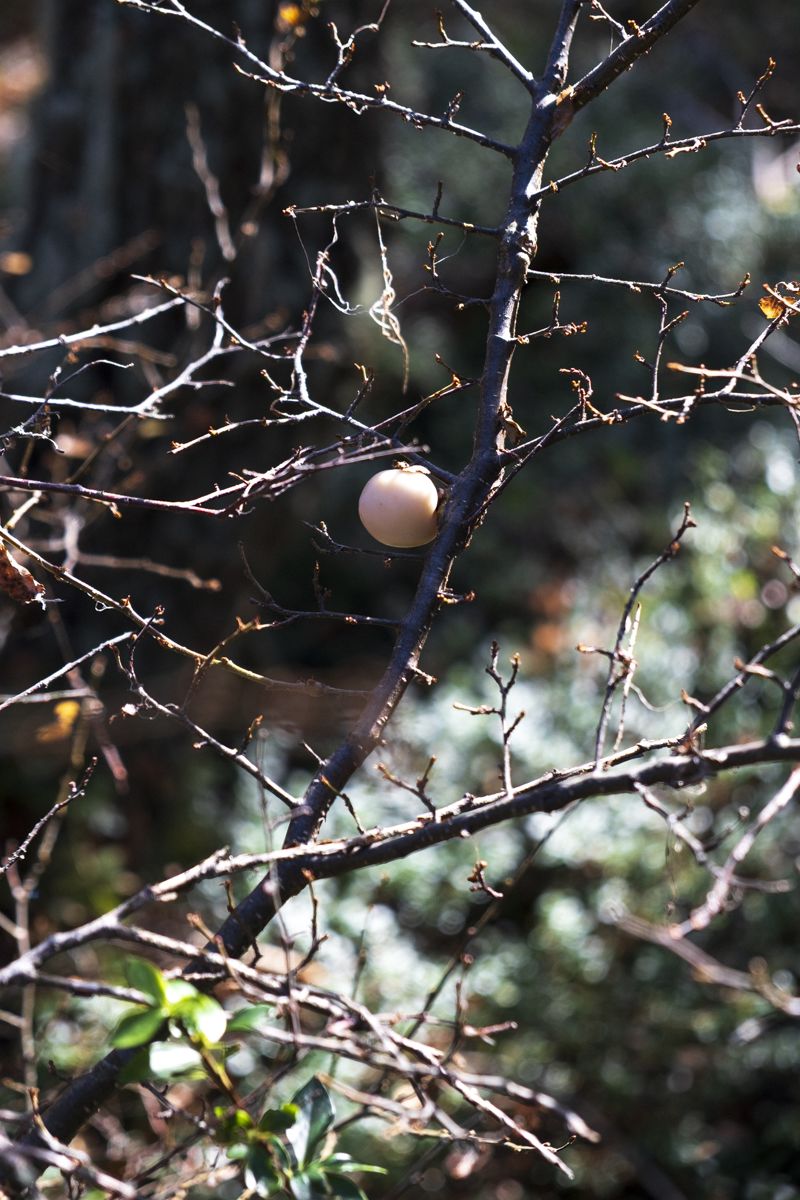
A specimen of a fungus locally known as “Pan de Indio”, a traditional component of the diet of the indigenous Fuegian societies. © Chiara Scardozzi
A specimen of a fungus locally known as “Pan de Indio”, a traditional component of the diet of the indigenous Fuegian societies. © Chiara Scardozzi
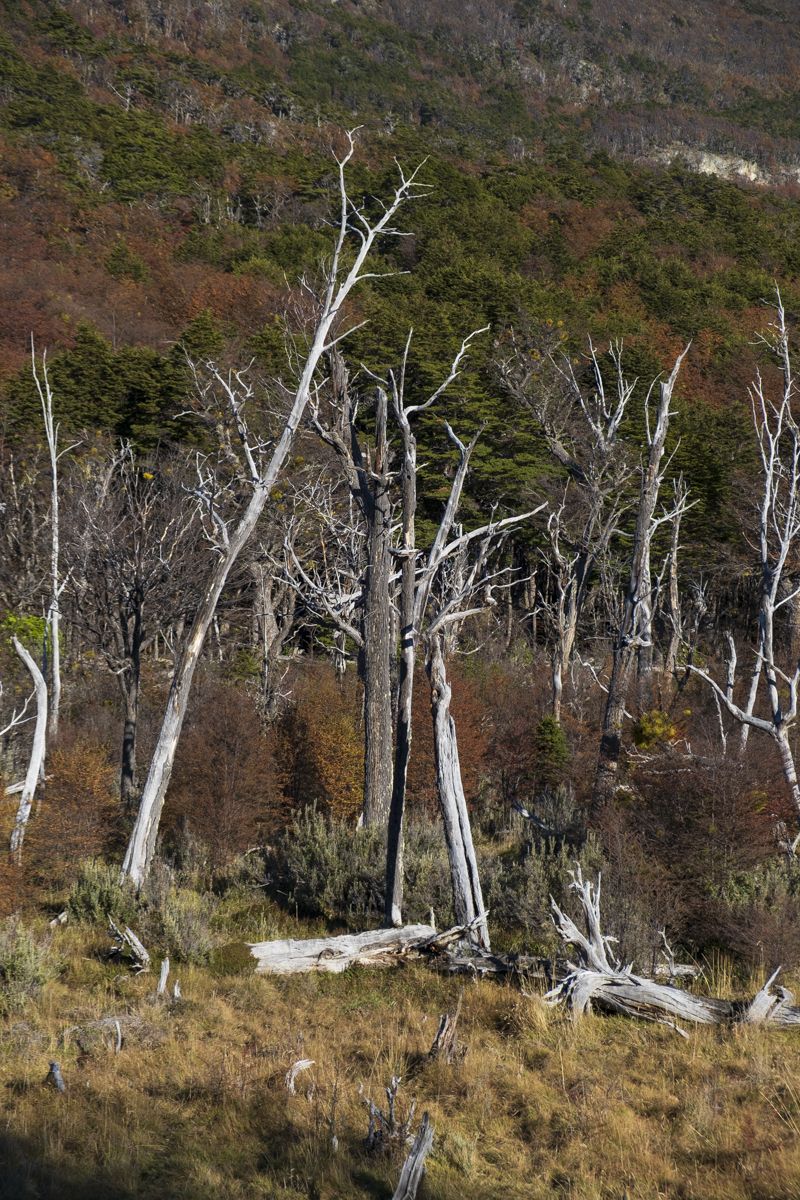
Fuegian forest in autumn. Some trees broken by strong gusts of wind. © Chiara Scardozzi
Fuegian forest in autumn. Some trees broken by strong gusts of wind. © Chiara Scardozzi

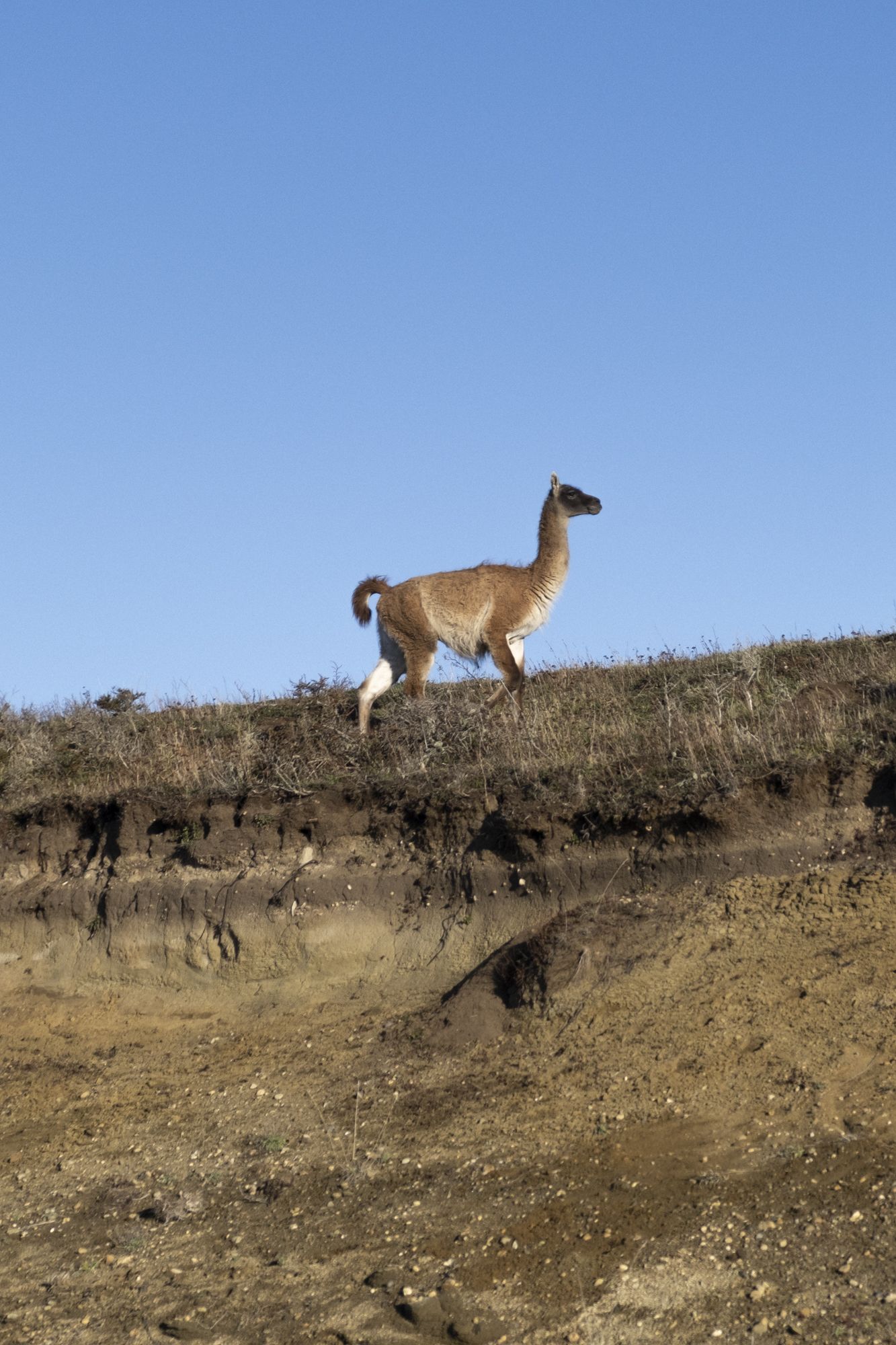
Guanaco running across fields near Río Grande (Argentina, 2024). © Chiara Scardozzi
Guanaco running across fields near Río Grande (Argentina, 2024). © Chiara Scardozzi

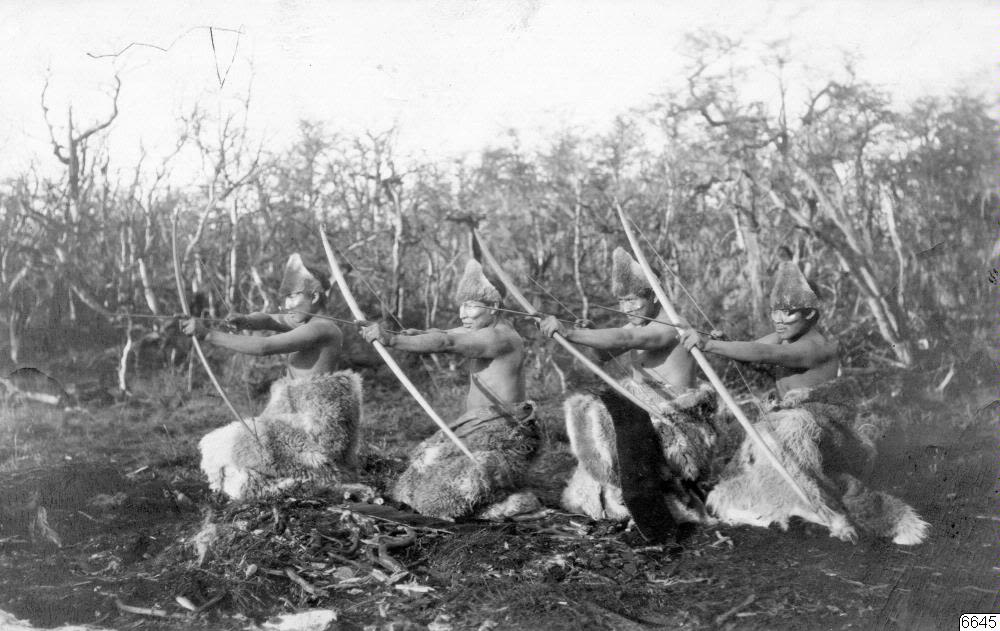

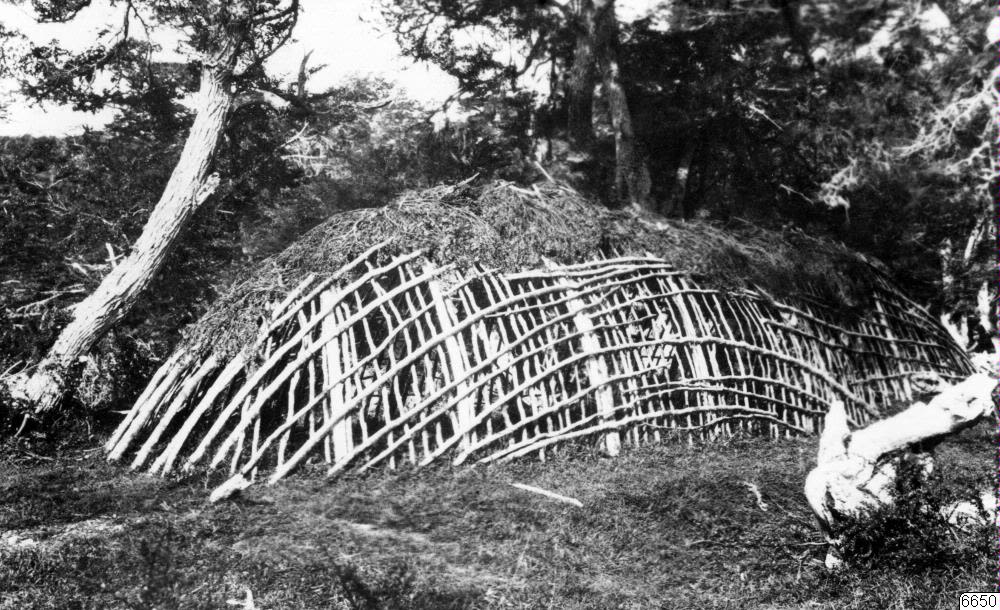

Selk’nam groups were linked to a spiritual leader called xo’on (shaman). One of their most well-known ceremonies, widely documented both textually and photographically by the ethnographer-missionary Martin Gusinde, was the Hain, a male initiation ceremony.
From the second half of the 19th century, these societies experienced one of the most critical moments in their collective histories: the arrival of Europeans in Tierra del Fuego coincided with the beginning of the massacre of the native populations.
Adventurers seeking fortune, gold prospectors, ranchers, seal and whale hunters, encroached indigenous territories and resources, disrupting indigenous territorialities and the possibilities for domestic groups to sustain themselves.
This was worsened by the impact of firearms, diseases such as syphilis and tuberculosis, and the introduction of alcohol, all of which severely weakened indigenous presence and their capacity to resist.
In the final decades of the 19th century, the Argentine and Chilean states carried out bloody and repeated military campaigns to conquer Patagonian territories, aiming to occupy them and forcibly integrate them into national unification projects.
The Pacification of Araucanía (1861–1883) in Chile and the Conquest of the Desert (1878–1885) in Argentina served the construction of nation-states through systematic violence, including killings, expulsions, and the reduction of indigenous peoples to conditions of slavery.
These conquest campaigns were part of a political project aimed at reconfiguring the country’s territory and identity, supported by international agreements favouring European migration.

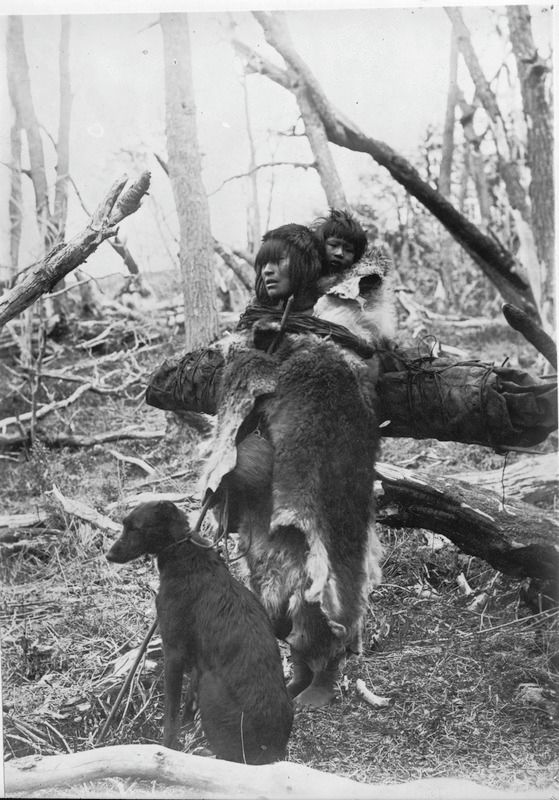
Selk’nam woman with child. The woman, draped in a guanaco cloak, holds a rush basket in her hands. Photograph attributed to Swedish photographer Oscar Ekholm (1884). Museum of Ethnography, Sweden. Public Domain

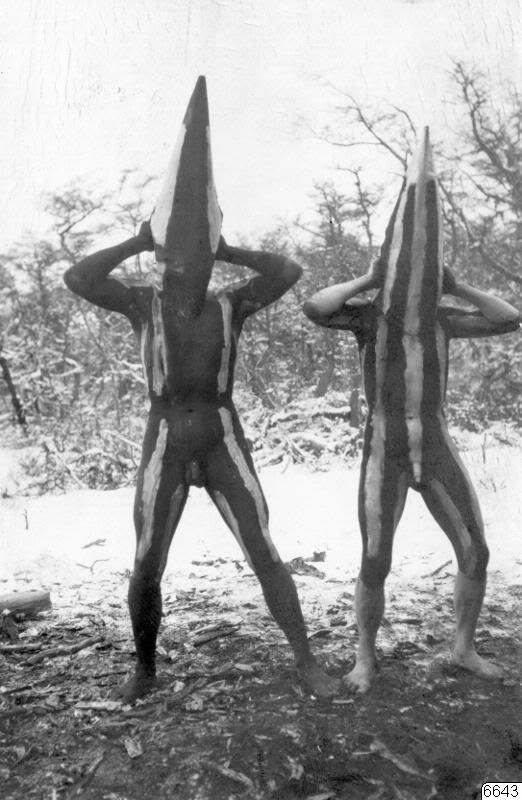
Hain ceremony photographed by Martin Gusinde (1923). Source: Museum of World Culture, Sweden - CC BY-NC-ND
The indigenous people who managed to survive were forced to abandon their ways of life, deemed “primitive”; native languages were prohibited, and surviving domestic groups were dispersed across different areas of the main island.

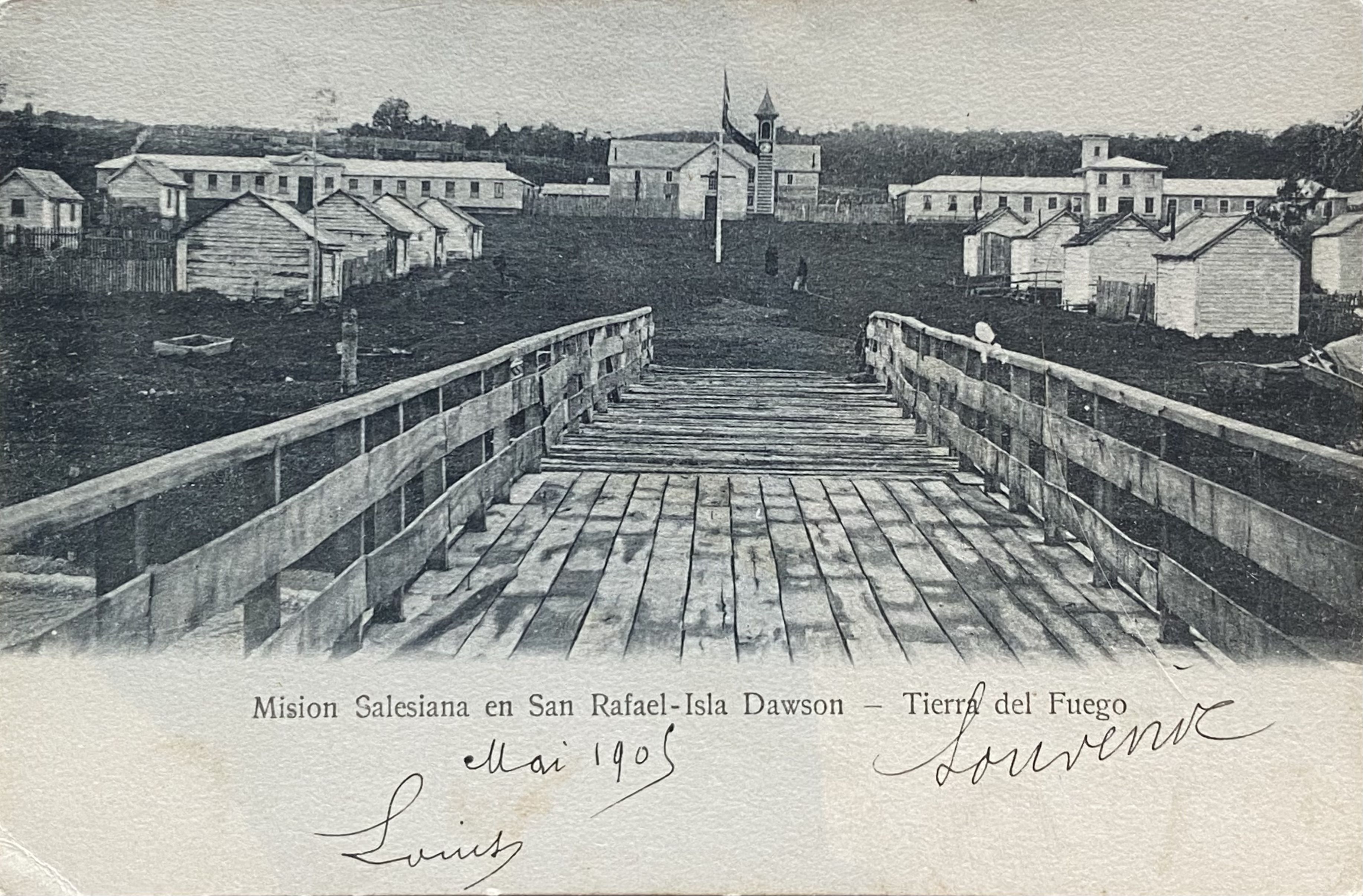
San Rafael Salesian Mission -Dawson Island, postcard. Private collection © Chiara Scardozzi
San Rafael Salesian Mission -Dawson Island, postcard. Private collection © Chiara Scardozzi

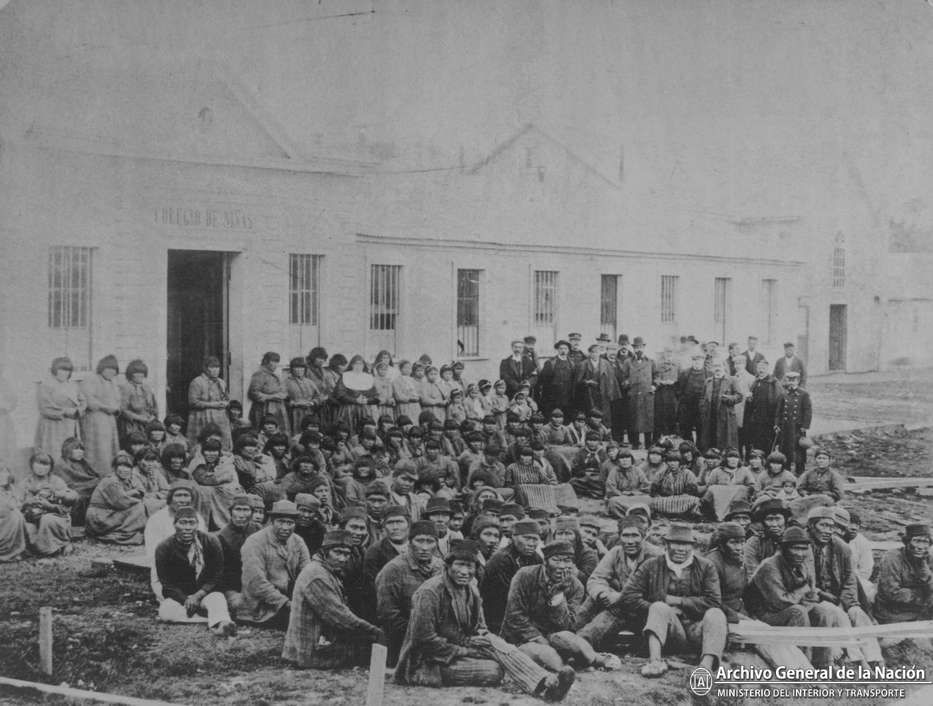
Visit of the President of Chile, Federico Errázuriz Echaurren, to the Salesian mission on Dawson Island (1899). Source: Archivo General de la Nación Argentina
Visit of the President of Chile, Federico Errázuriz Echaurren, to the Salesian mission on Dawson Island (1899). Source: Archivo General de la Nación Argentina

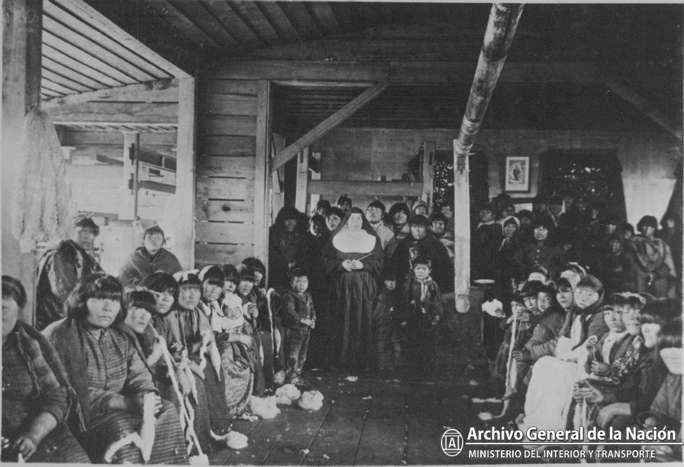
Sisters of the Salesian Congregation of Mary Help of Christians in San Rafael Mission -Dawson Island -1899. Source: Archivo General de la Nación Argentina
Sisters of the Salesian Congregation of Mary Help of Christians in San Rafael Mission -Dawson Island -1899. Source: Archivo General de la Nación Argentina
02.
The Salesian missions
The Salesians had been operating in Argentina since 1875. In 1883, they established a presence in Tierra del Fuego with the aim of evangelizing and converting Indigenous people, and “civilizing” them according to the standards of the time, but also protecting them from the threats and persecutions of large entrepreneurs who sought control of native territories for sheep ranching.
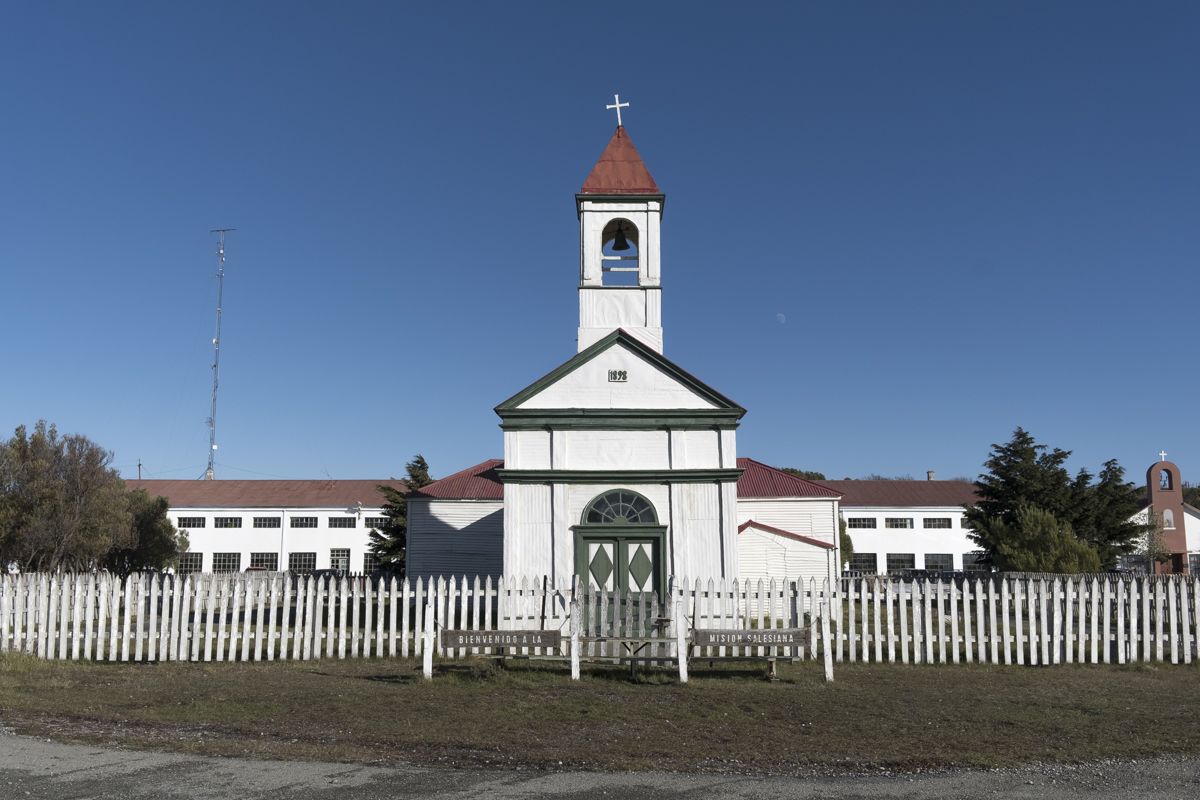
Monsignor Fagnano, Apostolic Prefect of Southern Patagonia and Tierra del Fuego, obtained from the Chilean government a free concession of Dawson Island (Chile), located in Kawésqar territory, for a period of twenty years. In 1888, the San Rafael Mission was established, administered by priests and the Sisters of Mary Help of Christians. Almost one thousand men, women, and children who identified as Selk’nam and Kawésqar entered the mission, compelled by danger, fear, and hunger.
There, Indigenous people were subjected to a sedentary lifestyle, with their ways of life completely transformed.
Inadequate diet and clothing, together with exposure to previously unknown diseases, led to widespread illness and death. When the concession expired and the mission closed, only around thirty individuals remained. The surviving women were transferred to the main island of Tierra del Fuego, to the Mission of Nuestra Señora de la Candelaria in Río Grande (Argentina), which was active from 1893 until the first half of the 20th century.

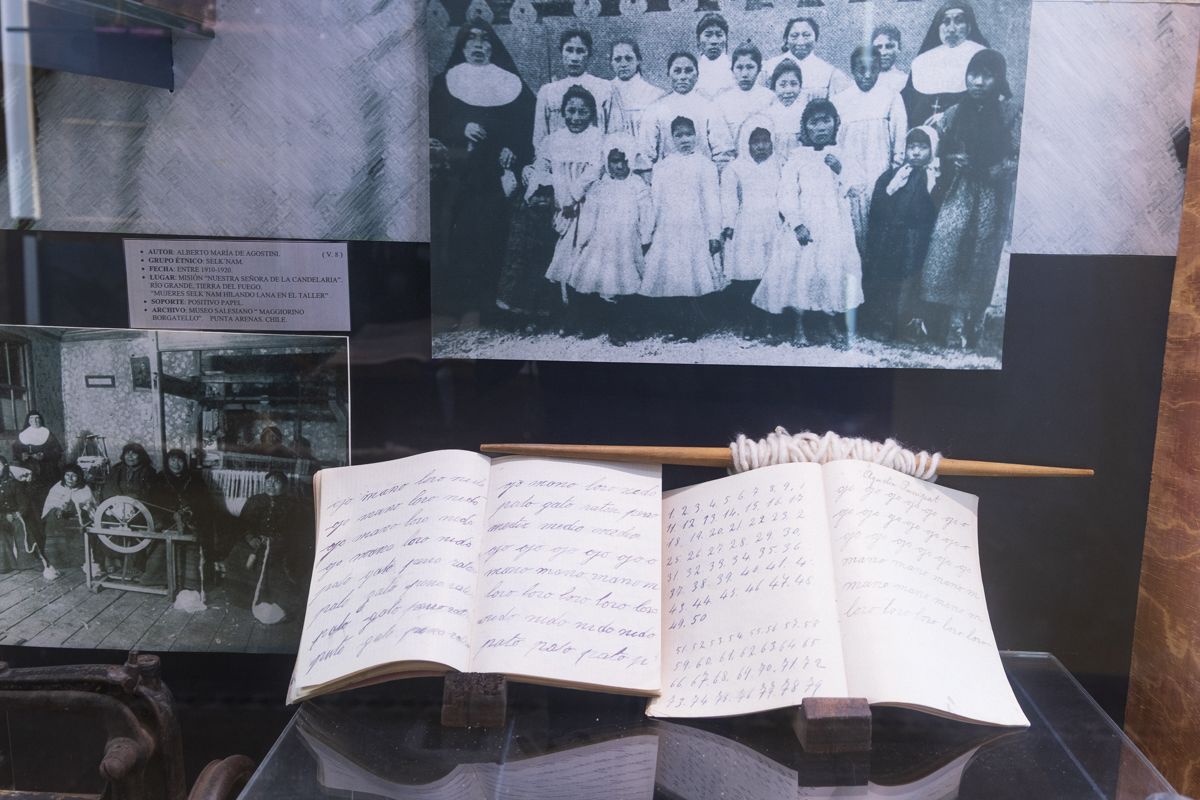



They took on various forms of rural work, as well as cleaning and domestic service, within a regional population composed primarily of descendants of Europeans.
For decades, speaking Indigenous languages posed a danger, as did the expression of any element of Indigenous identity, which was disparaged and excluded from the dominant society.
03.
Fuegian collections today
Many of the objects now preserved in the Missionary Ethnological Museum Colle Don Bosco, such as rush baskets, hunting tools, and everyday utensils, were collected during the years of the missions, often as evidence of what missionaries regarded as cultures on the brink of disappearance.
Already in Punta Arenas (Chile), the missionaries had founded the Salesian Territorial Museum in 1888, today known as the Maggiorino Borgatello Salesian Museum. The museum was created to assemble a collection of fossils and Indigenous artefacts during the period of Salesian missionary activity in the southern region.
Studying the Fuegian collections preserved in Italy today means engaging with a history that is often painful, marked by dispossession, rupture, and violence.

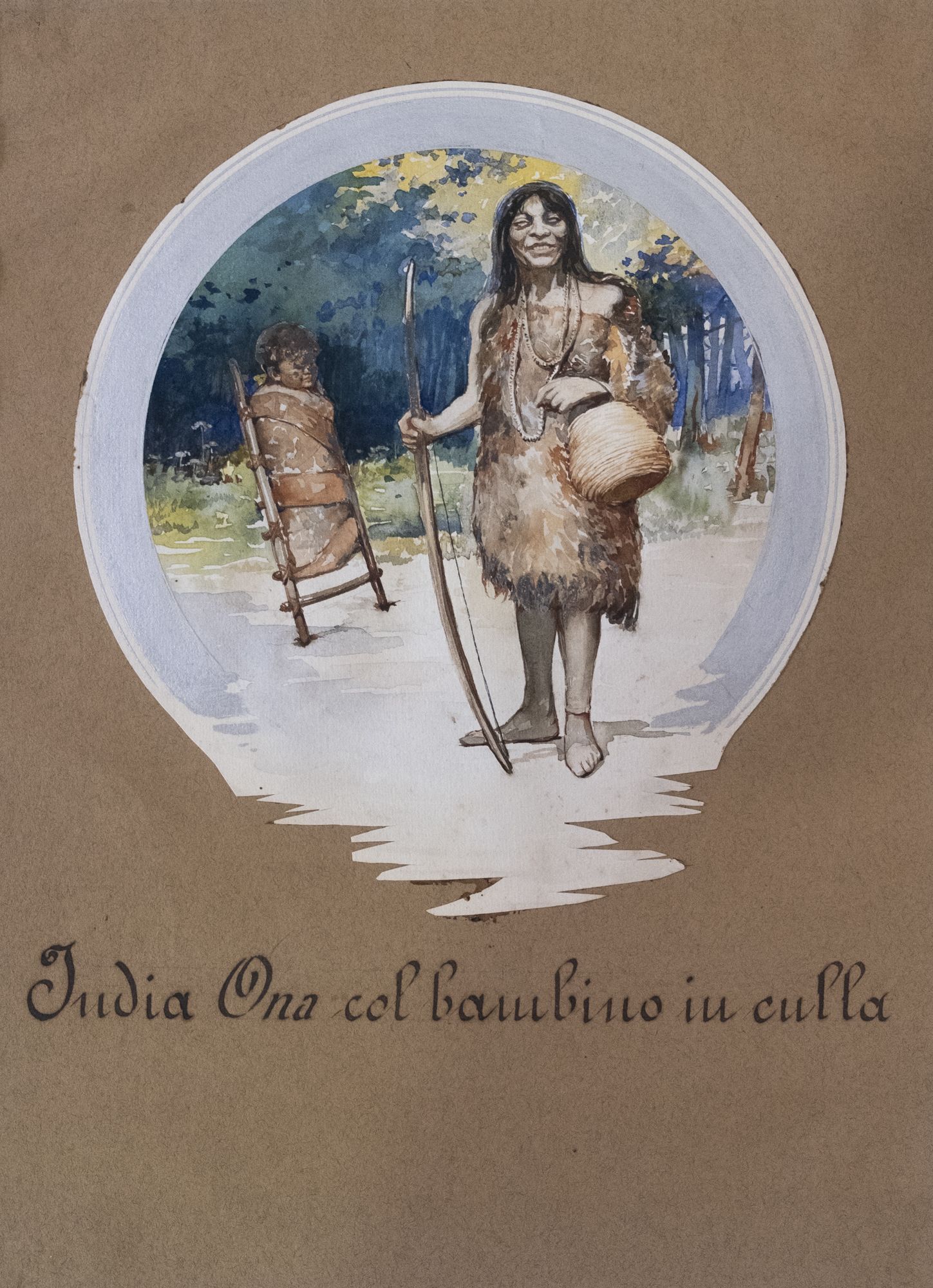
“Ona indigenous woman with a child in a cradle”. Painting on paper, unknown author, preserved at the Missionary Ethnological Museum of Colle Don Bosco (Asti). In this representation, the woman carries a tayka and a bow, despite the fact that hunting was an activity carried out by men.
“Ona indigenous woman with a child in a cradle”. Painting on paper, unknown author, preserved at the Missionary Ethnological Museum of Colle Don Bosco (Asti). In this representation, the woman carries a tayka and a bow, despite the fact that hunting was an activity carried out by men.

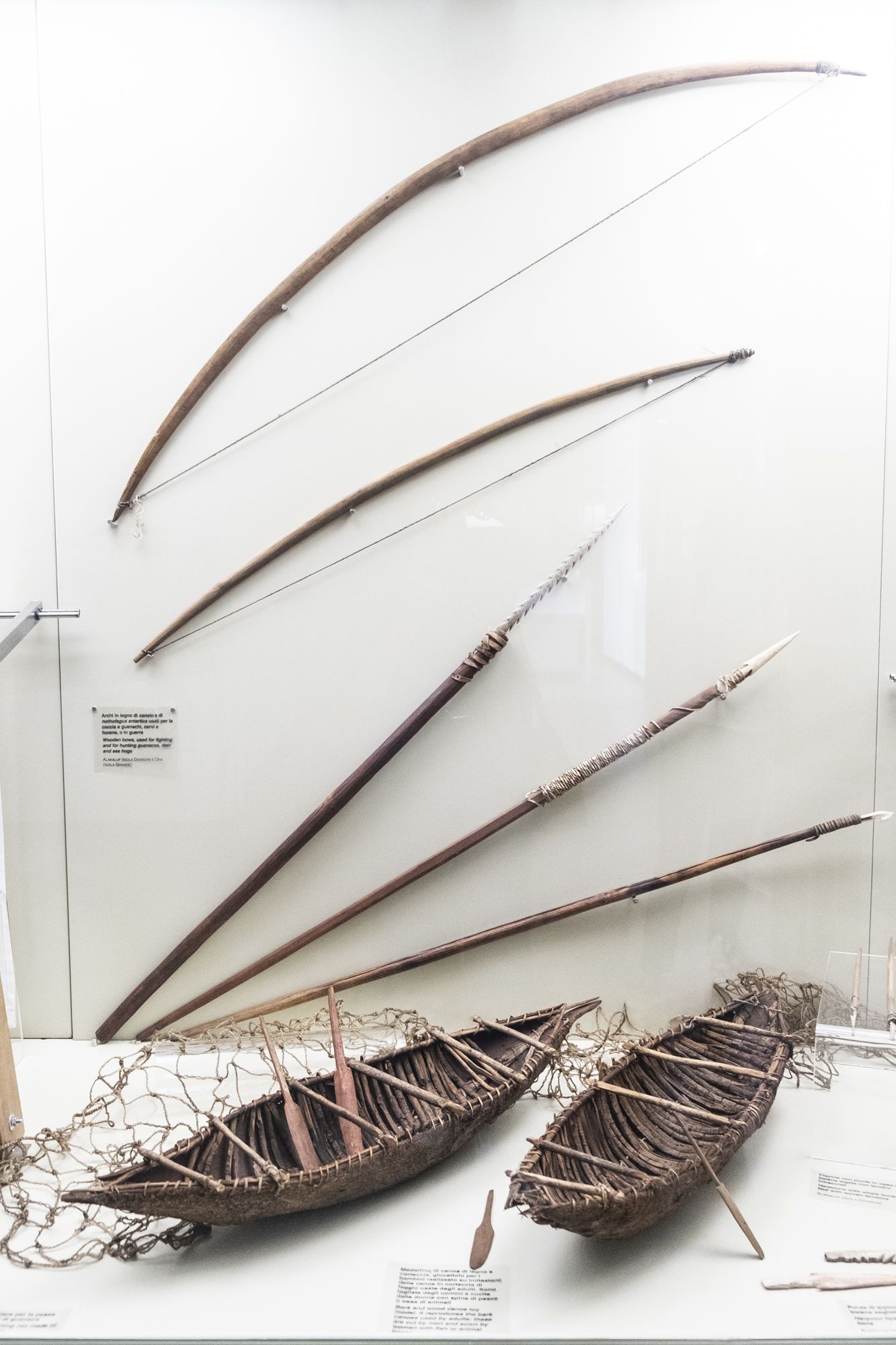
Bows, harpoons and model canoes on display at the Missionary Ethnological Museum of Colle Don Bosco (Asti). © Chiara Scardozzi
Bows, harpoons and model canoes on display at the Missionary Ethnological Museum of Colle Don Bosco (Asti). © Chiara Scardozzi
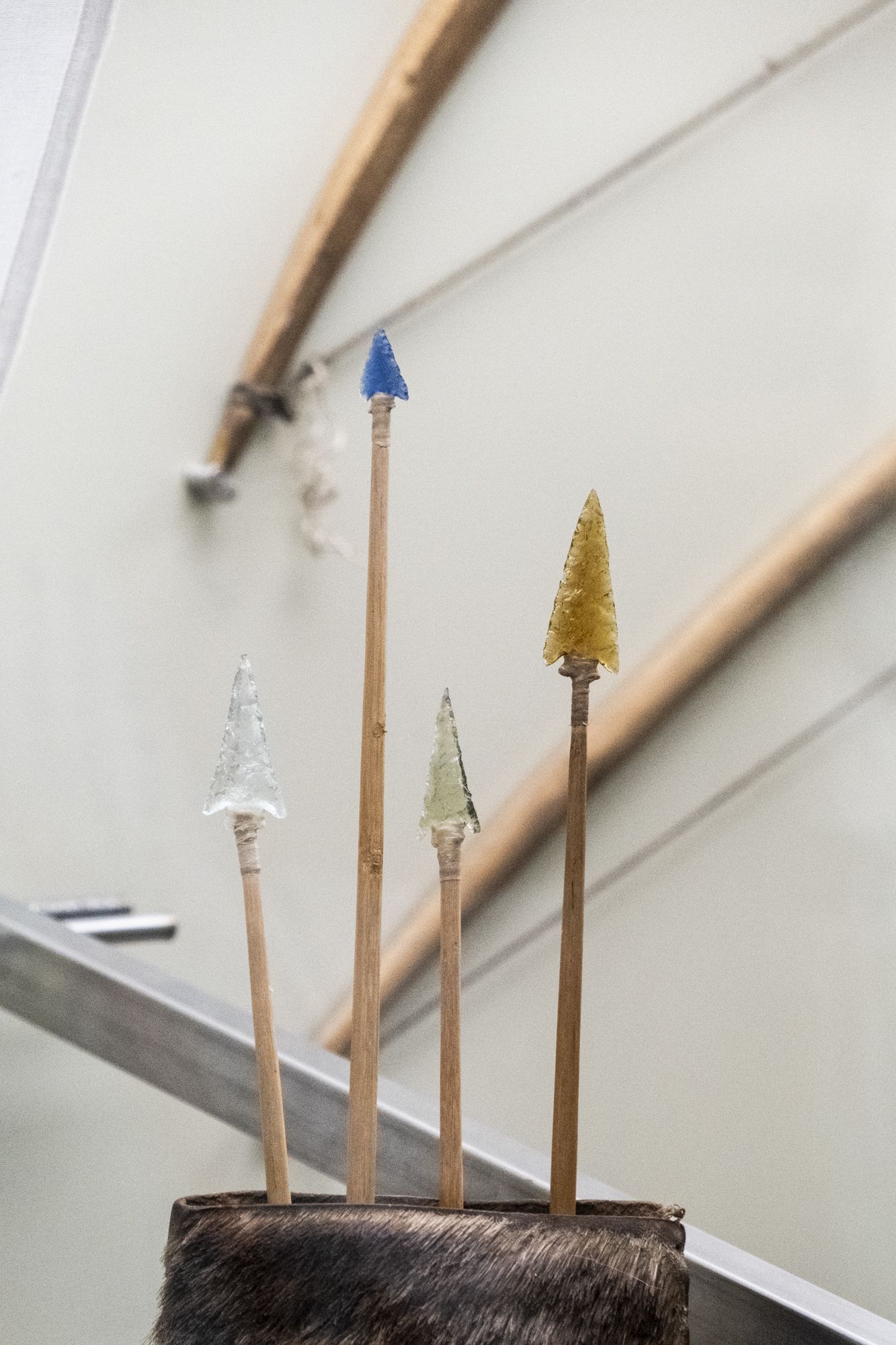
Selk’nam arrows with glass tips on display at the Missionary Ethnological Museum of Colle Don Bosco (Asti). © Chiara Scardozzi
Selk’nam arrows with glass tips on display at the Missionary Ethnological Museum of Colle Don Bosco (Asti). © Chiara Scardozzi

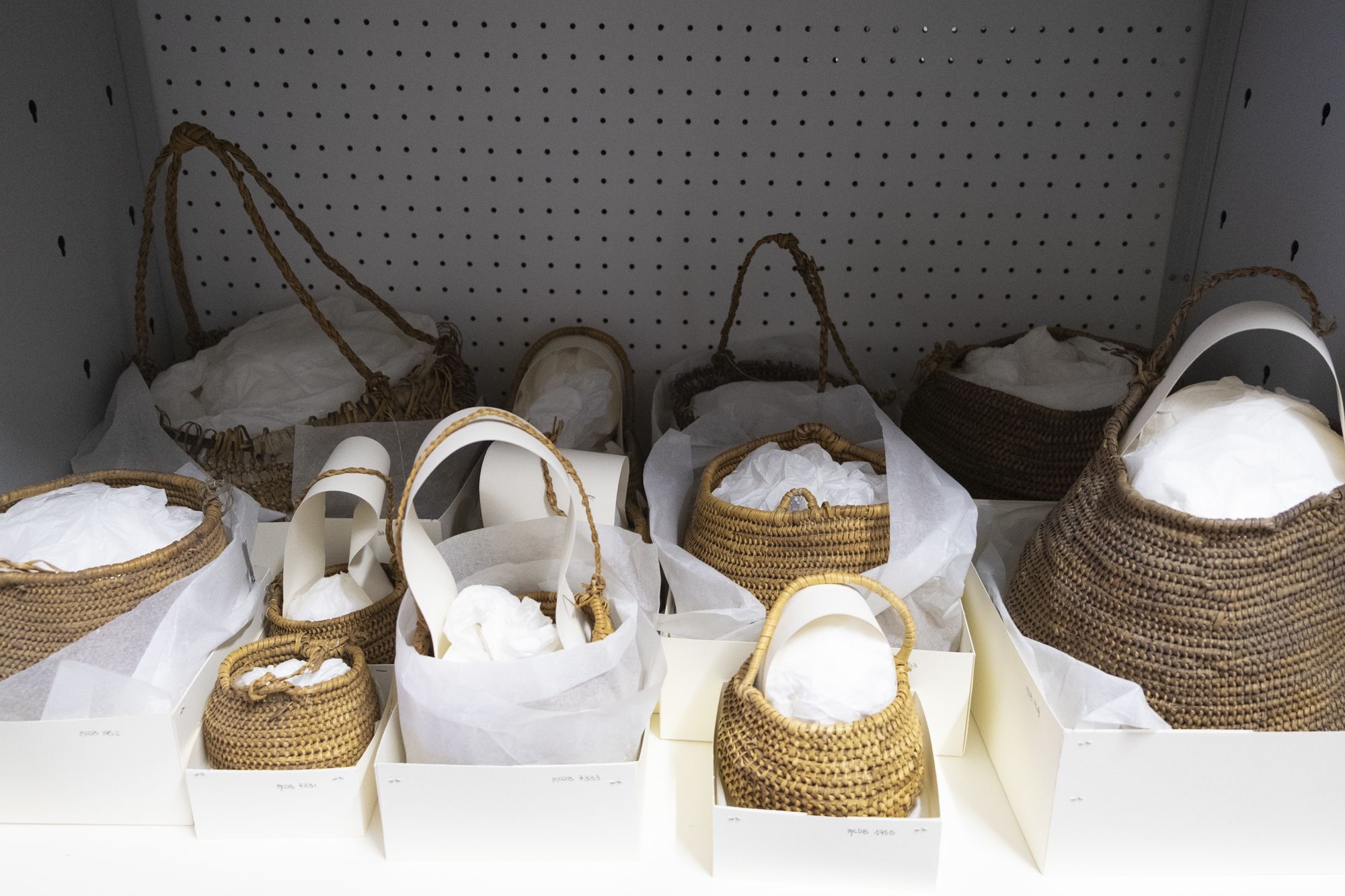

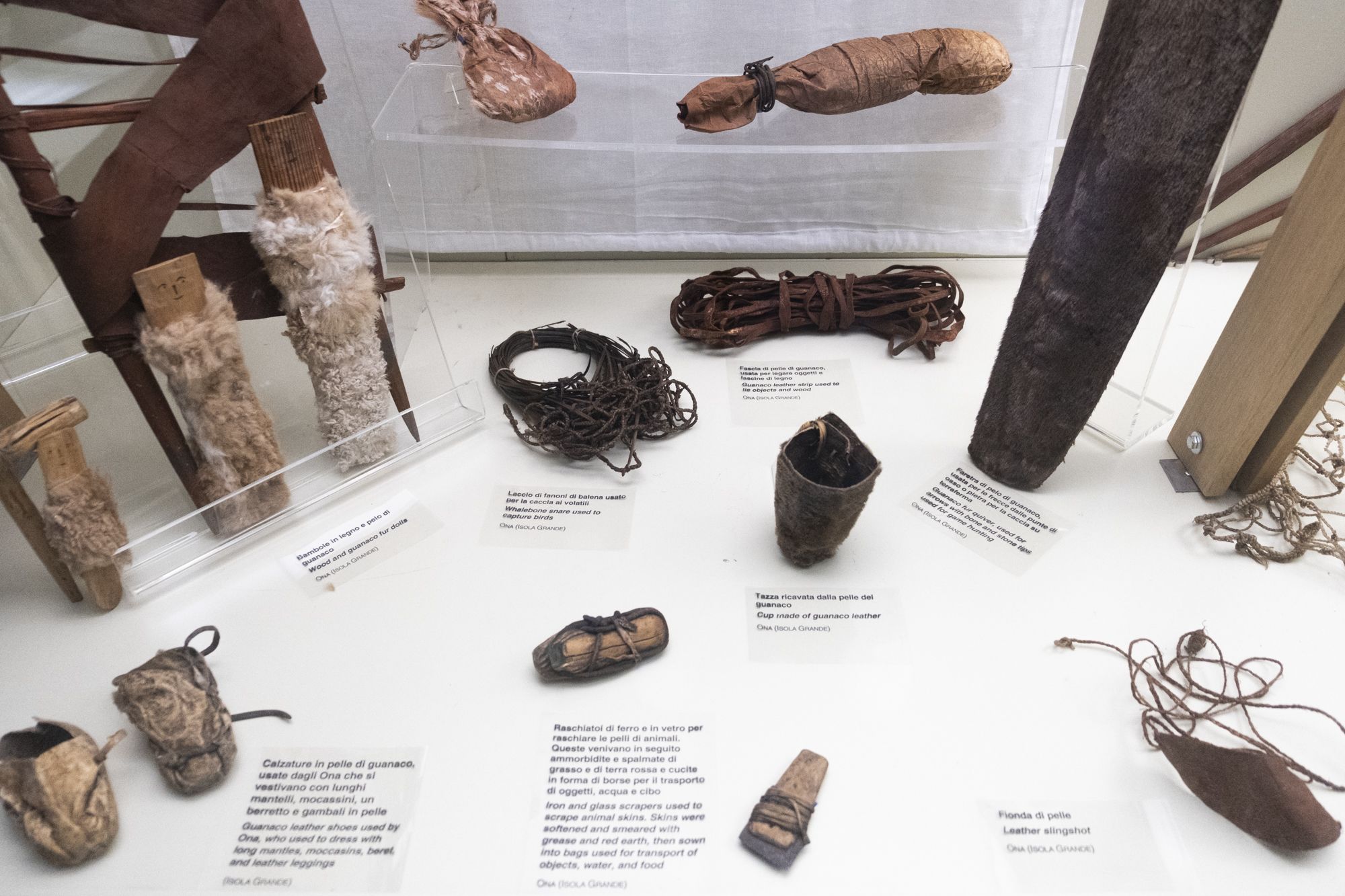
It also requires embracing multiple perspectives. These objects also tell another story: for present-day Selk’nam descendants, items such as woven baskets or hunting tools are not merely remnants of a distant past, but expressions of a living culture that is regaining value and visibility after generations of marginalization.
Revisiting these collections today means creating space for Indigenous voices that challenge the long-standing narrative of extinction and reaffirm the presence, continuity, and struggle for recognition of the Selk’nam and other Fuegian peoples.
04.
The art of basketry:
cultural re-existence and reactivation
Between the 1980s and the 1990s, the international recognition of Indigenous rights, together with Argentina’s return to democracy, facilitated processes of Indigenous identity’s reaffirmation. In fact, according to the provisions of Convention No. 169 of the International Labour Organization – ILO (1989), a person is considered Indigenous if they self-identify as such, while an Indigenous community may recognize its members based on its own criteria.
In the 2010 National Census, 294 residents on the Argentine side of Tierra del Fuego self-identified as Indigenous members of the Selk’nam people (“Onas” in the official report), residing in the province of Tierra del Fuego, Antarctica, and the South Atlantic Islands. Nowadays, according to estimates by the community itself, there are almost 1000 people who identify themselves as Selk‘nam.
The 2022 census records 1206 people across the country.
Among these people is Margarita Angélica Maldonado, who belongs to a generation that has come to look back on the past with pride, and to publicly express a sense of belonging to an Indigenous people who were victims of genocide (commemorated each year on 25 November since 1992) but who were not exterminated.

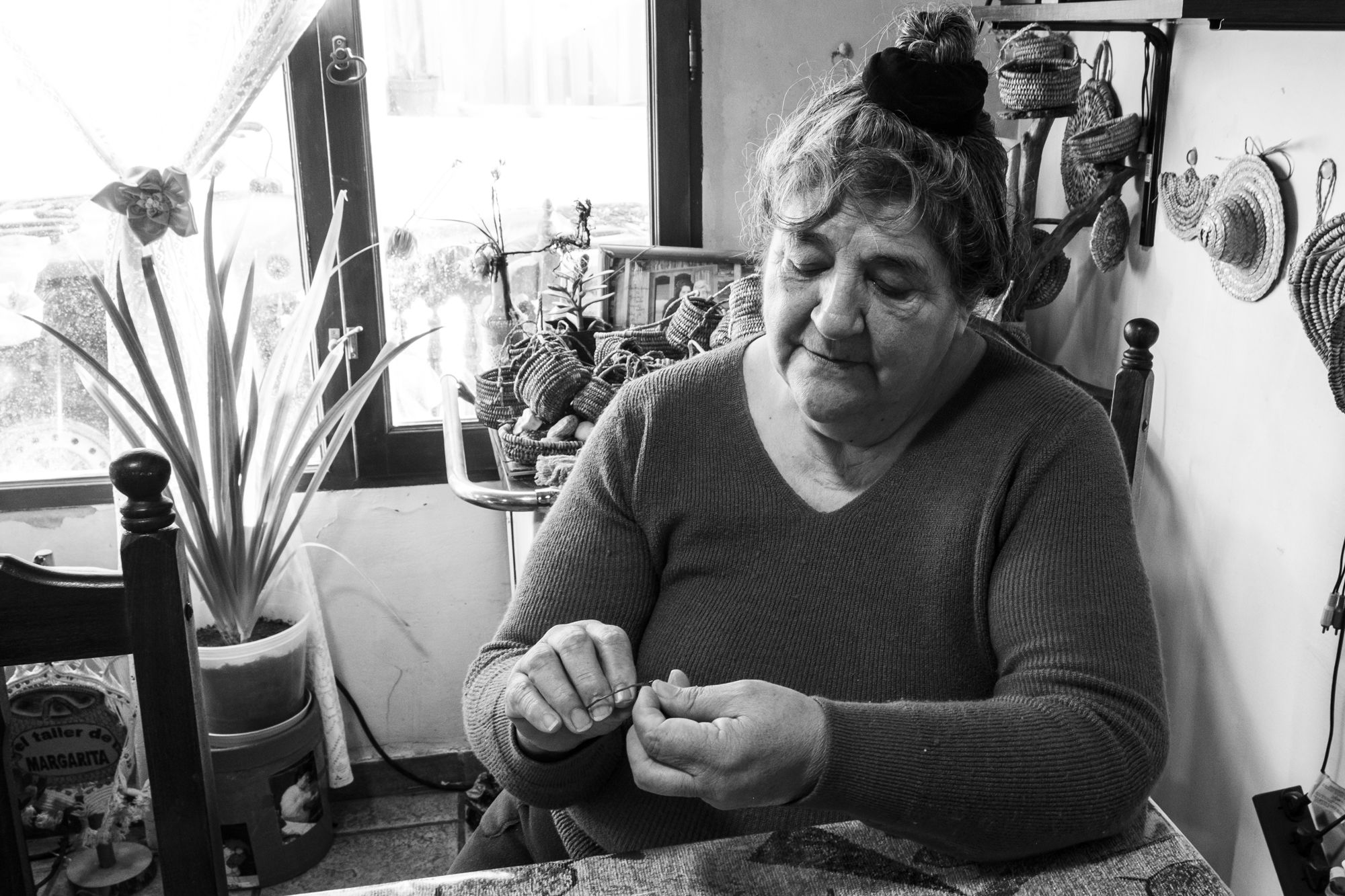

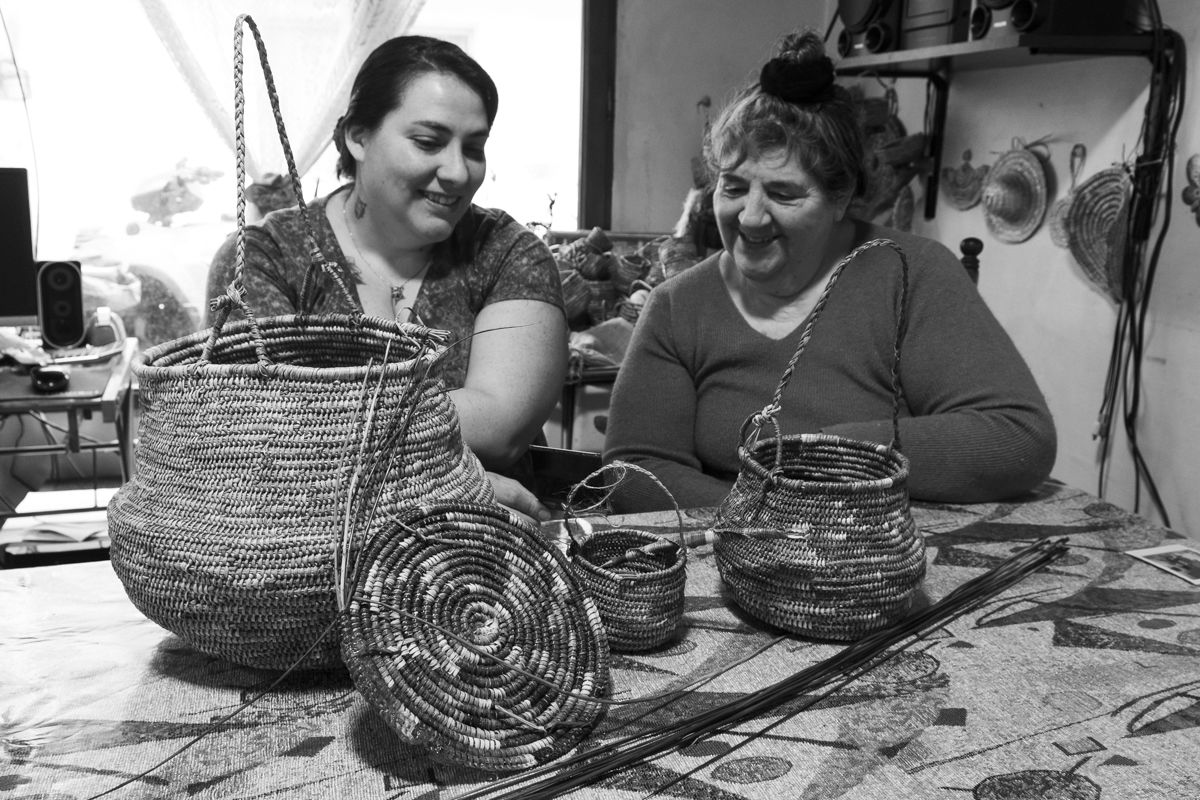
I met Margarita in the Fuegian autumn of 2024, when I visited her at her home. While sharing a mate, she told me that by the age of seven she already knew she was the daughter of an india ona, as people commonly referred to Selk’nam at the time. Margarita’s mother, Herminia Vera Illioyen, spent part of her life at La Candelaria mission in Río Grande. There she met her two older brothers, who entered the mission after their mother passed away. She also encountered other Selk’nam women, such as Angela Loij and Lola Kiepja, who taught her how to weave rush baskets.
Margarita said:
"I cannot speak badly of the missions, because My mother grew up at La Candelaria; for her it was home, and she always spoke of it with great affection. For many people this is difficult to understand. There were both positive and negative experiences; we know that very serious things happened, but we cannot always look only at the darkest side of history".
(Dialogue with Margarita Maldonado, Rio Grande, April 2024)
Margarita was nearly forty years old when she later self-identified as Selk’nam. She worked with her elder brother and other families to strengthen Indigenous identity and community organization. Thanks to this collective work, the Rafaela Ishton Indigenous Community (CIRI) of Tierra del Fuego was established, officially recognized by the National Institute of Indigenous Affairs (INAI) on July 27th 1998.

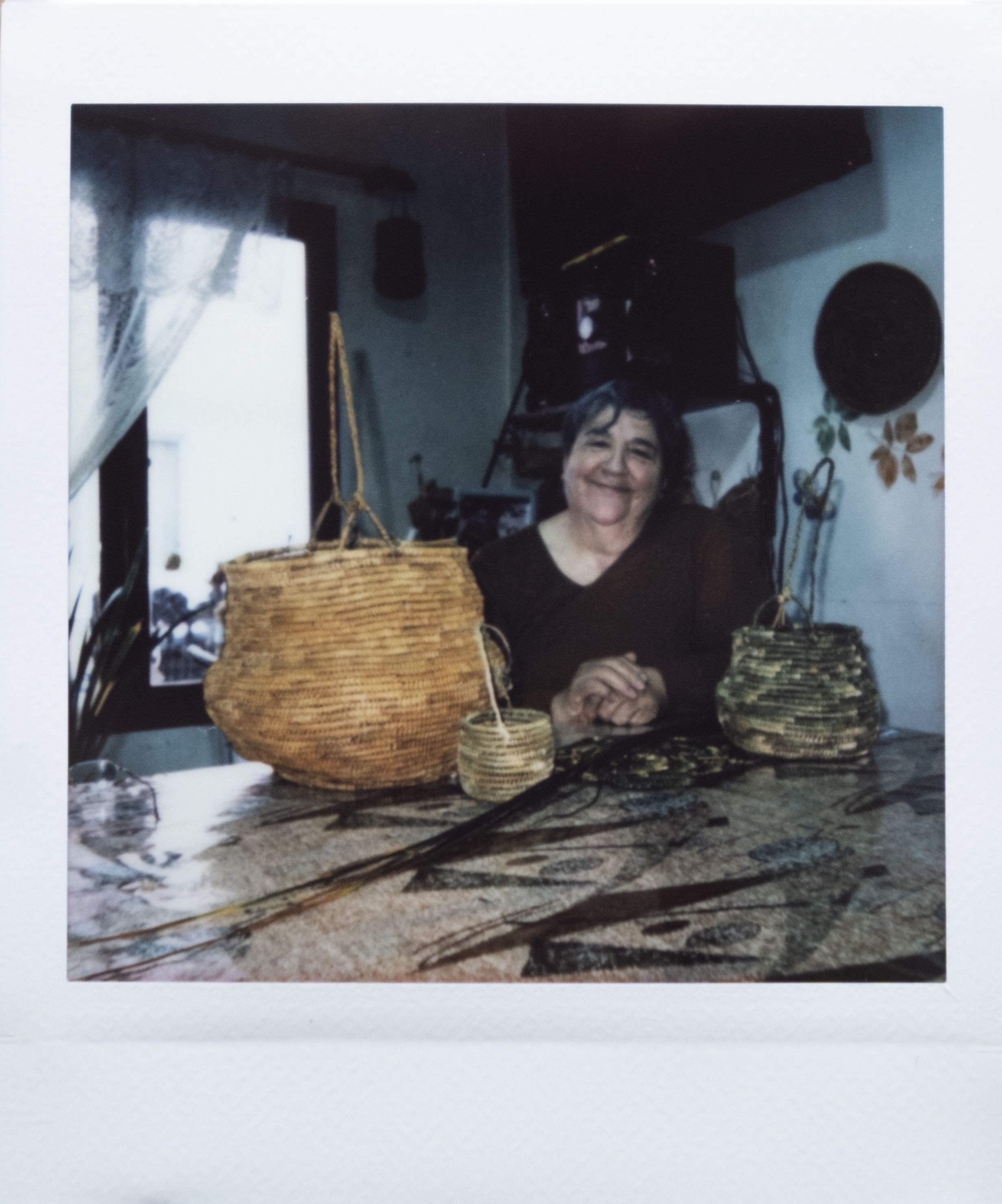




Margarita Maldonado with her baskets in a Polaroid taken at her home in May 2024 ©Chiara Scardozzi
Margarita Maldonado with her baskets in a Polaroid taken at her home in May 2024 ©Chiara Scardozzi

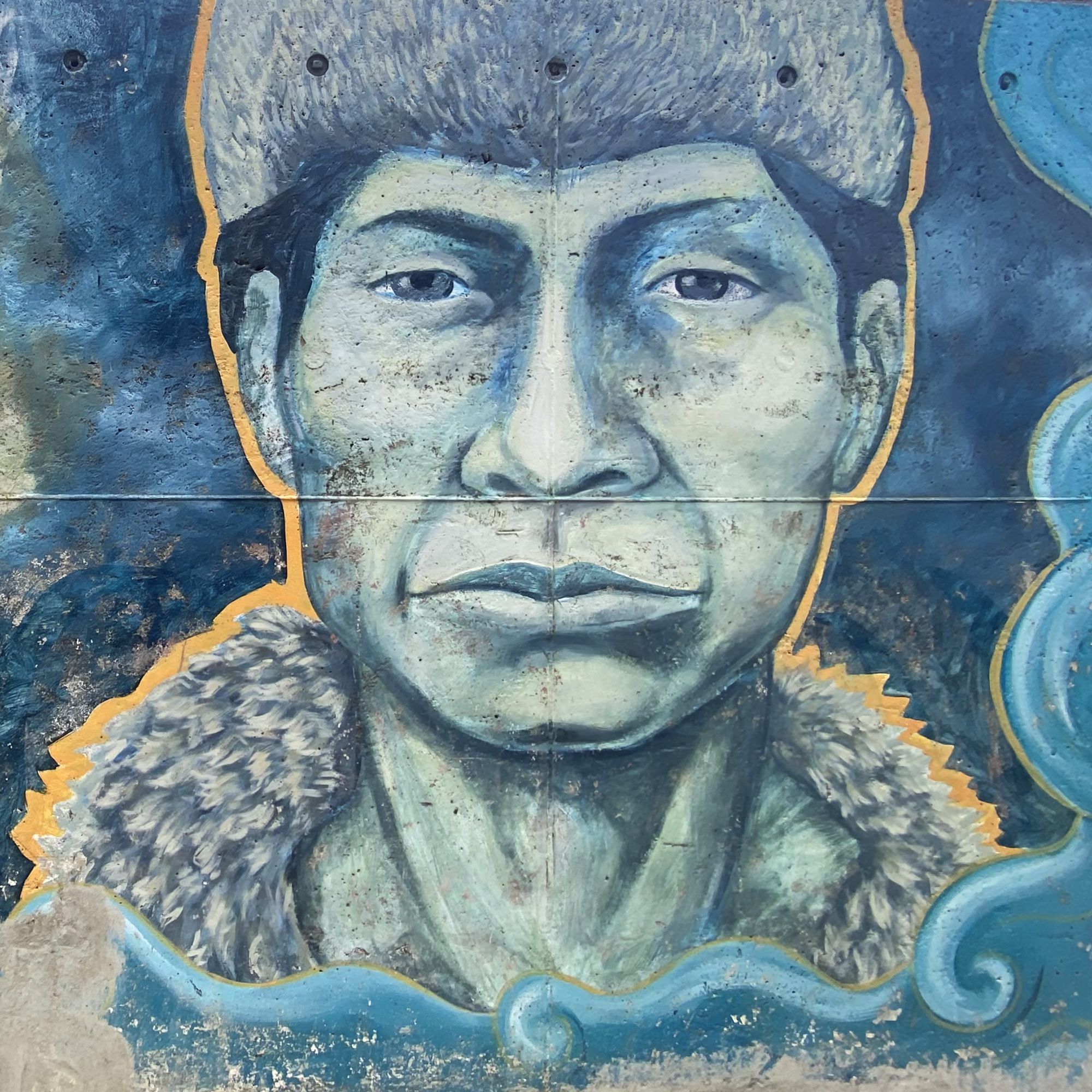
A Selk’nam man is depicted in a mural on the wall outside the Museo del Fin del Mundo, in the city of Ushuaia (2024). © Chiara Scardozzi
A Selk’nam man is depicted in a mural on the wall outside the Museo del Fin del Mundo, in the city of Ushuaia (2024). © Chiara Scardozzi
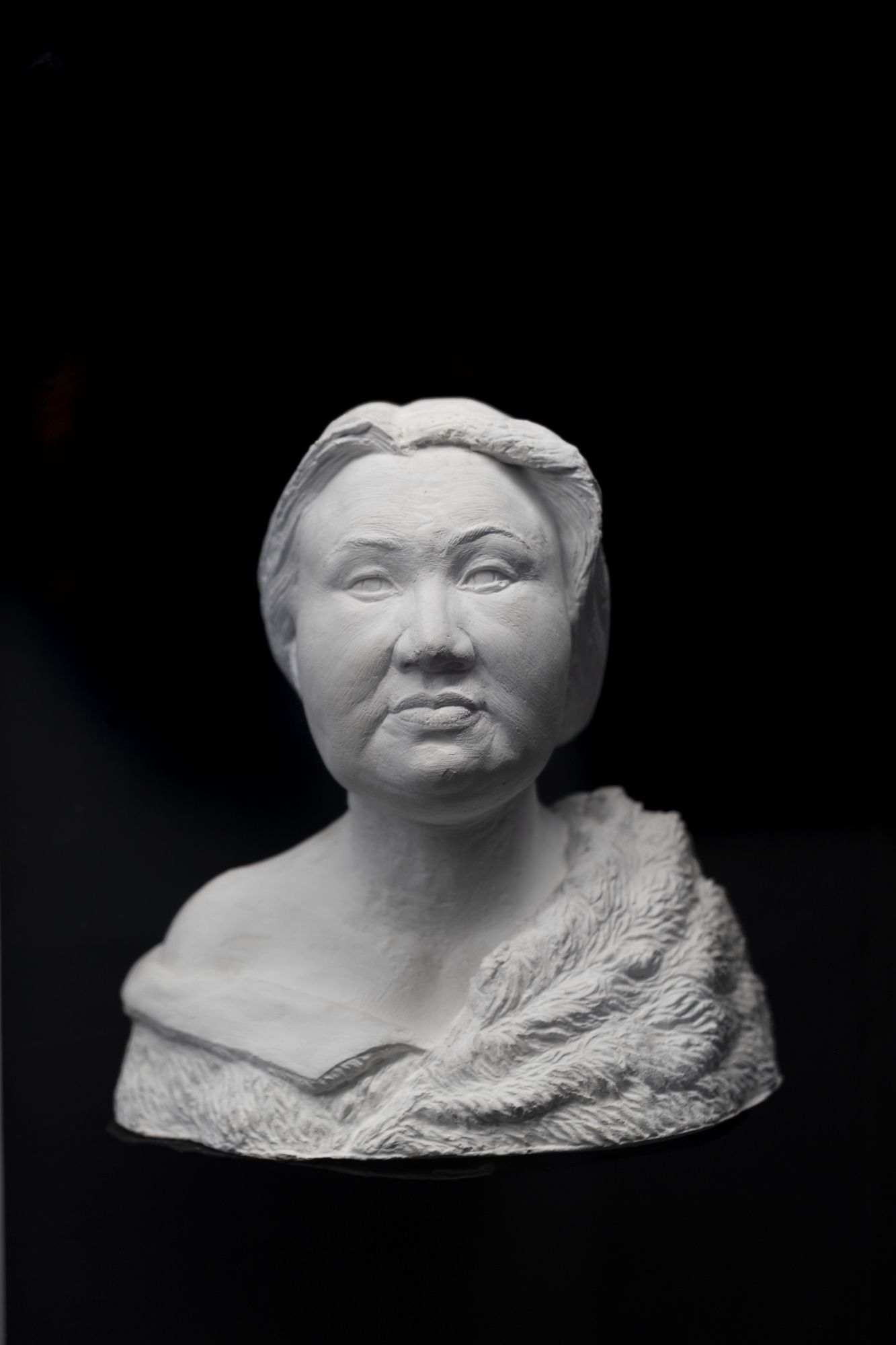
Plaster statue of Virginia Choquintel, a historical reference figure of Selk’nam people, displayed in the museum dedicated to her (Museo Municipal Virginia Choquintel) in the city of Rio Grande (Argentina). © Chiara Scardozzi
Plaster statue of Virginia Choquintel, a historical reference figure of Selk’nam people, displayed in the museum dedicated to her (Museo Municipal Virginia Choquintel) in the city of Rio Grande (Argentina). © Chiara Scardozzi
Lake Fagnano, called Kami in Selk’nam language (Tolhuin 2024). © Chiara Scardozzi
Lake Fagnano, called Kami in Selk’nam language (Tolhuin 2024). © Chiara Scardozzi
Under Law 405, the province of Tierra del Fuego allocated 36,000 hectares of communal land to the Selk’nam Indigenous Community.
Today, part of the community lives on this territory, while other members reside in the cities of Ushuaia, Tolhuin, and Río Grande, where Margarita currently lives.
Margarita began to realize that she inhabited “two worlds”: the world of her ancestors and the world of the present. While the first world may be invisible today, it persists through memories and practices connected to the land, such as gathering fruits, fungi, and shellfish for food, and creating objects rooted in millennia-old ways of life, such as bark masks and rush baskets. Margarita speaks of a true “transition” toward a way of understanding personal history in connection with other people and families who have shared experiences of cultural, economic and territorial dispossession. Engaging with these stories offers a way to challenge the dangerous narrative of the “extinct people.”

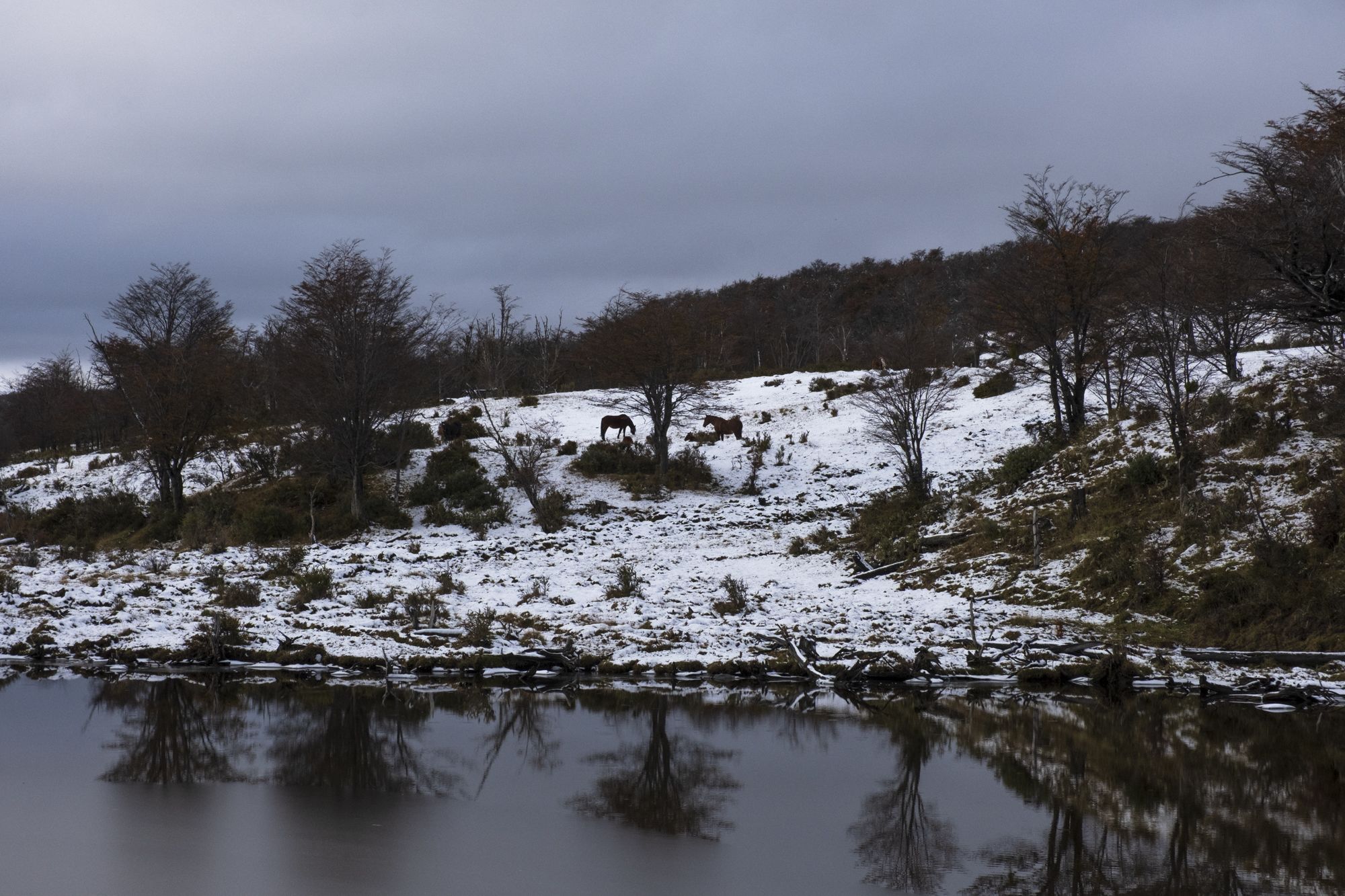
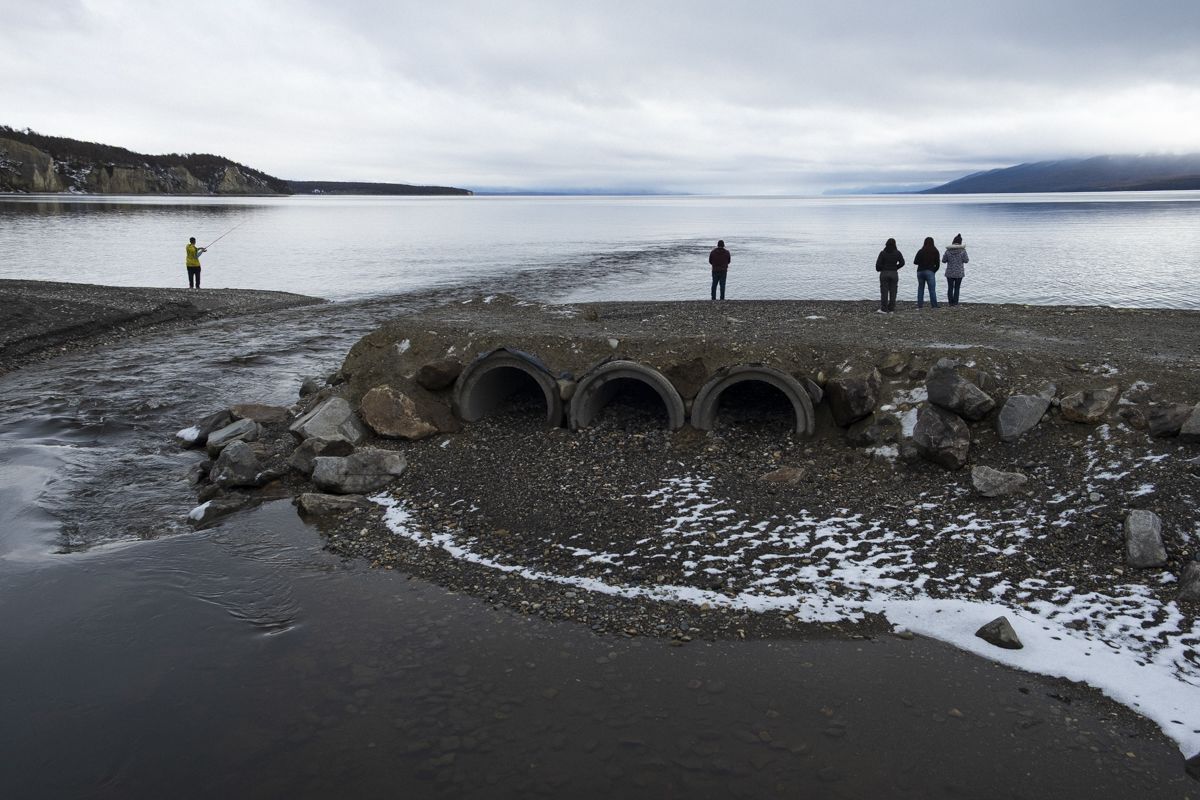
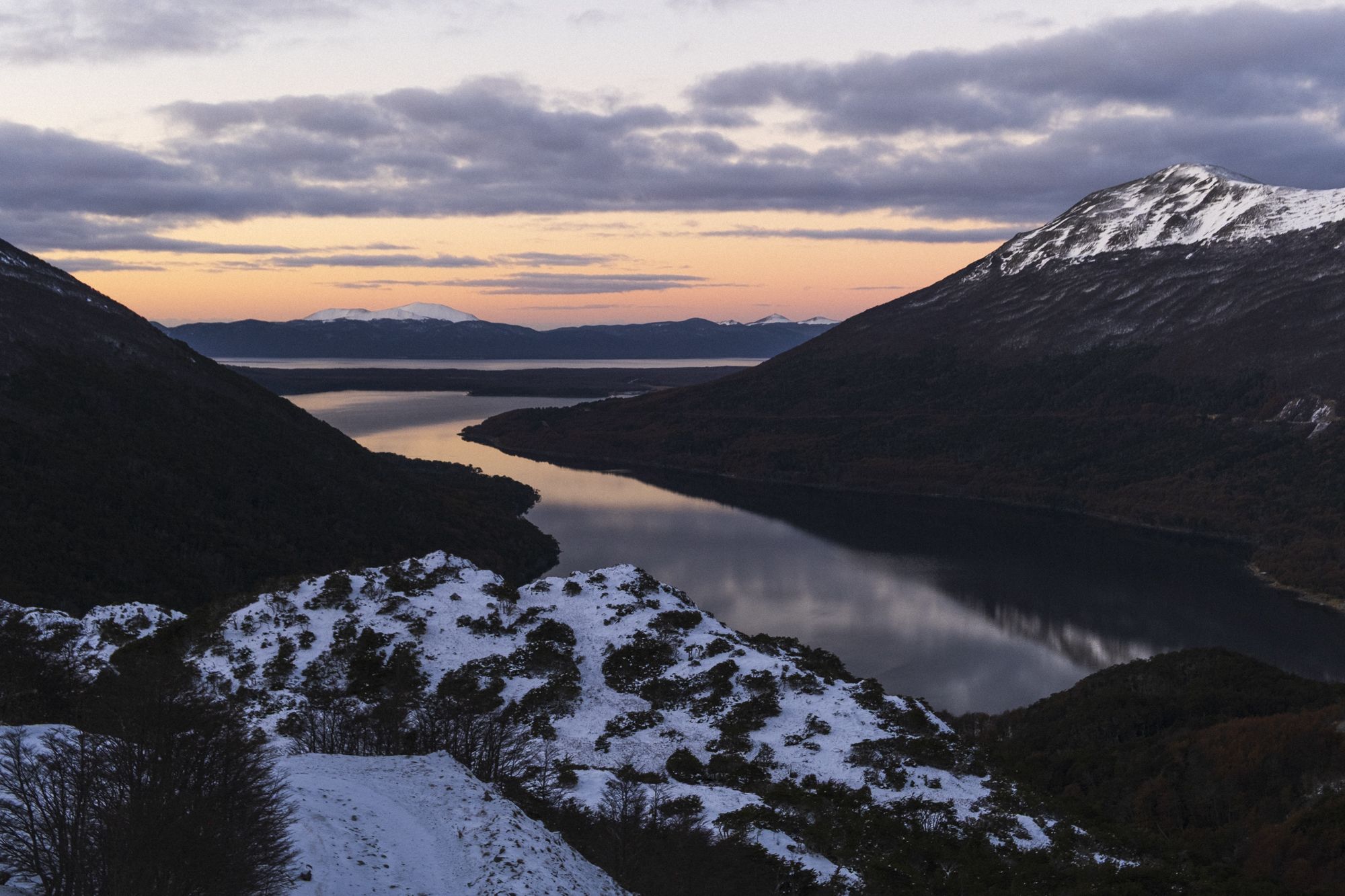

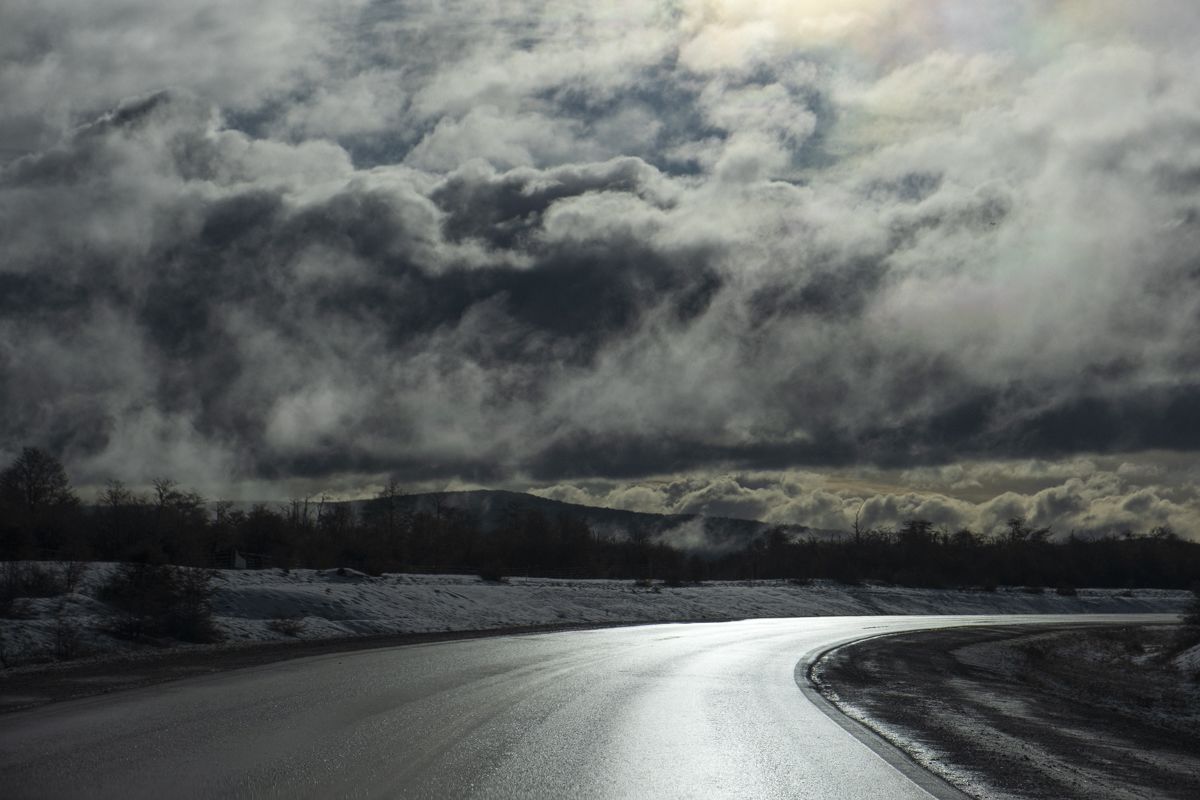
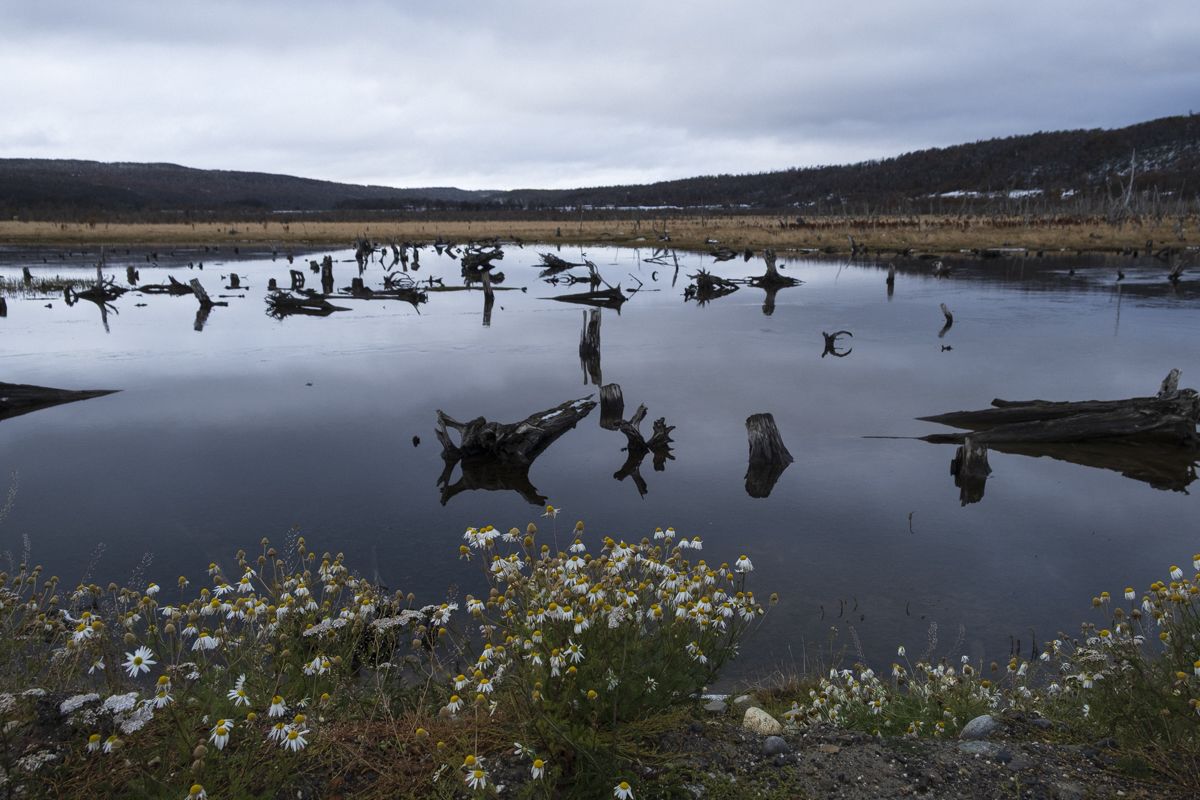
“National Route 3” connecting Ushuaia with Tolhuin and Río Grande. © Chiara Scardozzi
“National Route 3” connecting Ushuaia with Tolhuin and Río Grande. © Chiara Scardozzi
We are not usurpers of an identity. If today we are dressed and no longer live in our natural habitat, it is because there was a usurpation. There was no extermination, because otherwise we would not be here. History must be read. There was a genocide. Historians, writers, and anthropologists have always spoken about us and in our place. We are always questioned and studied. They reclaimed stories of the past to write books, but they did not speak about the present. Yet we are here, we are the present!
(Dialogue with Margarita Maldonado, Rio Grande, April 2024)
Margarita defines herself as an educator and “cultural transmitter”. She runs a basketry workshop in Río Grande, open to anyone wishing to learn this ancient art. Like a stone thrown into water that creates ripples, the knowledge shared through basketry has become a way to honour memory, forge connections, and build community, creating a new social fabric that is continually evolving.
In the book she wrote, titled “Entre dos mundos. Presente y pasado de los habitantes Selk’nam -Haus de la Tierra del Fuego”, she states that:
Basket weaving with rushes is an art. Why an art? Because making each piece requires many hours of work, focus, and patience; because each one is unique; because we preserve the same technique rooted in our ancestry (for over 11,000 years); because we have the right, the duty, and the responsibility not to allow talk of ethnocide. Because it is up to us to fight and uphold the valiant legacy that has been passed down to us: values of life, values of respect. We must reclaim the spaces we have lost by offering fervour, passion, and cultural work—by promoting basketry, ornaments, organizing photographic exhibitions, and spreading our history, legends, and myths.
(Maldonado M., “Entre dos mundos”, 3ed 2021 p. 107, my translation)
Through the ancient art of basketry, Margarita conveys the practices and knowledge of her ancestors, activating a cultural heritage that affirms the presence and struggle for recognition of the Selk’nam people and other Fuegian peoples in the present and for the future.
05.
A digital tayka
The ancient baskets preserved in the Missionary Ethnological Museum of Colle Don Bosco were woven by her ancestors and, far from being merely part of a museum collection, they today represent a tangible connection to ancestral territories. They form part of trajectories that link the communities and individuals currently present in the Fuegian archipelago with their dispersed heritage, reactivating histories, memories, and processes of knowledge recovery and reconstruction.
In this sense, the digital tayka should not be understood as a simple copy of the physical object or as its mere reproduction. Rather, it constitutes a shared space for exploration and critical reflection, where collaboration and knowledge exchange are possible, allowing objects to be reactivated and endowed with new forms of existence. For descendants, as well as for researchers, academics, and other professionals, these “reactivated” objects can acquire a decolonial value, as they invite us to reconsider our position within a global history and to view it from diverse perspectives.
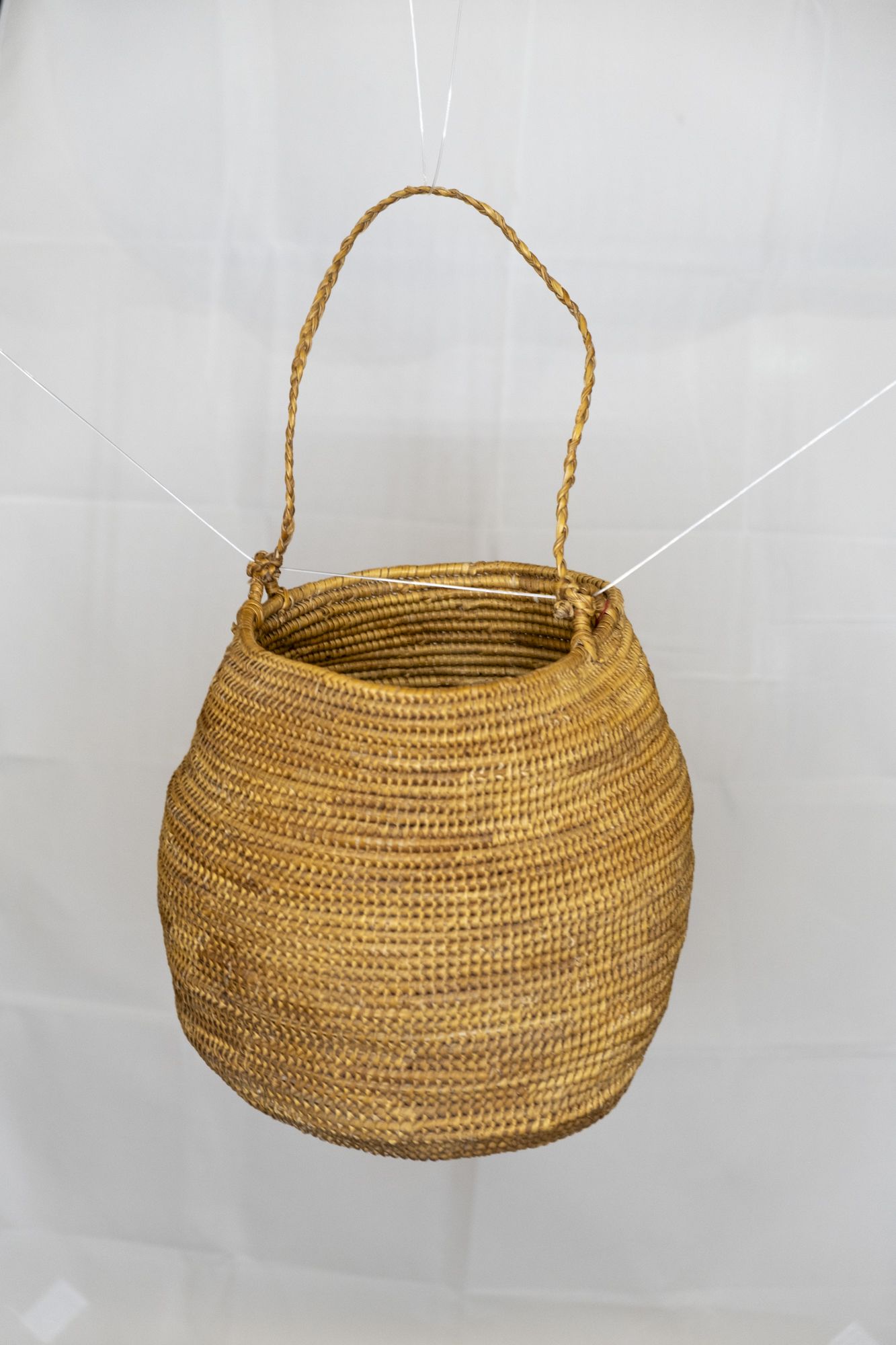
Basket preparation for digitization made by the team of CNR ISPC, Museo Etnologico Missionario Colle Don Bosco, July 2024. © Chiara Scardozzi
Basket preparation for digitization made by the team of CNR ISPC, Museo Etnologico Missionario Colle Don Bosco, July 2024. © Chiara Scardozzi
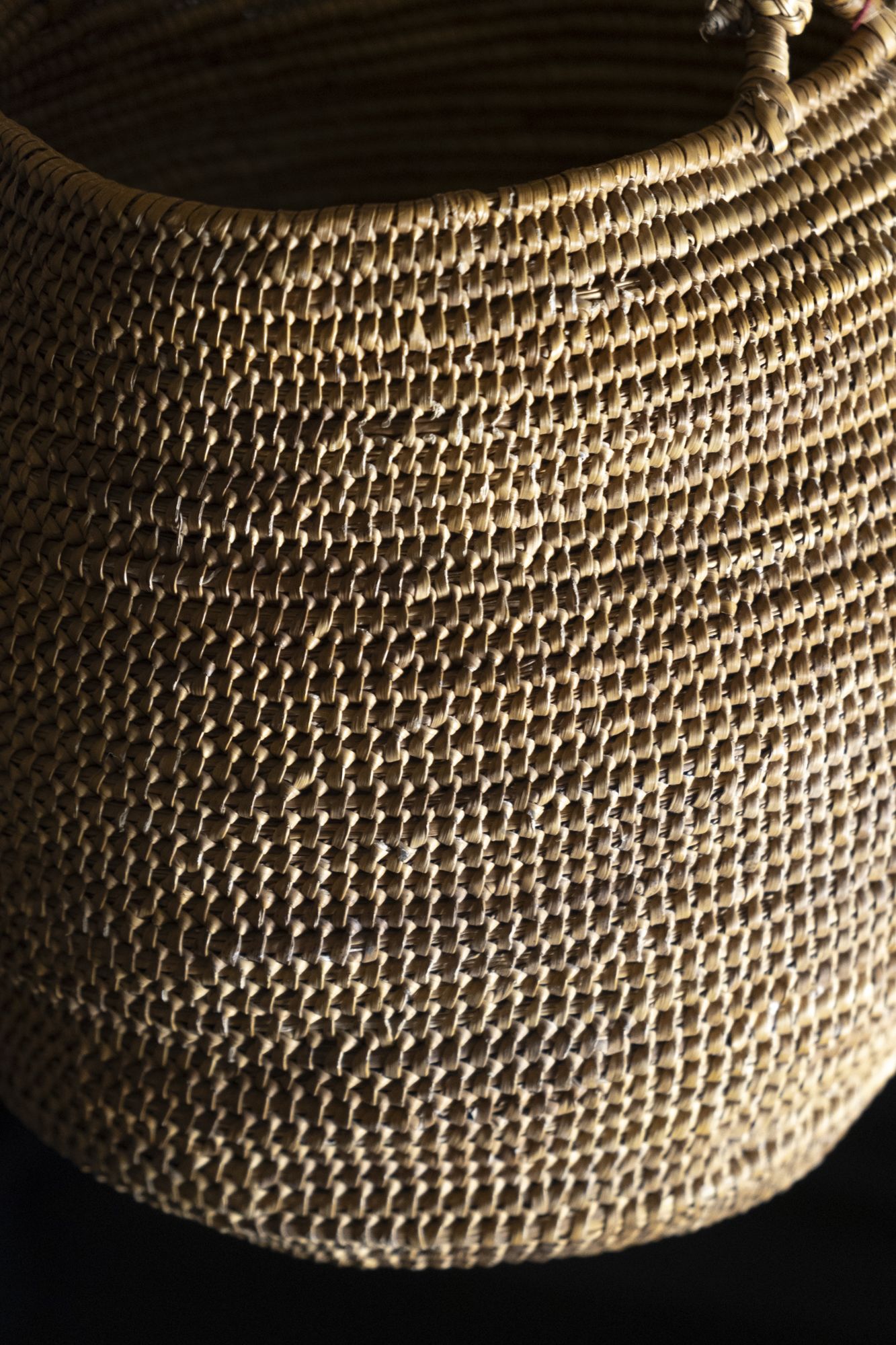
Close-up of the structure of the rush basket. Museo Etnologico Missionario Colle Don Bosco, July 2024. © Chiara Scardozzi
Close-up of the structure of the rush basket. Museo Etnologico Missionario Colle Don Bosco, July 2024. © Chiara Scardozzi
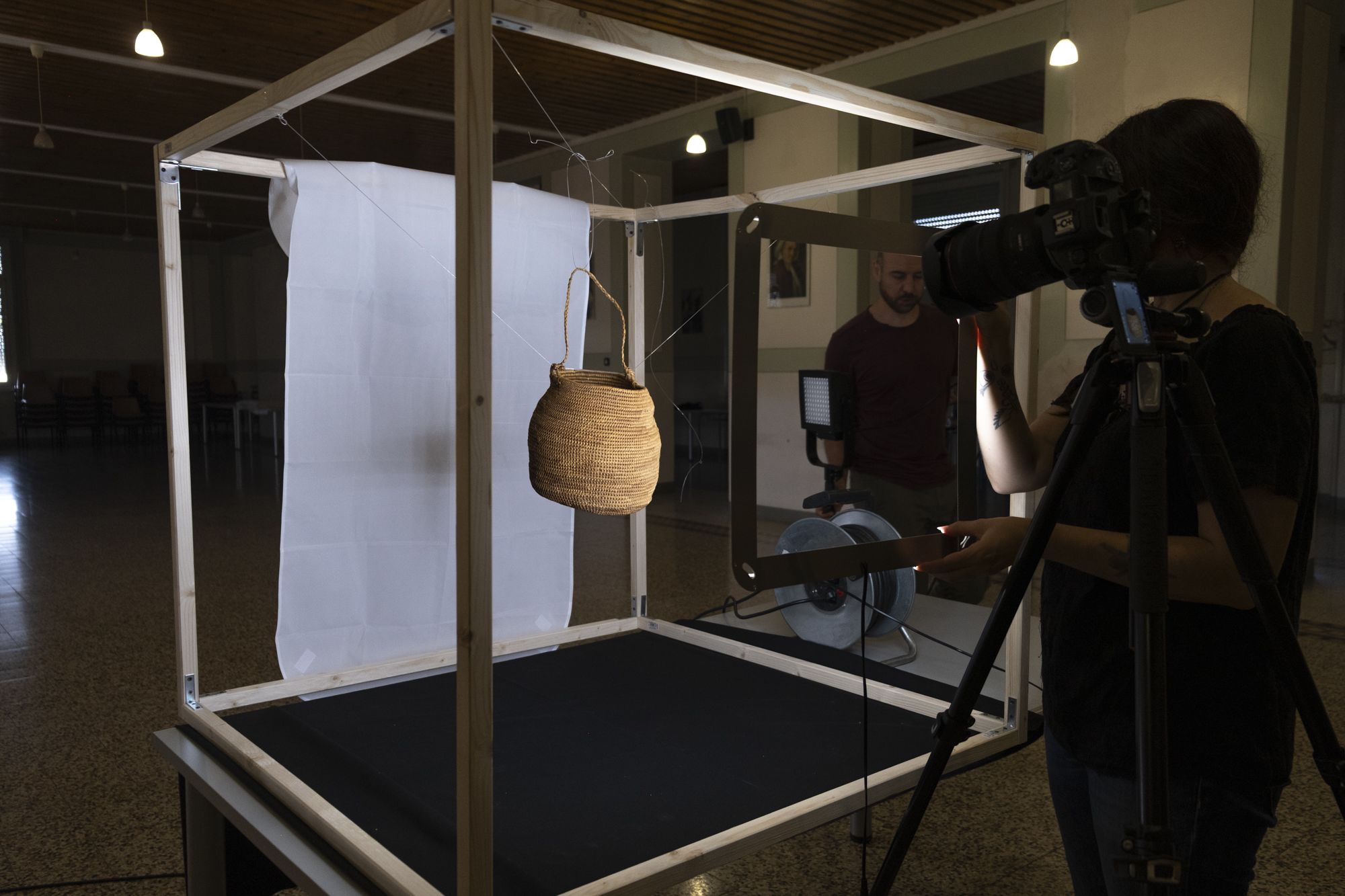
CNR Team at work with the structure set up for the basket’s digitization. Museo Etnologico Missionario Colle Don Bosco, July 2024. © Chiara Scardozzi
CNR Team at work with the structure set up for the basket’s digitization. Museo Etnologico Missionario Colle Don Bosco, July 2024. © Chiara Scardozzi
From this point of view, heritage can be conceived as a shared and dialogic space, and research as a weave of fibres and knots, like the rushes in a basket: a structure that requires time, attentive listening, and the ability to intertwine distinct threads and elements, sometimes very distant from each other. Each component contributes a voice, knowledge, and memory. Weaving is not a solitary act: it is a collective process, made of hands coming together and mutually transforming knowledge.
The individuation of the tayka for the digitization process, among the collection held by the Museo Colle Don Bosco, was a collaborative process led by the researcher Chiara Scardozzi with Margarita Maldonado and the curator Dr. Letizia Pecetto.
In this sense, the digital tayka is a basket constructed by multiple hands; what sustains its structure is not only the technique, but the relationships that emerge from the act of creating together. In this way, research ceases to be a neutral container and becomes a living artifact, shaped by connections, tensions, and forms of solidarity.

 Built with Shorthand